Practical Sales Training™ > How To Get Attention > Fake Negativity

Fake Negativity
Nobody scrolls past an apology without at least a glance. Fake Negativity uses that instinct on purpose. It opens with something that sounds like bad news, then flips it into something genuinely positive.
It’s the “We’re sorry…” or “We failed you…” approach. It hooks the reader instantly because it sounds like a mistake or a problem. But the twist isn’t real bad news at all. It’s a clever setup that makes the positive message hit harder once it lands.
In short, this isn’t about deception. It’s about contrast. So you pull people in with tension, then win them over with truth.
What Is Fake Negativity?
Fake Negativity is a marketing tactic that uses attention-grabbing negative statements that aren’t actually bad news. The headline sounds like an apology or a confession, so people stop and read. But the content quickly reveals something positive underneath.
It works because people are naturally drawn to potential conflict or drama. The brain wants to know what went wrong, even if nothing actually has. So that pull is exactly what gets the message read in the first place.
It’s just a setup, used deliberately. The goal is to make the positive message land harder than a straightforward headline ever could.
Why Does Fake Negativity Work?
1. It hijacks curiosity
When someone reads “We’re sorry…” or “Why we stopped doing X,” their brain automatically wants to resolve the tension. That open loop is hard to ignore, because the message feels emotionally charged from the very first word. So people keep reading just to find out what happened.
2. The reveal creates emotional relief
Once the reveal comes, the negativity turns out to be only surface-level. As a result, it creates a feeling of relief, surprise and often humour. That emotional flip is what makes the message stick in memory. It’s the marketing equivalent of a plot twist.
3. It feels human rather than corporate
An apology, even a fake one, sounds more human than a standard sales pitch. Because it mimics how real people talk when something’s gone wrong, it earns trust quickly. A typical promotional headline never gets close to that.
4. It separates the brand from competitors
Most ads open with a benefit or a claim. Fake Negativity opens with something completely different, so it stands out immediately in a crowded feed. That contrast alone is often enough to earn a second look before a single product detail appears.
How Can You Use Fake Negativity In Sales?
Use Fake Negativity when you need to stop the scroll and pull people into your message. Phrases like “We got it wrong,” “We’re quitting something” or “We’re sorry” draw instant interest. That’s true as long as the real story underneath is positive, helpful or self-aware.
1. Open with a believable apology
Start with a statement that sounds genuinely regretful. “We’re sorry” works because it’s short, direct and instantly recognisable as an apology. The key is making sure the apology connects to something real your audience has experienced. It should never be invented purely for shock value.
2. Tie the hook to a genuine frustration
It works best when the negative hook ties directly to a genuine insight about your audience’s frustrations. So before you write the apology, identify the real problem your buyer faces. The stronger that connection, the more the technique feels honest rather than gimmicky.
3. Flip quickly into the positive
Don’t drag out the negativity for too long. As soon as the tension is established, pivot into the genuine value of your offer. The faster the flip, the sharper the contrast, and the sharper the contrast, the more memorable the message becomes.
4. Keep it honest and relevant
Just make sure it’s done with honesty and relevance, not clickbait. If it feels clever, human and relatable, it earns attention without damaging trust. However, if the apology has nothing to do with the actual offer, readers feel misled rather than charmed.
When Fake Negativity Works Best
This technique works best in crowded, scroll-heavy environments like social media ads, email subject lines and landing page headlines. Because attention is scarce in these spaces, an unexpected opening line has real value. Fake Negativity delivers exactly that kind of pattern interrupt.
It also works particularly well when your brand is positioning itself against an industry-wide frustration. If your competitors all share a common weak point, such as poor service or unclear pricing, you can use that. An apology on their behalf can land as both funny and genuinely persuasive at the same time.
When Fake Negativity Becomes Dangerous
The risk is using the hook without a genuine payoff. If the apology promises something meaningful but the reveal feels weak or unrelated, readers feel tricked rather than entertained. That damages trust far more than a plain, honest headline ever would.
It also becomes dangerous if used too often. A brand that constantly apologises, even ironically, can start to feel insincere or gimmicky. So save the technique for moments where the contrast genuinely earns attention, rather than making it your default style.
Common Fake Negativity Mistakes
1. Using a fake apology with no real connection
If the “sorry” doesn’t connect to a genuine frustration your audience has felt, the technique falls flat. Buyers can sense when a hook is invented purely for shock. So always anchor the apology in something true about their experience.
2. Dragging out the reveal too long
The longer you delay the flip into positivity, the more the tension turns into irritation rather than curiosity. Keep the negative hook short, then move quickly into the genuine value behind it.
3. Overusing the technique
A single well-placed Fake Negativity hook is memorable. A brand that uses it in every piece of messaging starts to feel predictable. And predictability kills the surprise the technique depends on. Use it sparingly so it keeps its impact.
4. Letting the tone feel mean-spirited
Apologising on behalf of a competitor can tip into being unkind if it’s not handled carefully. Keep the tone light and self-aware rather than aggressive, so the message reads as clever rather than as an attack.
Fake Negativity – An Example
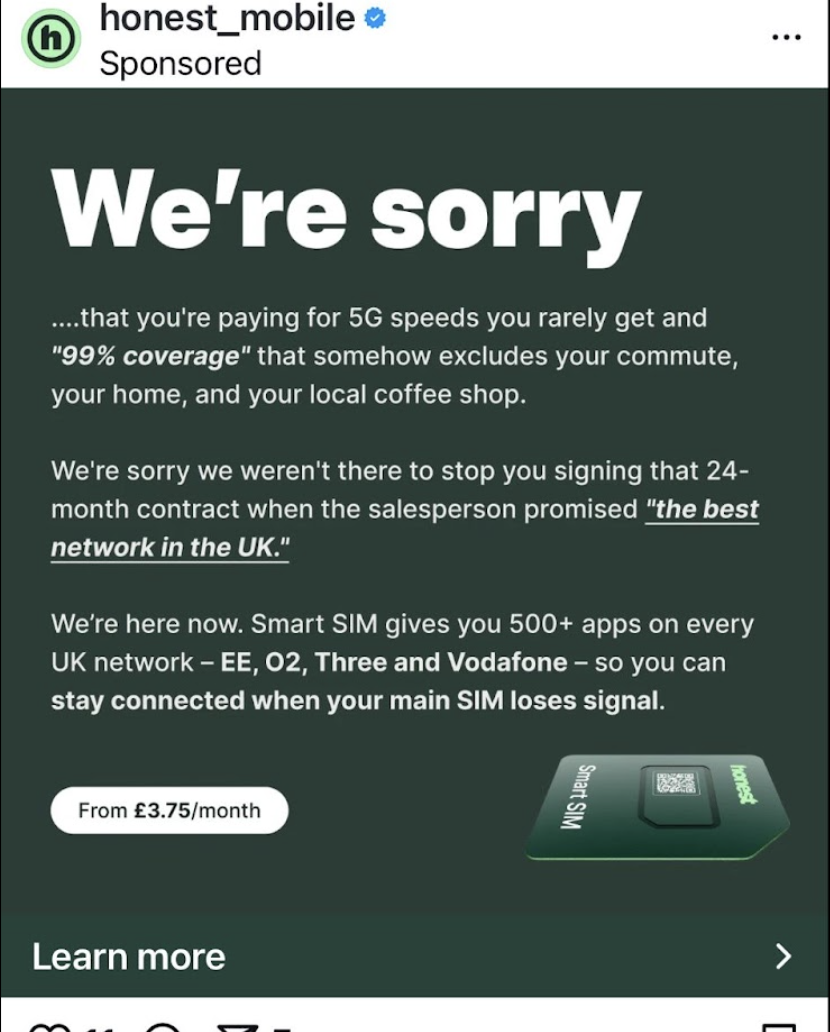
“We’re Sorry” From Honest Mobile
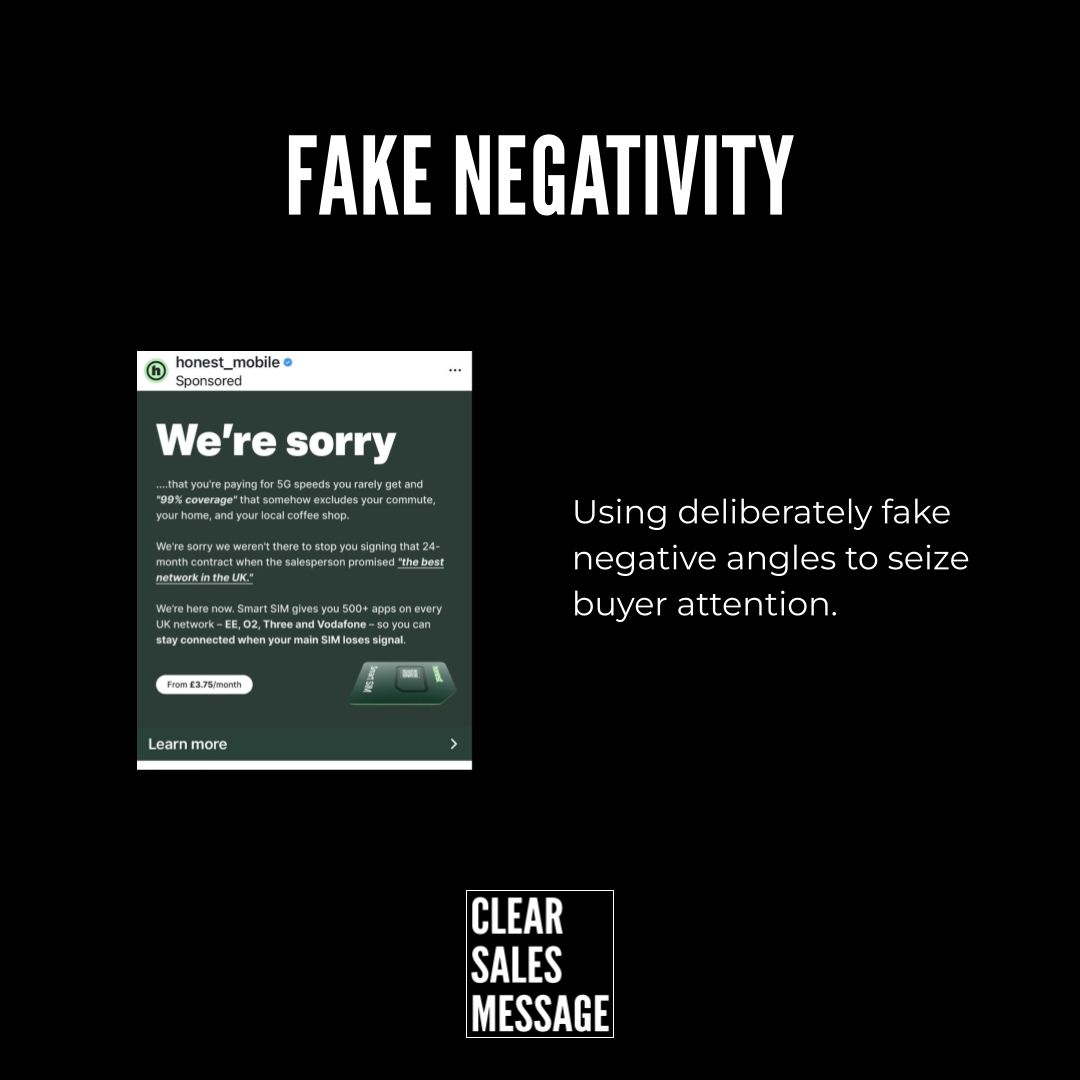
A mobile network called Honest Mobile opens a social ad with two huge words: “We’re sorry.” There’s no logo claim and no benefit headline. Just an apology in big white text on a dark background.
The copy underneath reveals what they’re actually sorry for. Paying for 5G speeds you rarely get. “99% coverage” that somehow excludes your commute. Getting locked into a 24-month contract after a salesperson promised “the best network in the UK.” None of it is Honest Mobile’s fault. They’re apologising on behalf of the entire industry.
Then comes the flip. “We’re here now,” followed by a genuine product pitch for Smart SIM. It’s a SIM that works across every UK network, so users stay connected even when their main provider drops out. The apology hook did its job. It stopped the scroll and validated a real frustration. It also made the actual offer feel like relief rather than a sales pitch.
See also