Practical Sales Training™ > How People Work > Forgetting Curve
Forgetting Curve
You give a brilliant pitch. The buyer nods, smiles and says, “Great, leave it with me.” A week later, they can barely remember your name. Your three key benefits? Gone.
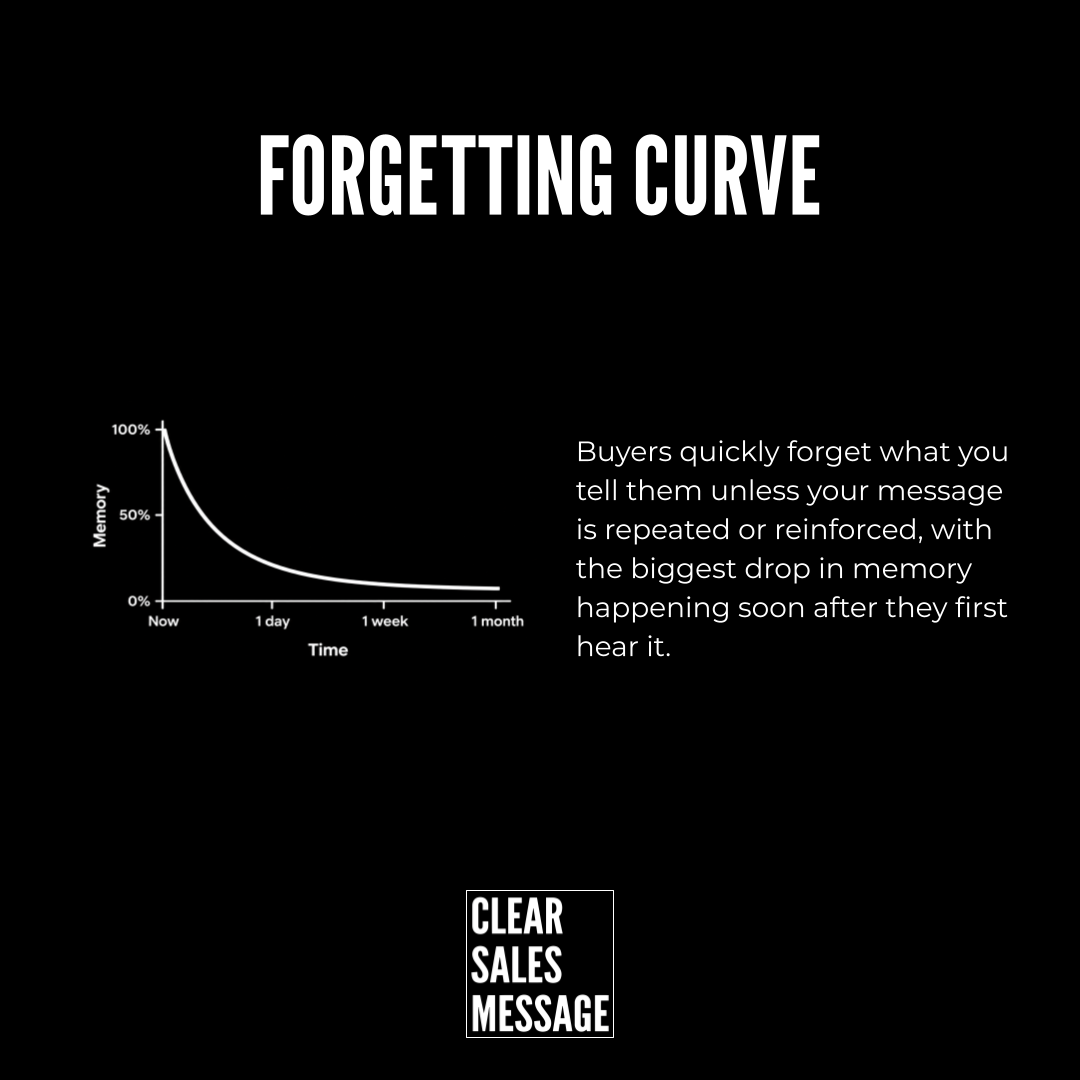
That’s the Forgetting Curve. Memory drops fast after people first hear something. And unless you top it up, your message slips away.
So a great pitch only gets you so far. What you do next decides whether the buyer remembers you at decision time.
What Is The Forgetting Curve?
The Forgetting Curve shows how quickly people forget new information. The biggest drop comes soon after they first hear it. Then the decline slows down over the following days and weeks.
A German psychologist called Hermann Ebbinghaus first mapped it out in the 1880s. He tested his own memory over time. His results showed recall falls off sharply, unless you review what you learned.
For sellers, the lesson is simple. Buyers forget your message far faster than you think. So repetition is part of the job.
Why Does The Forgetting Curve Matter?
It matters because most buying decisions happen after the meeting. The buyer talks to colleagues, compares options and thinks it over. By then, much of your pitch has already faded.
It also explains why good sellers lose. Their message was strong on the day. But a rival who followed up well stayed fresher in the buyer’s mind.
Then there’s the retelling problem. Your champion has to explain your offer to their boss. If they’ve forgotten the details, they’ll tell a weaker version.
Finally, each reminder slows the slide. Every time a buyer hears your key point again, it sticks a little longer. In fact, a few well-timed nudges can keep your message alive for weeks.
How Can You Use The Forgetting Curve?
Here’s how to beat it.
Send A Recap The Same Day
Memory drops fastest early on. So send a short summary within hours of the meeting, while it’s still fresh.
Stick To Three Key Points
The more you say, the more they forget. Instead, pick your three most important points and repeat those.
Space Out Your Follow-Ups
Reminders work best when you spread them out. For example, follow up after one day, then one week, then two weeks.
Say It In Different Ways
Repeat the same message through a case study, a short video or a quick stat. Then it feels fresh while still reinforcing the point.
Make It Easy To Repeat
Give your champion a one-line summary they can pass on. As a result, your message survives the meeting with their boss.
When Does The Forgetting Curve Matter Most?
It matters most in long sales cycles. The longer the gap between pitch and decision, the more buyers forget.
It also bites when several people decide. Each person forgets different parts, so the group remembers a muddled version.
And it hurts in crowded markets. When buyers see several suppliers, the details blur together fast.
When Does The Forgetting Curve Become Dangerous?
It gets dangerous when you overcorrect. Chasing buyers every day feels pushy. So space your reminders and make each one useful.
It also backfires when you repeat the wrong thing. If your follow-ups only say “just checking in,” they reinforce nothing. Instead, repeat the value.
Watch out for long, dense recaps too. Buyers skim a five-page summary and forget it just as fast.
What Are The Common Mistakes With The Forgetting Curve?
Most mistakes come from assuming buyers remember. Here are the ones I see most.
Relying On One Great Pitch
A strong meeting fades within days. So plan your follow-ups before you walk in.
Waiting Too Long To Follow Up
By next week, most of it is gone. Instead, send your recap the same day.
Saying Too Much
Ten benefits means none stick. So focus on a few.
Empty Follow-Ups
“Any update?” adds nothing to memory. So remind them why they cared in the first place.
Forgetting Curve – An Example
Two Software Demos
Say two software firms demo to the same operations director on the same Monday. Both demos go well. She likes them equally.
The first seller sends nothing until Friday. Then they write, “Just checking in on our demo.” By now, she can’t quite recall what made them different.
The second seller sends a short recap that afternoon. It lists the three problems they solve, in her own words. On Wednesday, they share a two-minute case study video. The following week, they send a one-page summary she can show her boss.
Two weeks later, the board meets to decide. Only one supplier’s message is still clear in her head. So that’s the one she recommends.
See Also