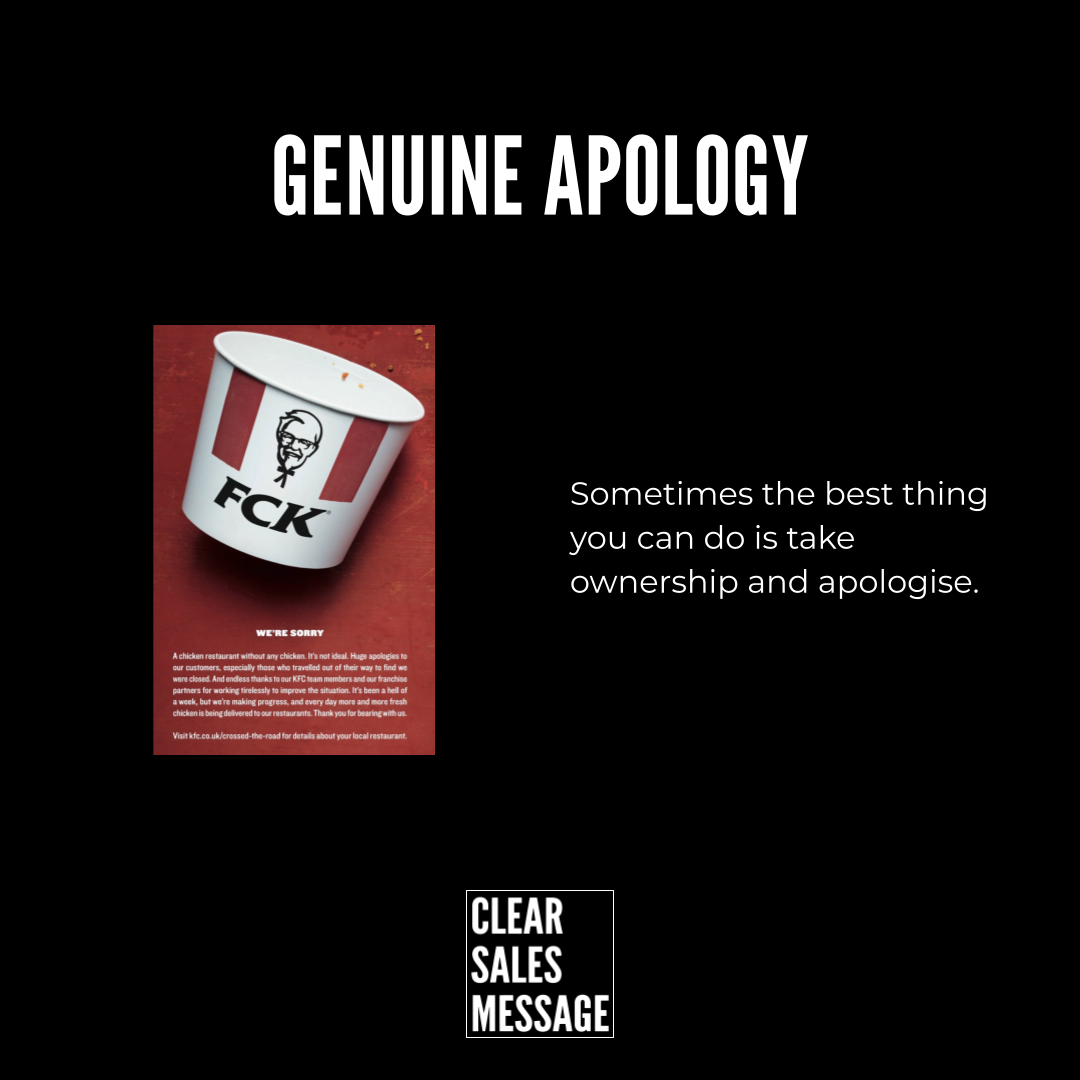
Practical Sales Training™ > How to connect with your buyer > Genuine Apology

Genuine Apology
Many businesses think mistakes always destroy trust. But in practice, poor handling causes more damage than the original problem.
Buyers are often more understanding than businesses expect. What tends to frustrate people is not the mistake itself. It is the defensiveness, the vague language, and the scripted response that follows.
People want honesty. Not theatre.
What Is a Genuine Apology?
A genuine apology is an honest admission that something went wrong – without trying to hide, water down, or shift the blame. It includes a clear acknowledgement of the issue, visible ownership, a real plan to fix it, and language that sounds like a human wrote it.
The key word is believable. Buyers can almost always tell the difference between a real apology and a carefully worded corporate response. So the goal is not to sound polished. The goal is to sound honest.
How Does a Genuine Apology Work?
When something goes wrong, buyers are asking themselves a set of quiet questions. Can I still trust these people? Do they actually care? Are they going to fix it? A genuine apology answers those questions fast and clearly.
Interestingly, businesses sometimes become more trusted after handling a problem well. Because now the buyer has seen how the business behaves under pressure. That is very different to a business that only looks good when things are easy.
So a well handled mistake can actually strengthen a relationship rather than end it.
How Can You Use a Genuine Apology In Sales?
The key is to communicate like a person rather than a legal team. That does not mean being dramatic or overly emotional. It means being clear, calm, and accountable.
Acknowledge the problem clearly
Buyers get more frustrated when businesses avoid saying what went wrong. So say it plainly. “We made a mistake.” “We missed this.” “We should have handled this better.” Direct language feels more trustworthy than careful, sanitised wording. And buyers notice the difference immediately.
Focus on resolution
A genuine apology should reduce worry, not add to it. So explain what happened, what you are doing about it, and what comes next. Clarity creates reassurance. And reassurance is what the buyer needs most in that moment.
Keep it short and human
Long explanations can sound defensive rather than accountable. Buyers want to know the issue is being owned and fixed – not given a full post mortem. So say what needs to be said, keep it simple, and move forward. Less is usually more here.
When a Genuine Apology Matters Most
Genuine apologies matter most when the buyer feels let down, financially affected, or unsure whether to carry on. For example, service failures, missed deadlines, and gaps in communication all put the relationship under pressure. In these moments, buyers are judging the response just as much as the original problem. So how you handle it matters as much as what went wrong.
When a Generic Apology Backfires
Generic apologies often make things worse because they feel fake. Most buyers have heard enough corporate apology language to spot it straight away. Phrases like “we apologise for any inconvenience caused” or “your feedback is important to us” do not feel human. As a result, they do not rebuild trust. They just confirm that nobody is really taking ownership.
Common Genuine Apology Mistakes
Most mistakes come from businesses trying to protect themselves instead of reassuring the buyer. However, that instinct almost always makes things worse.
Over-explaining the problem
Too much detail can sound like an excuse rather than an apology. Buyers want to know it is being fixed – not why it happened in great depth. So keep the explanation brief and put the focus on what comes next rather than what went wrong.
Trying to sound too corporate
Polished language tends to reduce trust rather than build it. Because it sounds made up rather than felt. People trust human words more than PR words. So write the apology the way you would say it out loud to a friend – then tidy it up slightly. That is usually the right tone.
Genuine Apology – An Example
A software firm has an outage that cuts off customer access for several hours. One response says: “We apologise for any inconvenience caused while our engineers investigate the situation.”
Another says: “We made a mistake during a system update this morning which caused downtime for some customers. We know that disrupted your work and we are genuinely sorry. The issue is now fixed and we are reviewing our process to make sure it does not happen again.”
The second response works because it is specific, honest, and human. It sounds like a person taking ownership – not a business covering itself.
You can read more about the research behind this here: Service Recovery Paradox

See also
- 150+ ways to connect with your buyer
- The Candid Effect
- The Ritz Carlton $2000 Rule
- Resolution Loyalty
- Fake Negativity