Practical Sales Training™ > Wordplay > Lexical Stress Indicators

What is a lexical stress indicator?
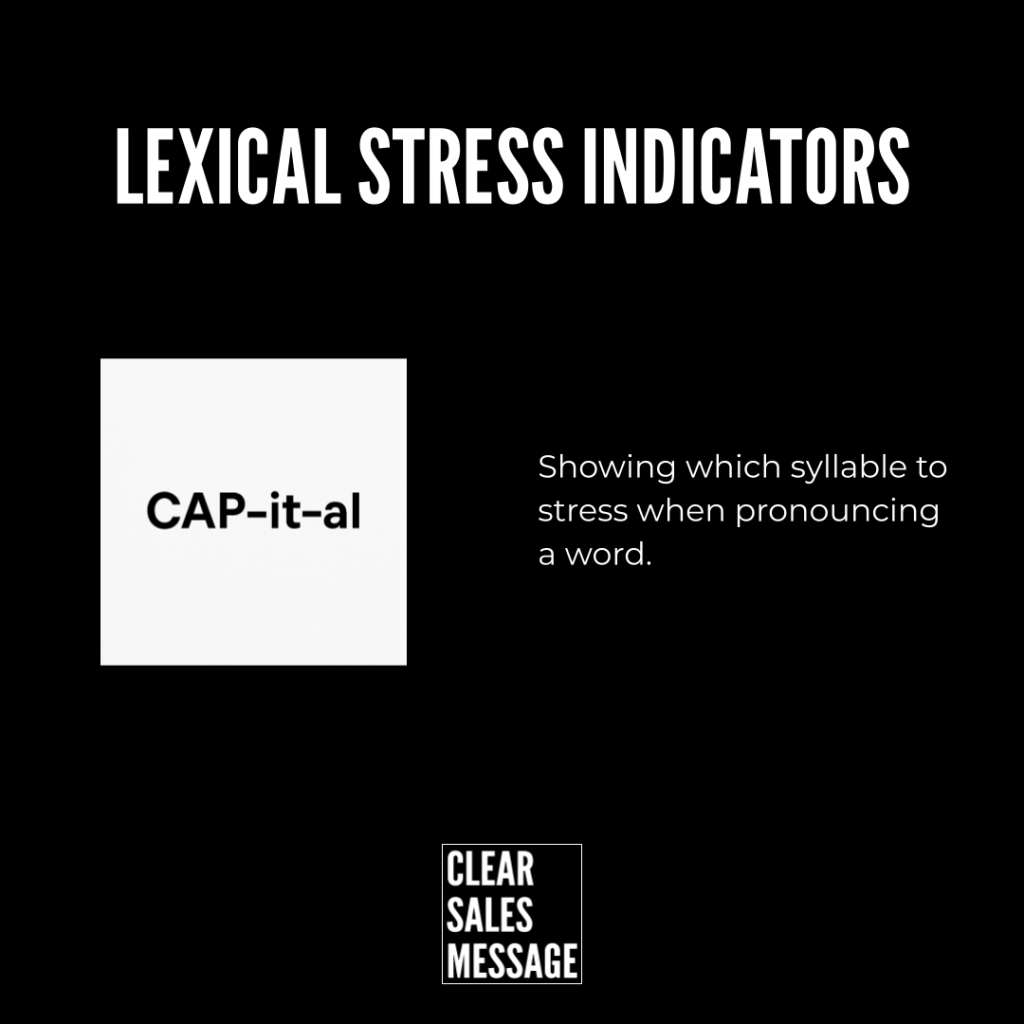
A lexical stress indicator shows which part of a word (which syllable) should be emphasised when spoken. In English, the meaning or clarity of a word can change depending on where the stress is placed—so these indicators help guide correct pronunciation.
Example:
The word capital is spoken as CAP-it-al (with the first syllable stressed).
How does it work?
Lexical stress is usually shown in one of three simple ways:
-
Capital Letters – To highlight the stressed syllable.
Example: IN-ter-est-ing -
IPA Stress Mark – In formal dictionaries or phonetic guides.
Example: /ˈɪn.tər.əs.tɪŋ/ (the'shows stress before the syllable) -
Bold or Underlined Text – To visually call out the stress in informal guides.
Example: interesting or interesting
Whichever method is used, the goal is the same: make it clear which syllable should stand out.
How can you use it?
1. When sharing your name
If your name is often mispronounced, show people where the stress goes.
Example: “It’s NA-talie, not na-TA-lie.”
2. When introducing a brand or product name
Use stress indicators to make pronunciation easy and repeatable.
Example:
“It’s called Acora – that’s a-CO-ra, with the stress on the second syllable.”
3. In scripts or presentations
Use stress indicators to help you (or your team) say key phrases confidently and consistently.
4. In pronunciation guides for sales or customer support
Help clients say things right the first time—especially with unfamiliar terms or global names.
Final thought:
If your audience can’t say it, they won’t remember it. Lexical stress indicators give people confidence to say your words, brand, or message out loud—and that makes your communication more repeatable, more relatable, and more powerful.
See also