Practical Sales Training™ > How To Connect With Your Buyer > Momentum Loss
Momentum Loss
You leave a great meeting. The buyer loved it and asked for a proposal. Then your week gets busy, and the proposal goes out ten days later. By then, the buyer’s reply is polite but flat.
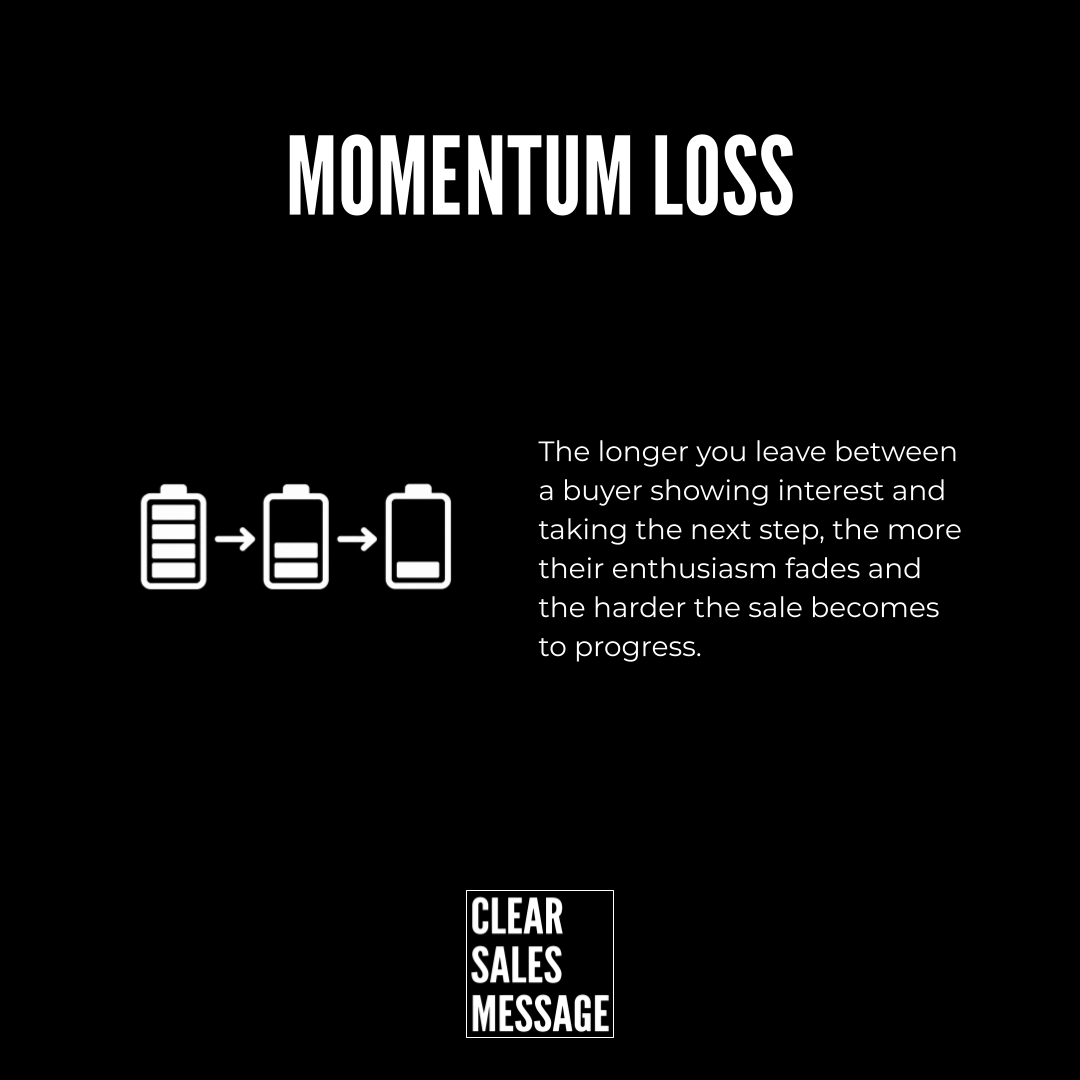
That’s Momentum Loss. Interest is like a hot drink. Leave it too long and it goes cold, however good it was to start with.
What Is Momentum Loss?
Momentum Loss is the drop in a buyer’s enthusiasm when gaps open up. It can happen after a demo, before a proposal or while you wait for sign-off. Each pause lets excitement fade.
Life gets in the way too. Other projects, other suppliers and other worries all compete for their attention. So the longer the gap, the more those things push you aside.
It hits B2B sales especially hard. Long buying cycles and busy diaries create lots of gaps. And every gap is a chance for the deal to stall.
Why Does Momentum Loss Happen?
It happens because feelings fade faster than facts. Right after a great meeting, the buyer feels excited. A week later, they only remember the outline.
It also happens because doubt creeps in. With time to think, buyers start to wonder about cost, risk and change. As a result, small worries grow bigger.
Then there are rivals. While you’re quiet, someone else may be calling. In fact, a quick competitor can take the lead in the gap you left.
Finally, people lose track. The buyer’s colleagues weren’t in the room. So when you finally follow up, they need convincing all over again.
How Can You Avoid Momentum Loss?
Here’s how to keep things moving.
Agree The Next Step Before You Leave
End every meeting with a clear next step and a date. For example, “I’ll send the proposal Thursday, and we’ll talk it through on Friday.” So nobody leaves wondering what happens next.
Shrink The Gaps
Look at each stage of your sale and ask where things wait. Then cut those waits down. A proposal sent the next day keeps far more energy than one sent next week.
Keep In Touch Between Steps
If there has to be a gap, fill it with something useful. A short case study, a quick answer or a helpful idea all work. As a result, you stay on their mind.
Make Their Next Step Easy
Fiddly forms and long contracts slow things down. So make signing, booking or paying as simple as you can.
Help Them Sell It Internally
In B2B, your contact often needs approval. So give them a short summary they can forward to their boss. That way the deal keeps moving even when you’re out of the room.
When Does Momentum Loss Hurt Most?
It hurts most right after a buyer shows strong interest. That’s when enthusiasm peaks. So any delay there costs the most.
It also bites hard in long B2B deals. With several decision makers and lots of steps, gaps appear everywhere.
And it matters most when rivals are active. If a buyer is talking to several suppliers, the slowest one usually loses.
When Does Chasing Momentum Become Dangerous?
It gets dangerous when you rush the buyer. Pushing for decisions they’re not ready to make feels like pressure. As a result, they slow down even more.
It also backfires when follow-ups become nagging. Daily check-ins with nothing new to say annoy people. So make each contact useful.
Watch out for skipping steps to save time too. Cutting corners can leave buyers with questions you never answered. And those questions come back later as objections.
What Are The Common Mistakes With Momentum Loss?
Most mistakes come from treating time as free. Here are the ones I see most.
Leaving Without A Next Step
Ending with “I’ll be in touch” invites drift. Instead, agree a specific date before you go.
Taking Too Long On Proposals
Spending two weeks polishing a proposal often costs more than it gains. So send a clear, good version quickly.
Going Quiet During Their Delays
When the buyer is waiting for sign-off, many sellers just wait too. Instead, stay in touch with helpful updates.
Making The Final Step Hard
A buyer ready to sign can still stall on a clunky contract. So keep the paperwork short and simple.
Momentum Loss – An Example
The Slow Proposal
Say you run a training company. A sales director loves your workshop idea and asks for a proposal. You promise it by Friday.
But Friday becomes the following Wednesday. Then the director goes on holiday. By the time you speak again, three weeks have passed, and her boss has questions she can’t answer. The deal stalls.
Now picture the other version. You send the proposal the next morning, with a one-page summary for her boss. Then you book a call for two days later. So the decision happens while her enthusiasm is still high.
See Also