Practical Sales Training™ > Wordplay > Onomatopoeia

Onomatopoeia
What Is It
Say the word crack, and you hear the branch snap before you even picture it. That’s Onomatopoeia at work.
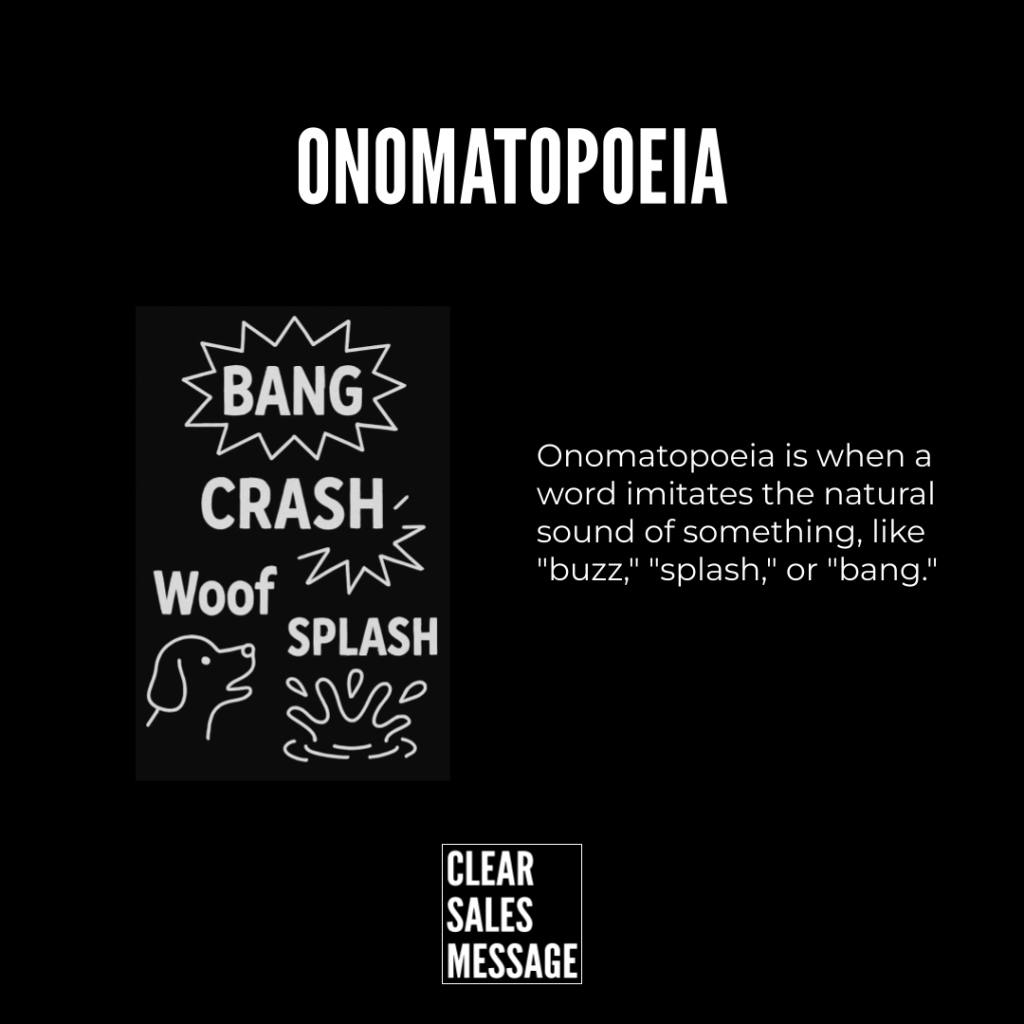
It’s when a word sounds like the thing it describes. The crack of a branch, the buzz of a bee, the whoosh of wind. These words don’t just describe a sound, they are the sound. Bang, sizzle, pop, crash, click, hiss. You’ll hear them in comics, kids’ books, marketing, music, and everyday conversation. It’s sound turned into speech.
Why Does It Work
It works because it’s immediate and sensory. So it connects sound directly to meaning, which makes it easy to grasp and hard to ignore.
These words are vivid, bringing a whole scene to life in someone’s head instantly. So they’re also memorable, since a sound-based word creates a stronger mental image than a plain description ever could. They’re emotional too. A loud bang or a soft shhh changes how you feel before you’ve even processed why.
How Can You Use It
In Product Names
So use it when naming a product. Snapple, Fizz, Zipcar, TikTok, all catchy because they sound like exactly what they do.
In Copywriting
Add sound-based words to your copy too. The idea just popped into her head. Watch sales sizzle with our latest offer. One click and it’s done. So each one makes the message feel active instead of flat.
In Storytelling Or Speech
Use it in storytelling or speech as well. The thunder rumbled in the distance. He crunched across the gravel driveway. The fire crackled as they talked. So even one sound word can shift the entire tone of what you’re saying.
When It Works Best
This works best when you want a scene or a feeling to land fast. It skips the need for a long description. One well chosen sound word often beats a whole sentence of explanation.
It also works well in casual, energetic writing, where a bit of texture and drama fits naturally. So a dry report gets far less.
When It Becomes Dangerous
This becomes a problem if you scatter sound words everywhere, and the writing starts to feel like a comic strip. So restraint keeps the impact real.
It also falls flat if the word doesn’t actually match the sound it’s meant to represent. So a mismatch breaks the spell.
Common Mistakes
Overusing The Technique
Some writers overuse the technique until every sentence has a bang or a pop in it. So save it for the moment.
Picking Sounds Nobody Recognises
Others pick invented sounds nobody actually recognises. So stick to words your reader already associates with the exact sound you mean.
Using It In The Wrong Tone
Some writers use onomatopoeia in serious, formal contexts where it clashes with the tone. So match the device to the voice of the piece, not just the moment.
Onomatopoeia – An Example
Snapple’s Built-In Sound Effect
Snapple built its whole name around a sound. Snap suggests something fresh and crisp, apple suggests the fruit behind the flavour. So the name does double duty, describing the product and making a small sound effect at the same time. Nobody has to explain what Snapple means. The word already tells you.
See also: