

Practical Sales Training™ > How To Lose The Sale > Passive Language
Passive Language
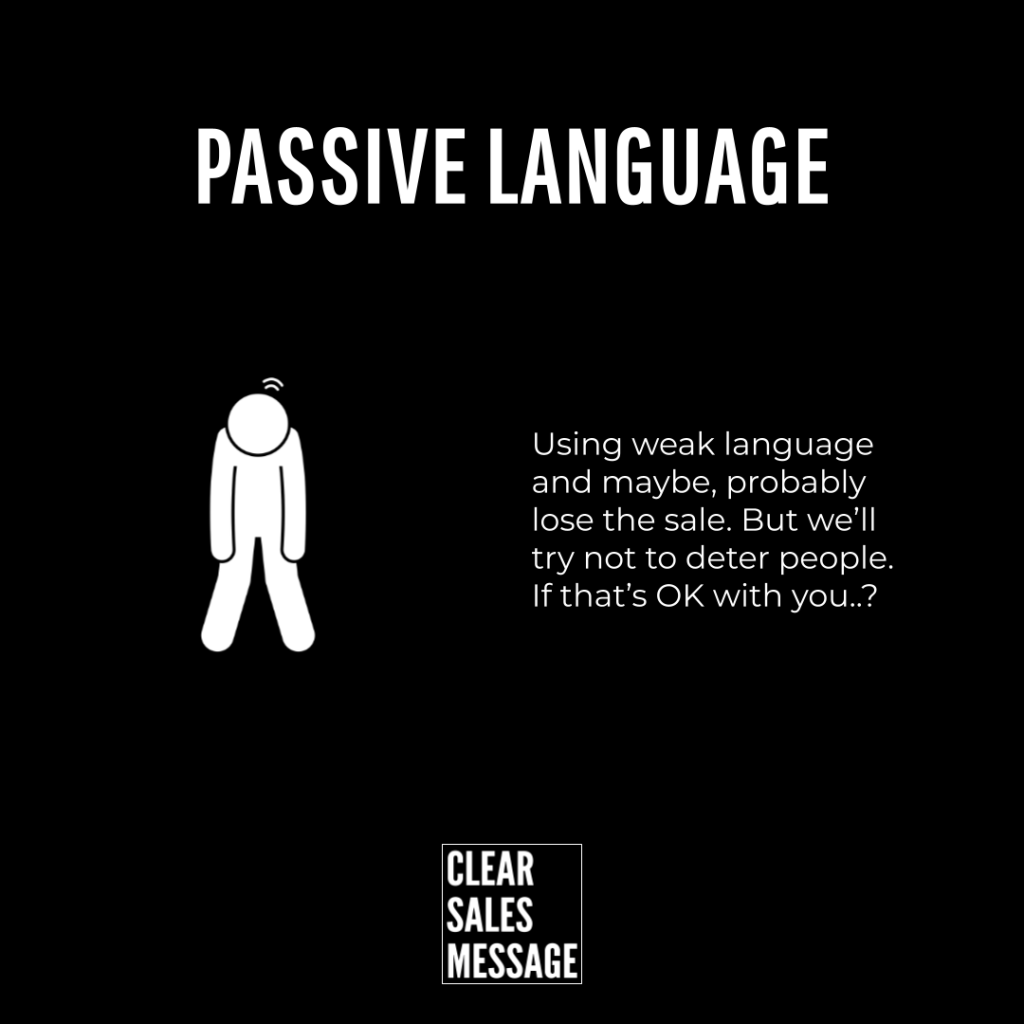
Your words give away your confidence, whether you mean them to or not.
So the wrong ones can make you sound unsure, even when you’re not.
That’s passive language. So it costs you more trust than you’d think.
Why Does It Work
Let’s use an example.
A client comes to me for a Clear Sales Message™, and I respond in two different ways.
1 – “Sure, I think we can help you, we’ll try to get a name for your methodology and hopefully also solve that issue with explaining X.”
2 – “Sure. We can definitely help you. We need to get a name for your methodology and solve that issue with explaining X as a matter of priority.”
Notice something in the second reply. I haven’t actually said anything different. Nor promised anything different.
But it sounds and feels far more compelling.
So the words alone shift how certain you seem.
How Can You Use It
Cut Passive Words From Your Vocabulary
Cut passive words like “try” and “aim” out of your vocabulary.
Because those words plant doubt before you’ve even finished the sentence.
So swap them for definite, certain language instead.
Stop Asking Permission
Stop seeking permission when you speak with buyers.
A question like “is that OK with you?” hands over control you don’t need to give away.
So state your plan instead. Let them react to it, rather than approve it first.
When It Works Best
This works best in client-facing moments, since those are exactly where confidence gets judged.
Proposals, calls and quotes all count.
So use it anywhere a buyer is deciding whether to trust you.
When It Becomes Dangerous
It becomes dangerous when certainty tips into arrogance.
Because a buyer can tell the difference between confident and pushy fast.
So back every certain statement with something you can actually deliver.
Otherwise the confidence collapses the moment you miss.
Common Mistakes
Overcorrecting Into Arrogance
Overcorrecting into arrogance is the most common mistake I see.
Because swapping “try” for “will” doesn’t mean you can promise the impossible.
So stay certain about what you’re doing, not about outcomes you can’t control.
Slipping Back Into Old Habits
Slipping back into old habits is the second mistake.
Because passive words creep back in the moment you stop paying attention.
So check your own emails and scripts often. Catch the slip early.
Passive Language – An Example
Common Confidence Swaps
There are too many confidence swaps to list, but these cover the most common issues.
“Try” becomes “We need to”
“Aim” becomes “We will”
“Is that OK with you?” becomes “This is what we plan to do”
“Should” becomes “We will do X”
See Also