Practical Sales Training™ > How To Convert > Personalised Discounts
Personalised Discounts
A blanket sale shouts at everyone. A personalised discount speaks to one person, at the exact moment they need a small push. The difference in how each one lands is huge.
This isn’t about being cheaper. It’s about being precise. The right offer to the right person beats the same offer sent to your whole list.
This page covers what a personalised discount is and why it works so well. It also shows you how to set one up properly, without training buyers to wait for a discount.
What Is A Personalised Discount?
A personalised discount is a targeted price cut offered to one specific person. It’s based on what they do, when they buy, how loyal they are, or how close they are to buying.
Instead of running a promotion for everyone, you tailor the offer to the person who needs a small push.
So it isn’t about being cheaper. It’s about being precise.
When you get this right, it feels thoughtful rather than desperate. The buyer doesn’t feel like they’re reacting to a public sale. Instead, they feel like they’re getting something built around their own situation.
Why Does A Personalised Discount Work?
Most sales get lost through hesitation, not outright rejection. Someone is interested. They see the value. They just pause, maybe wanting reassurance, maybe needing urgency, or maybe still weighing up other options.
A personalised discount cuts that friction at exactly the right moment. Instead of lowering prices across the board, you trigger an offer when a specific behaviour happens. That might be visiting your pricing page several times, abandoning a basket, or sitting through a webinar without buying. It could also be a renewal date getting close, or someone going quiet after a proposal.
Because the discount is tied to context, it feels earned rather than random. And because it’s selective, it also protects your margins. You’re not giving up revenue across your whole list. Instead, you’re boosting the odds of a sale exactly where momentum already exists.
It also shifts the mood of the whole sale. A blanket sale can signal too much stock or too much pressure. But a personal offer signals attention and relevance instead. That subtle shift matters more than people expect.
How Can You Use Personalised Discounts In Sales?
Find Where People Slow Down
Look at your data first. Where does interest drop off? Where do chats stall, or renewals slip? That pause point is exactly where a personalised discount belongs.
Set A Clear, Measurable Trigger
Once you find that pause point, set a clear trigger you can measure. It might be a set number of page visits, a length of time with no action, basket size, or a renewal window. The key is that the discount stays conditional and planned, not random.
Frame The Offer Around The Reason
When you send the offer, explain why it’s there. You might be holding a rate until a set date. Or you might offer loyalty pricing after a year together, or a private deal because someone joined a specific session. So that context gives the discount a real reason to exist.
Keep It Time Bound And Track The Result
Without a clear deadline, a discount soon stops feeling like a push and starts feeling like the norm. So always check the impact. If sales go up while your prices still feel fair, it’s working. But if buyers start waiting for a discount every time, the plan needs a rethink.
When Personalised Discounts Work Best
They work best when you already have data to act on, like browsing history, basket activity, or loyalty status. Without that data, a “personalised” discount is just a guess wearing a friendlier name.
They also work well at renewal time, or after a long relationship with a buyer. Loyalty gives you a real reason to offer something, rather than just a price cut for its own sake.
When Personalised Discounts Become Dangerous
They turn risky the moment buyers start to expect them. If every pause gets met with a discount, people learn to pause on purpose, just to trigger one.
They can also hurt trust if the personal touch feels fake. A “loyalty offer” sent to someone who’s never bought a thing is a clear example. So the data behind the offer needs to back up the story you’re telling.
Common Personalised Discount Mistakes
Triggering Discounts Too Easily
If one visit to a pricing page sets off an offer, buyers will quickly learn to expect one every time. Set the trigger high enough that the discount still feels earned.
Leaving Out The Reason
A discount with no explanation just looks like a random price cut. Always tie it to something specific about that buyer, so it reads as relevant rather than random.
Never Setting A Deadline
An open-ended discount removes any reason to act now. Without a clear window, buyers simply wait, because waiting costs them nothing.
Personalised Discounts – An Example
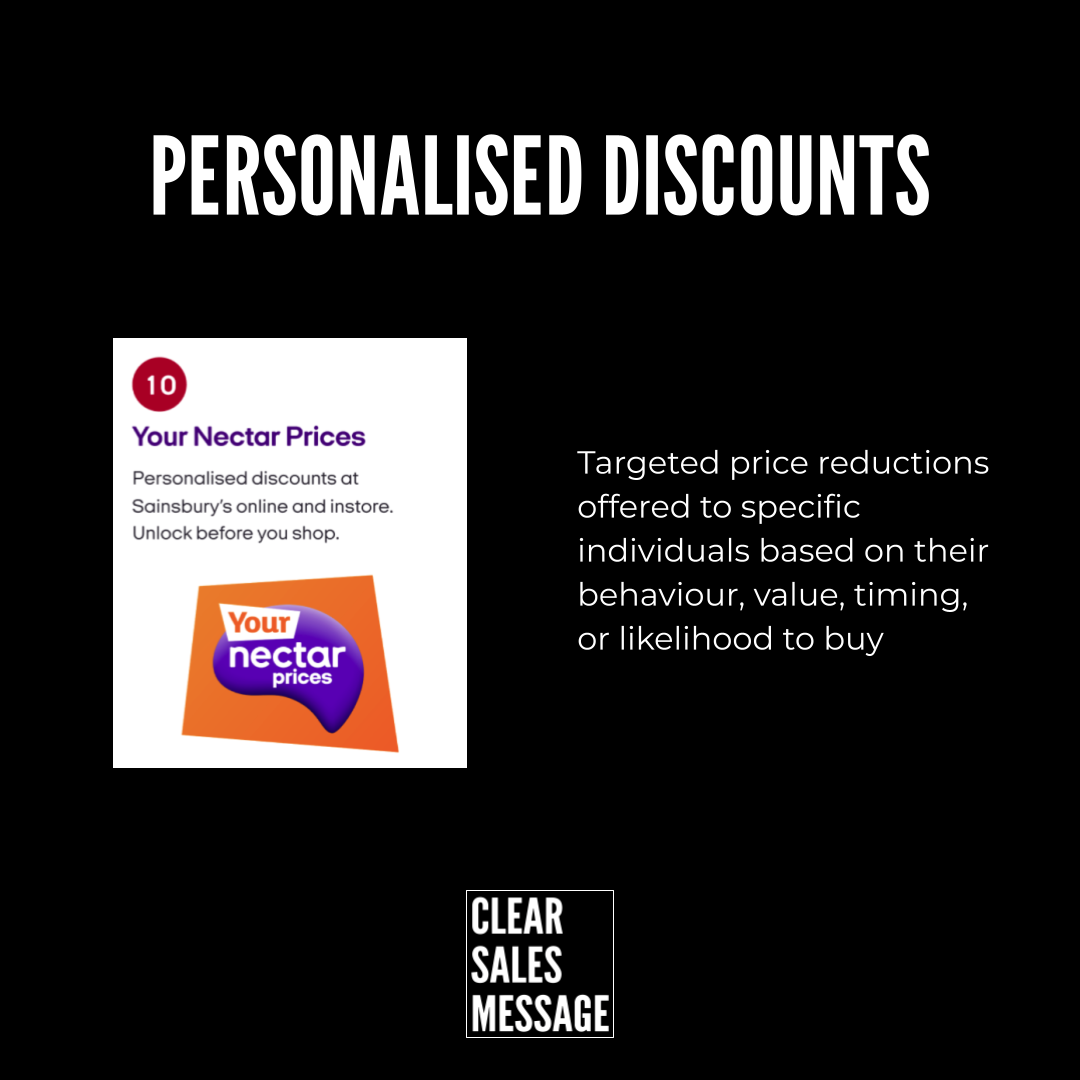
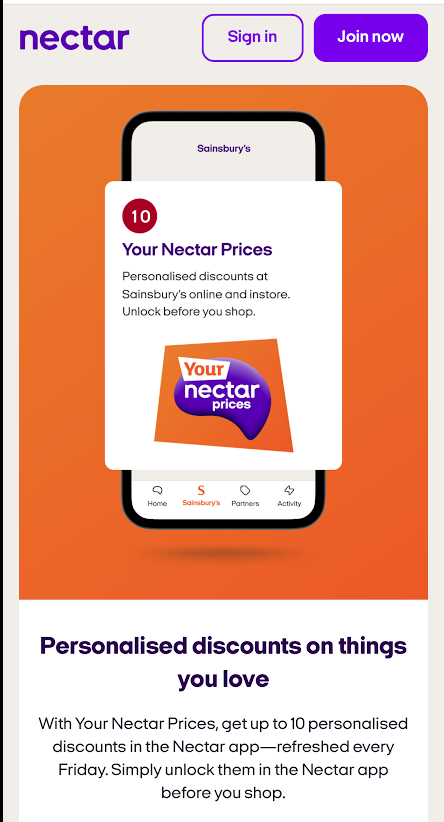
Sainsbury’s Nectar scheme runs on exactly this idea. Inside the app, “Your Nectar Prices” shows personal discounts built around what that one shopper actually buys. They refresh every Friday.
It isn’t the same offer for every customer. One shopper might see money off their usual coffee. Another might see a discount on nappies instead. The offer comes from their own shopping history, not one single sale sent to everyone.
That’s what makes it feel relevant instead of generic. The shopper isn’t reacting to a sale that landed on millions of people. They’re getting something that looks picked just for them. In a real sense, it was.
See also