Practical Sales Training™ > How To Lose The Sale > Pointless Discount

Pointless Discount
What Is It
A discount lands in someone’s inbox. They glance at it, shrug, and move on. Nothing about their decision just changed at all. That’s a Pointless Discount doing exactly nothing.
It’s a price cut that fails to change what a customer thinks, feels, or does. It looks like a deal. In reality, it offers little real value. So it’s usually too small to matter, too awkward to redeem, or simply irrelevant to the decision itself.
Why Does It Fail
Businesses reach for it hoping to create urgency or conversion. So when it’s done wrong, it does the opposite. It damages trust, and quietly reduces how valuable the offer feels.
It fails because it doesn’t shift thinking, feeling, or behaviour at all. So instead of motivating anyone, it can feel insulting, manipulative, confusing, or just inconvenient. Rather than encouraging a purchase, it raises eyebrows instead. A good discount feels like a genuine advantage. A pointless one just feels like noise.
How To Avoid It
Too Small To Matter
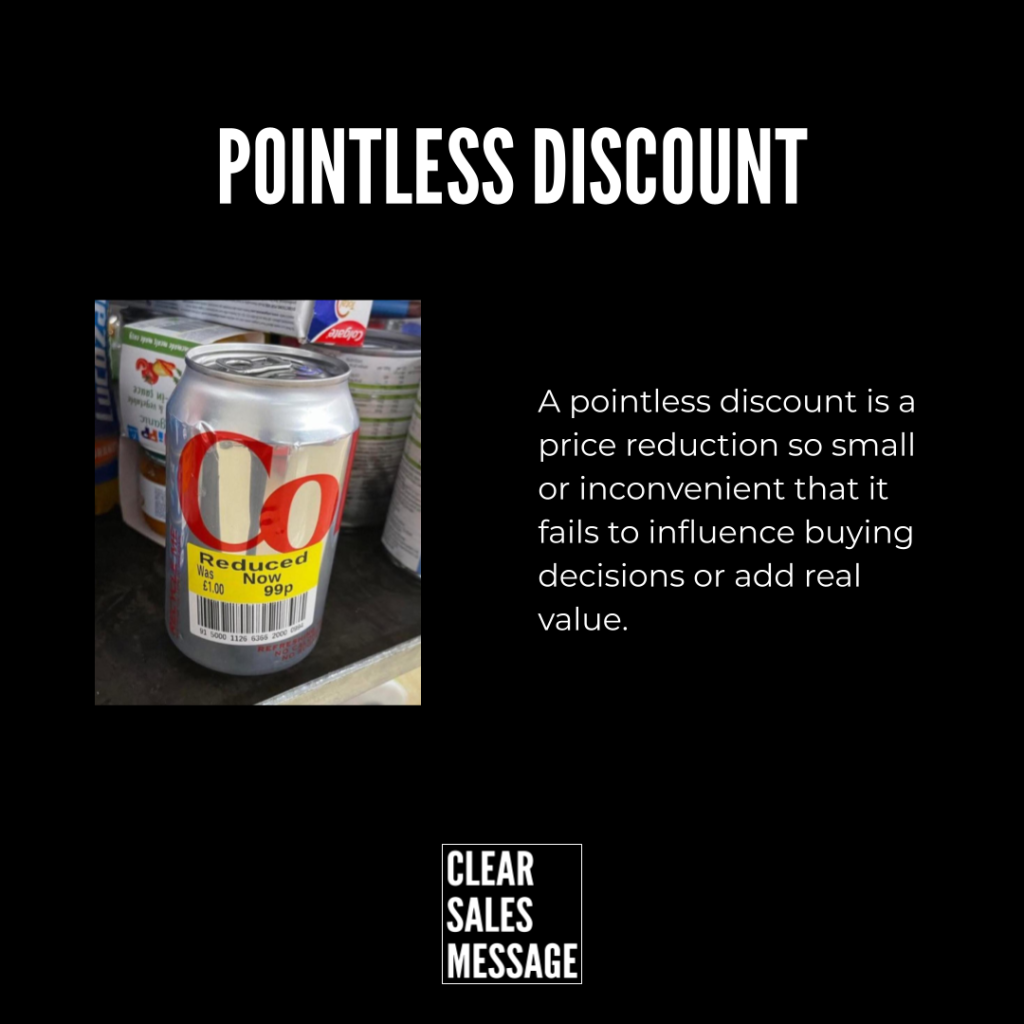
So watch for a discount that’s too small to matter. A one pound item dropping to ninety nine pence won’t motivate anyone. So it reads as a pricing trick. That can cheapen a high-ticket brand fast.
Costs More Than It Saves
Watch for a discount that costs more effort than it saves. Five pounds off, but only after a code, a signup, or three pages of clicks, adds friction nobody asked for. That’s a lot of effort.
Doesn’t Change Buying Behaviour
Watch for a discount that won’t change buying behaviour at all. Two percent off an infrequent, high-cost purchase is too small to tip the scale. So people either want it or they don’t. A tiny offer changes nothing either way.
Use Better Alternatives Instead
Use meaningful, time-limited offers instead, like twenty percent off until Sunday. Add value-add bonuses too, such as a free extra with every purchase. So round the numbers into something psychologically satisfying, like one hundred pounds dropping to seventy five.
When It Tempts Businesses Most
This tempts businesses most when they want to look generous without giving anything away. So a smaller real cost makes the trap more appealing.
It also shows up most in high volume, low margin businesses, where tiny discounts feel cheap to hand out. So low stakes tempt this mistake hardest.
When It Does The Most Damage
This becomes most damaging with high-ticket or premium products, where a token discount actively cheapens the brand. So more prestige means more damage.
It also does the most harm when redemption friction outweighs the saving itself. So a costly discount erodes goodwill instead of building it.
Common Mistakes
Rounding To An Insulting Amount
Some brands round to an amount that feels insulting rather than generous, like the classic penny off a pound. So test the number first.
Adding Unnecessary Redemption Steps
Others add unnecessary steps to claim a discount that was barely worth claiming in the first place. So keep redemption frictionless.
Discounting Things Buyers Weren’t Hesitating On
Some brands discount something buyers were never actually hesitating on. So aim the discount at genuine hesitation, not just habit.
Pointless Discount – An Example
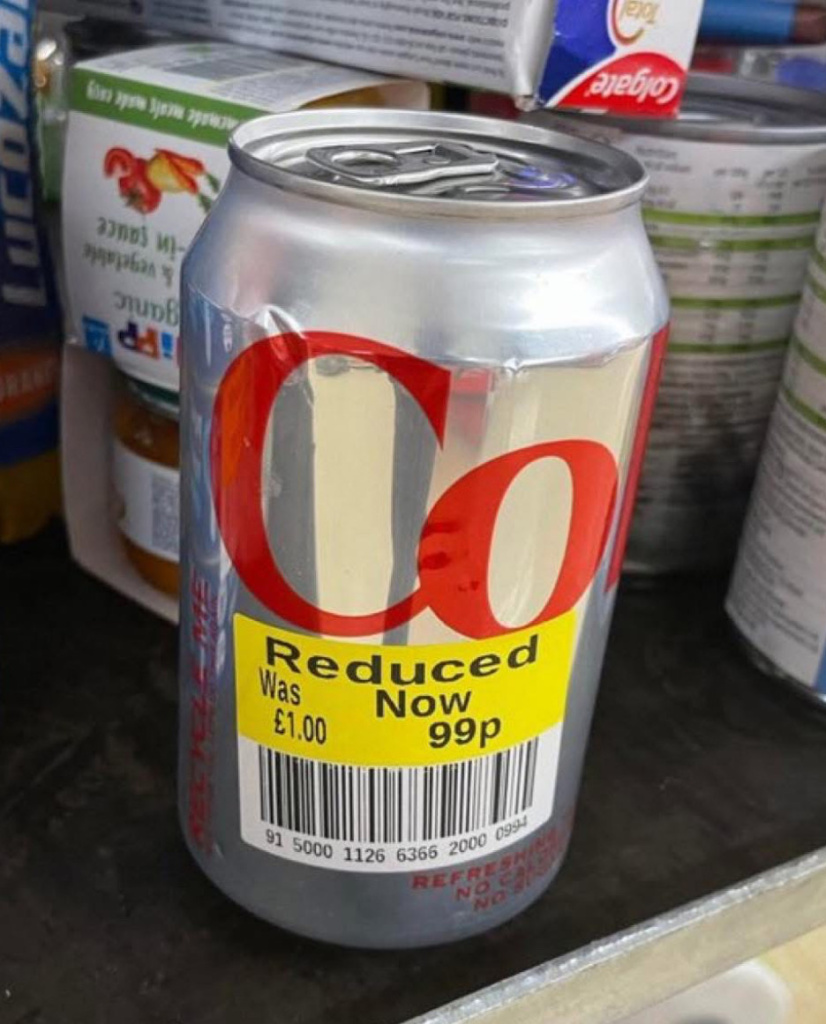
A Penny Off A Can Of Coke
A one penny saving on a can of Coke sums up the whole problem. Nobody chooses a drink over a single penny. So the discount exists on paper, and nowhere else in the buyer’s actual decision.
See also: