Practical Sales Training™ > How People Work > Precision Heuristic

Precision Heuristic
Say “we’ll improve your results” and a buyer has to guess what that means. Say “you’ll cut response time from 4 hours to 38 minutes” and they don’t have to guess anything. The second version is easier to believe, even if both claims are equally true.
That’s the precision heuristic at work. It’s the mental shortcut that makes exact, specific information feel more credible than round numbers or open-ended promises. The brain treats precision as a signal of real measurement, even when it isn’t.
This matters because most sales pitches are full of vague language. “Increase efficiency.” “Save time.” “Boost performance.” None of that gives the buyer anything to picture, so none of it sticks. Precision fixes that.
What Is The Precision Heuristic?
The precision heuristic is the tendency to trust information that sounds measured and exact over information that sounds vague or open ended. It’s a mental shortcut, not a conscious decision. Buyers don’t sit down and rationally weigh up your numbers. They just feel more confident when a claim sounds specific.
When a result comes with a defined outcome, a timeframe, or a clear constraint, it becomes easier to picture. The buyer can see what success actually looks like instead of imagining a fuzzy “better” version of their current situation.
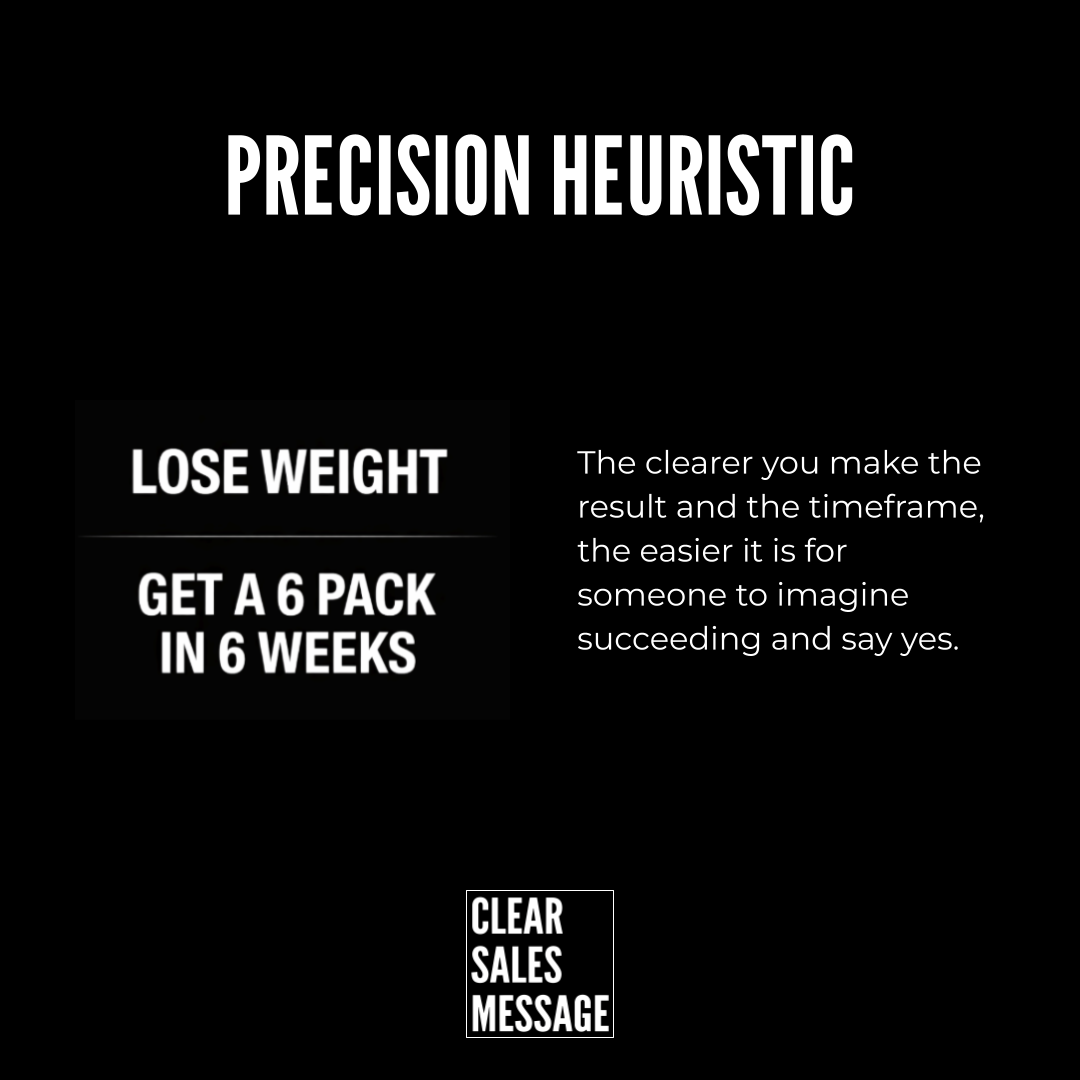
Compare “we’ll help you close more deals” with “we’ll help you close 3 more deals a month within 90 days.” The second one gives the buyer a finish line. The first one just gives them a hope.
So precision doesn’t just sound more professional. It gives shape to a promise that would otherwise stay abstract, and that shape is what makes people act on it.
Why Does The Precision Heuristic Work?
Buyers make decisions by running a kind of mental rehearsal. Before they commit to anything, they’re quietly asking themselves: can I picture this actually happening to me?
A vague claim forces the buyer to do that imagining themselves. They have to guess the timeline, guess the effort, guess the result. That guesswork creates friction, and friction creates hesitation.
A precise claim removes that work. The buyer isn’t being asked to construct a possibility from nothing. They’re being handed something that already feels structured and real. Because the path looks more predictable, the decision feels easier to make.
There’s research behind this too. Studies on judgement and decision making show that precise information helps people mentally simulate outcomes more easily, which makes the decision feel clearer and less risky. When a claim includes a defined result or a timeframe, people are far more likely to act on it than when the same claim is left open ended. (Source: Psychological Science Journal)
Precision also acts as a signal. It implies that someone has measured this before, tested it, or lived through it. Even a small detail, like an exact number or a specific timeframe, can raise how credible a claim feels, simply because it suggests understanding instead of guesswork.
How Can You Use The Precision Heuristic In Sales?
Define The Outcome, Not Just The Improvement
Don’t say things will “improve.” Say exactly what changes. Buyers trust a result they can picture far more than a result they’re told to expect.
Add A Timeframe
“You’ll see this within 6 weeks” does more work than “you’ll see this soon.” A timeframe lets the buyer judge whether the offer is realistic, so it becomes much easier to commit to.
Use Real Numbers, Not Round Ones
“38% faster” sounds more credible than “around 40% faster,” even though the gap is tiny. Odd, specific numbers read as measured. Round numbers read as estimated, or worse, made up.
Make The Result Easy To Picture
Frame the outcome in terms of something the buyer will actually see in their day to day work. The clearer the destination, the easier it is to want to move toward it.
Stay Honest
Precision should describe reality, not dress it up. If the number isn’t true, don’t use it. Credibility depends on your specifics matching what you can actually deliver.
When The Precision Heuristic Works Best
It works best when the buyer is comparing several similar options and needs a reason to trust one over the others. In a crowded market, the seller who says “you’ll cut onboarding time from 12 days to 4” stands out against five competitors all promising to “streamline the process.”
It also works well early in a conversation, before trust has had time to build. A precise claim gives a stranger a reason to keep listening, because it suggests you actually know your numbers instead of reciting a script.
When The Precision Heuristic Becomes Dangerous
Precision turns into a problem the moment it stops being true. If you promise an exact result and miss it badly, the buyer doesn’t just lose trust in that number. They lose trust in everything else you told them too.
It also backfires when it’s used to mask a weak offer. Buyers can usually sense when a precise-sounding number has been picked to impress rather than to inform. A suspiciously specific stat with no explanation behind it can do more damage than a simple, honest “it depends.”
So precision is a tool for clarity, not a tool for spin. Use it to describe something real, not to make something average sound exact.
Common Precision Heuristic Mistakes
Using Precision Without Proof
An exact number with nothing behind it just sounds invented. If you give a specific stat, be ready to explain where it came from.
Stacking Too Many Numbers At Once
One precise, well-chosen detail lands. Five of them in a row just overwhelm the buyer and start to feel like a sales pitch instead of a fact.
Picking A Number That Doesn’t Matter To The Buyer
“99.97% uptime” means nothing to a buyer who has never thought about uptime. Precision only works if it answers a question the buyer actually has.
Precision Heuristic – An Example
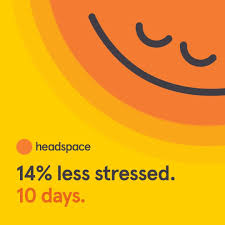
Headspace ran an ad that said “14% less stressed. 10 days.” Nothing else. No long explanation, no soft language about “feeling calmer over time.”
That specific number is what makes it work. “Less stressed” on its own is a claim anyone could make and nobody would remember. “14% less stressed in 10 days” sounds like it came from an actual study, even before you know whether it did. The oddness of the number, 14 instead of 15, is what makes it feel measured rather than invented.
It also gives the reader a finish line. Ten days is short enough to commit to without much thought, and 14% is specific enough to imagine. The claim does the buyer’s mental simulation for them, so there’s nothing left to guess.
See also