Practical Sales Training™ > How People Work > Present Bias
Present Bias
You show a buyer a plan that pays off big in a year. They nod and say it makes sense. Then they buy a cheap quick fix from someone else. That’s present bias at work. And once you see it, you’ll spot it behind lots of the deals you lose to “not right now.”
What Is Present Bias?
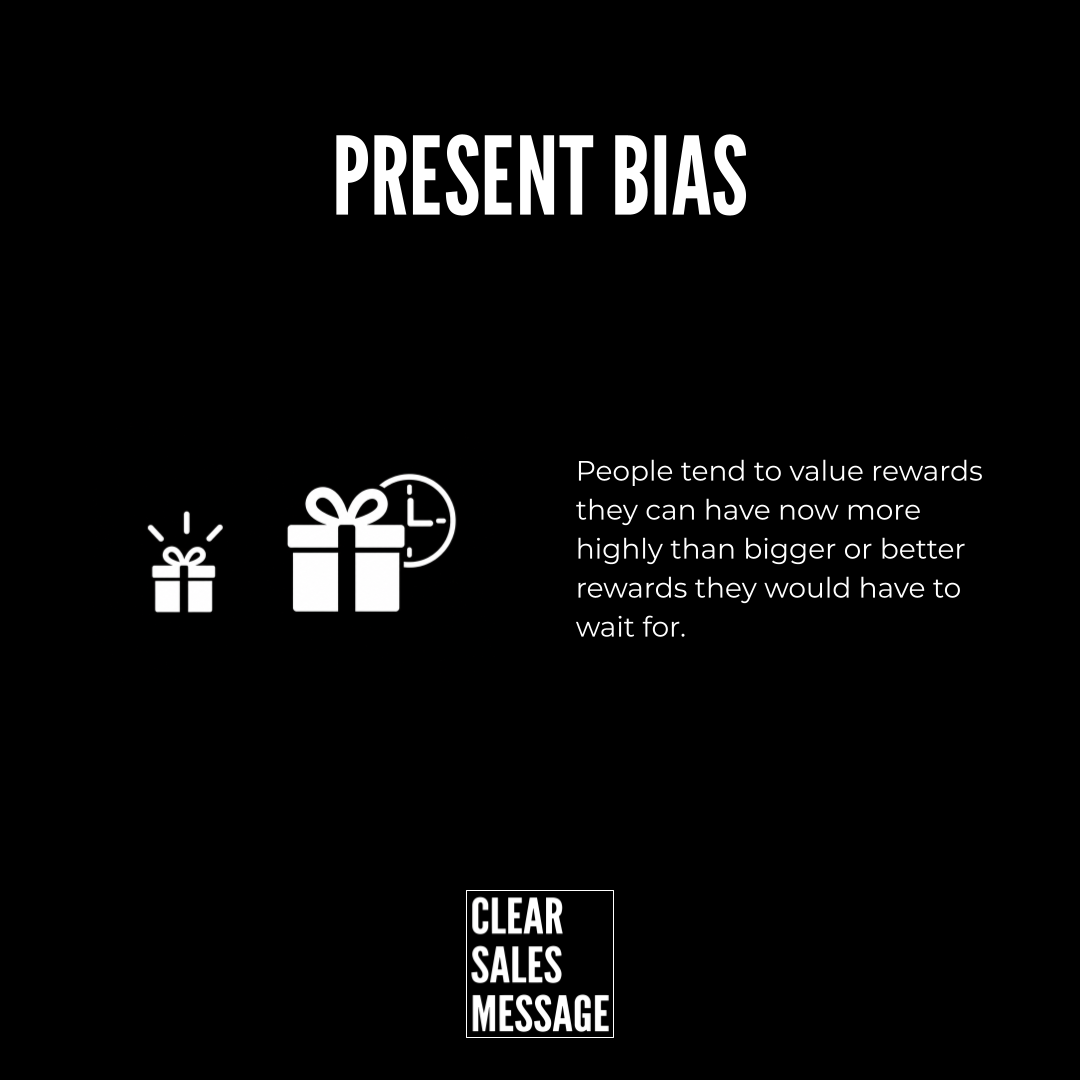
Present bias is the pull we feel toward rewards we can have today. So a small win now feels worth more than a big win next year. That holds even when we know the later prize is better. In fact, the gap between now and later does most of the work.
It shows up everywhere. You skip the gym because the sofa is right here. Then you buy the cheap tool because the budget pain hits today. And your buyer puts off a project because the payoff sits in next year’s numbers. But the cost lands this month.
Why Does Present Bias Work?
For most of history, later wasn’t a promise. Food today beat food maybe tomorrow. So now feels safe, and later feels like a guess.
Later also feels vague. You can picture today’s reward clearly. But next year’s reward is fuzzy, so it feels smaller than it is. As a result, the mind trims its value down.
Then there’s risk. Future value needs lots of things to go right. Your buyer has to trust you, the plan, their own team and the market. Each one is a chance for it to fall apart. Meanwhile, the thing they can have today carries none of that doubt.
How Can You Use Present Bias?
Give Them A Win This Week
If your big payoff sits six months out, find something they get straight away. That could be a quick audit, a first result, or one painful problem fixed in week one. Suddenly the deal feels real. As a result, the long term value gets easier to believe.
Bring The Cost Of Waiting Into Today
Buyers treat the cost of delay as a future problem. So bring it forward. Put a figure on what staying put costs them this month. For example, losing two deals a week to slow follow up stings. Yet buyers shrug off a vague warning about growth. People act on today’s pain, and they park next year’s.
Break The Payoff Into Steps They Can See
A one year plan feels like one long wait. However, twelve monthly milestones feel like twelve small wins. Each step gives your buyer a reason to keep going. It also gives their boss something to point at.
Make The First Step Tiny
The further away the reward, the smaller your first ask needs to be. A pilot, a trial or a short call all feel like now decisions. So they slip past the urge to put things off. Then, once they’ve started, the bigger choice feels like carrying on.
When Does Present Bias Work Best?
It works best when your buyer is under pressure today. A sales director missing target this quarter cares far more about next month than next year. So shape your offer around that.
It also helps when your product truly delivers something fast. In that case, you’re simply pointing at a real early win. And it’s strong with new leaders too. Someone fresh in a role needs a quick result to prove they were the right hire.
When Does Present Bias Become Dangerous?
It turns ugly when you push people into deals that hurt them later. Teaser rates, hidden lock ins and buy now pay later traps all lean on present bias. They feel good today. Yet the bill arrives later, and so does the anger.
It also backfires if you overpromise the quick win. If week one flops, your buyer stops trusting what you said about month twelve. So only promise the early win you know you can hit.
There’s a quieter risk as well. Sell only the short term and you attract buyers who only care about the short term. So they leave fast. They haggle hard too.
Common Mistakes With Present Bias
Leading With The Long Term Return
Lots of sellers open with the big three year return. It’s their best number, so it feels like their best pitch. But to your buyer, it’s the furthest away. That makes it feel like the weakest. So lead with what changes soon, then build up to the big number.
Treating “Not Now” As A Real Objection
When a buyer says “let’s look at this next quarter,” it’s often present bias talking. The cost of change feels real today. Meanwhile, the gain feels far off. So instead of chasing them, show them what next quarter costs.
Faking The Deadline
Countdown timers and “offer ends Friday” can trigger present bias. However, buyers spot fake deadlines fast. And once they do, your real deadlines stop working too.
Forgetting Your Buyer’s Boss
Your contact may be sold on the long game. But their finance team lives in this year’s budget. So give your champion a short term win they can take upstairs. Otherwise the deal stalls in a meeting you’re not in.
Present Bias – An Example
The Marshmallow Test
In the late 1960s, Walter Mischel ran a now famous study at Stanford. Children sat alone in a room with a treat, often a marshmallow. They could eat it straight away. Or, if they waited around fifteen minutes, they’d get two.
Some kids ate it in seconds. Others covered their eyes, sang or turned away to hold out. Later studies linked waiting to better results in life. Still, newer work suggests home background explains much of that link.
For sales, the lesson is simple. Your buyer is the kid staring at the marshmallow. And your two later is up against someone else’s one now. So either hand them a marshmallow today, or make the wait feel easy.
See Also