Practical Sales Training™ > How To Convert > Presupposition
Presupposition
Ask a buyer “Do you want to go ahead?” and you invite a yes or a no. But ask “Which day suits you for set-up?” and something shifts. Now they’re thinking about the day, and the yes is already in the room.
That’s Presupposition. You build your goal into the sentence as a given. So the buyer focuses on the next step instead of the big decision.
What Is Presupposition?
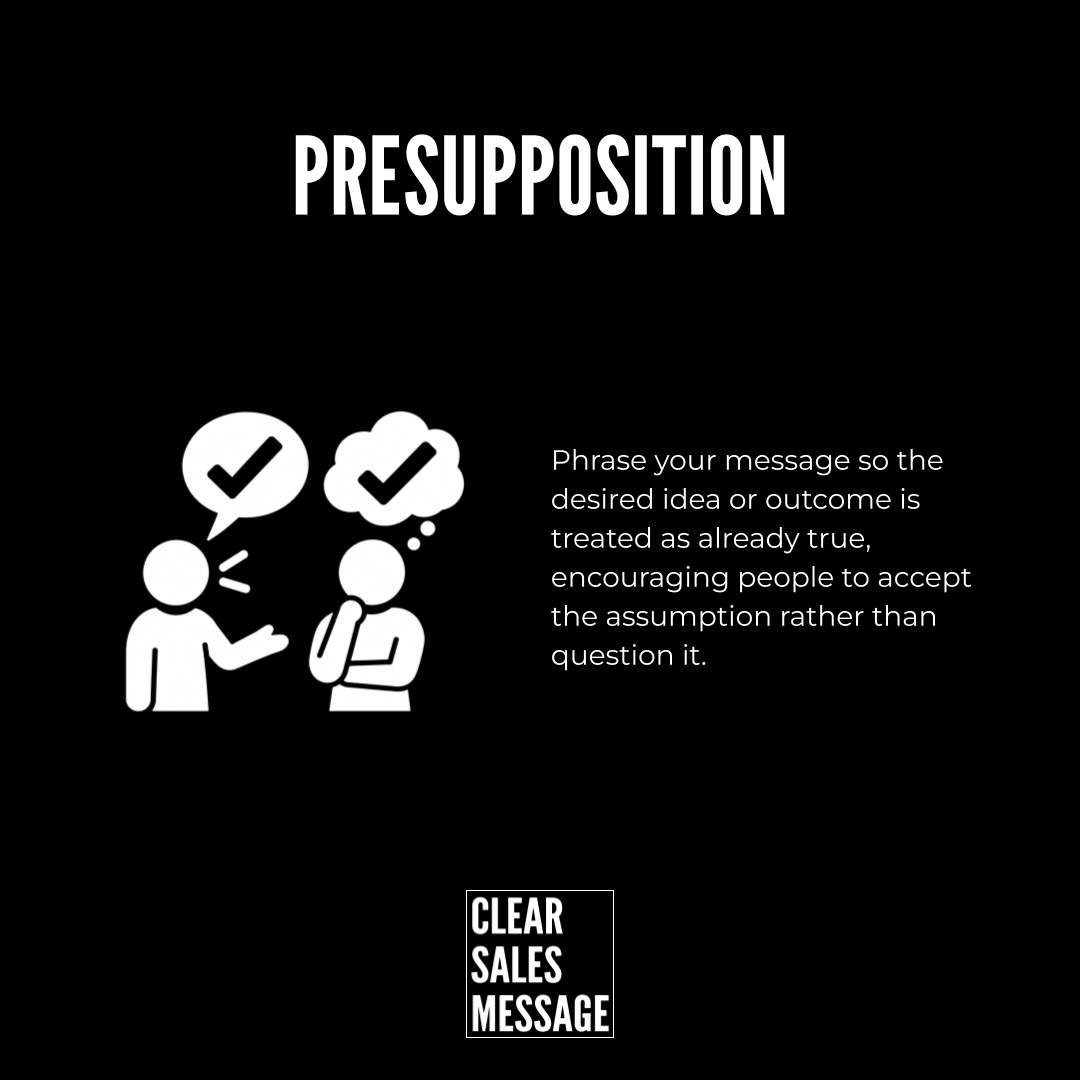
Presupposition means treating an idea as already true in the way you phrase it. You assume the idea and talk about what comes next. So the buyer meets it as a fact rather than a claim.
Small words carry a lot of it. “When you start,” “after you switch” and “which option” all assume a choice the buyer hasn’t made out loud. Most people never notice.
It works in B2B too. “Who else should join the kick-off call?” assumes there will be a kick-off. So the buyer starts planning instead of weighing up.
Why Does Presupposition Work?
It works because people question claims but accept assumptions. A claim sits in front of them, inviting debate. But an assumption hides inside the sentence. As a result, it slips through.
It also saves effort. Rejecting an assumption means stopping and rethinking. Most people won’t bother unless something feels wrong.
Then there’s momentum. Talking about delivery, start dates or colours makes the purchase feel real. In fact, the buyer starts to picture life after the yes.
Finally, it lowers the pressure. A choice between two days feels small. So the buyer can say yes without feeling pushed.
How Can You Use Presupposition?
Here’s how to use it well.
Offer A Choice Between Two Yeses
Instead of asking whether, ask which. For example, “Would you like the monthly or the yearly plan?” Both answers move the sale forward.
Use “When” Instead Of “If”
“If you sign up, you’ll get…” leaves room for doubt. But “When you sign up, you’ll get…” assumes it will happen. That one word changes how the buyer pictures the next step.
Talk About Life After The Purchase
Describe what happens once they’re up and running. For example, “In your first week, your team will see…” So the buyer starts living in the future you describe.
Ask About Next Steps Early
Questions like “Who will be using it day to day?” assume the deal is heading somewhere. They also give you useful details. As a result, you learn more while the buyer leans in.
Use It In Your Copy Too
Web pages can do this as well. “Pick your plan” assumes they’ll pick one. Similarly, “Start saving today” assumes they want to save. So your buttons and headlines can nudge without pushing.
When Does Presupposition Work Best?
It works best when the buyer has already shown real interest. Then the assumption matches where they are. So it feels like help rather than pressure.
It also shines near the end of a sale. Once you’ve answered the main questions, a small choice can tip them into action.
And it works well in written copy. Readers can’t argue back mid-sentence, so the assumption carries them along.
When Does Presupposition Become Dangerous?
It gets dangerous when you use it too early. If the buyer hasn’t decided anything, the assumption feels like a trick. As a result, they pull back and trust you less.
It also backfires when it’s obvious. Buyers know the “red or blue?” close. So if it feels like a script, it can make you look pushy.
Watch out for assuming facts that aren’t true. Assume a problem the buyer doesn’t have, and you look like you weren’t listening. And that costs you the sale.
What Are The Common Mistakes With Presupposition?
Most mistakes come from using it as a trick instead of a nudge. Here are the ones I see most.
Jumping Ahead Too Soon
Asking about delivery days in the first meeting feels silly. So wait for real buying signals first. Then assume the next step.
Ignoring A No
Sometimes the buyer rejects the assumption. That’s fine. So listen and go back a step instead of pushing on.
Stacking Too Many Assumptions
One assumption feels natural. Five in a row feels like pressure. So use it once or twice, then let the buyer speak.
Using It To Hide Bad News
Burying a cost or a catch inside an assumption might win the sale. But it loses the trust. So keep anything the buyer needs to know out in the open.
Presupposition – An Example
Tuesday Or Thursday?
A salesperson assumes the buyer is going ahead.
Instead of asking:
“Would you like to go ahead with the purchase?”
They ask:
“Would you prefer delivery on Tuesday or Thursday?”
Why it works: The question presupposes that the buyer has already decided to purchase. It shifts their attention from whether to buy to when they would like delivery.
The buyer can still reject the assumption, so this works best when they’ve already expressed genuine buying intent.
See Also