Practical Sales Training™ > How To Convert > Product Market Fit
Product Market Fit
You can have a great product and still struggle to sell it. I see it all the time. The demos go well, but deals stall anyway. So the team blames the price, the timing or the sales people. Yet the real issue often sits further back. The product and the buyers simply don’t fit each other yet.
Product market fit is the point where that changes. Suddenly buyers start to pull, so you stop having to push. And because the sale gets easier, the rest of the business gets lighter too.
What Is Product Market Fit?
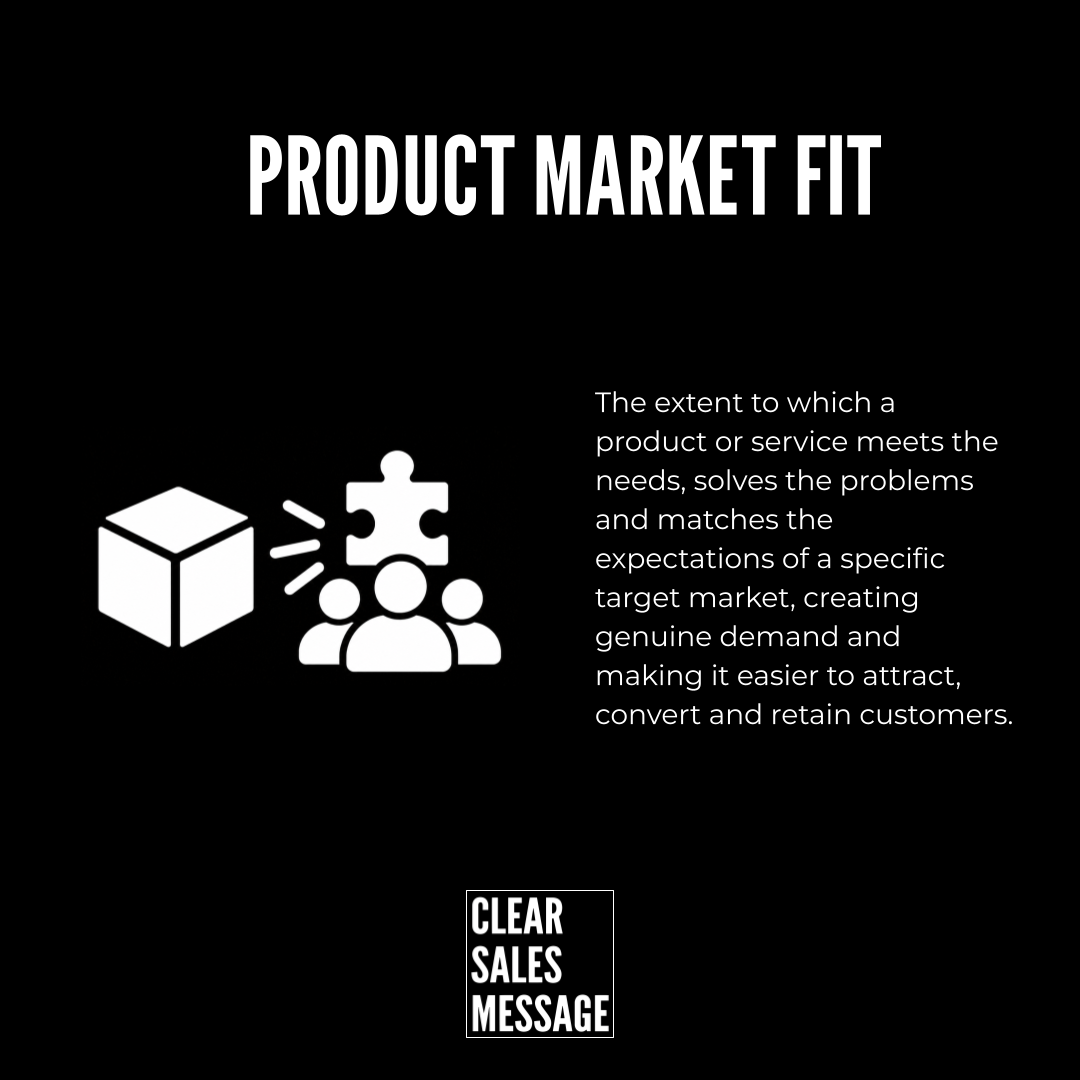
Product market fit is how well your product meets the needs of one clear group of buyers. It solves a problem they already feel. Plus it matches what they expect to pay, get and go through. So when you have it, demand feels real. As a result, buyers come to you, buy faster and stay longer.
Notice the word fit, though. Fit always works both ways. A great product can still fit badly if you aim it at the wrong people. And a simple product can fit perfectly. It just needs to fix the pain one group lives with every day.
Here’s the part most firms miss. Fit lives in the buyer’s head. So if they can’t see how you fix their problem, the fit stays hidden. And hidden fit won’t sell.
Why Does Product Market Fit Work?
Buyers act when they feel a real problem and trust you to fix it. Product market fit is the moment that happens for a whole group at once. So the sale stops feeling like a sale. Instead, it feels like help that turned up at the right time.
Fit also cuts the cost of every step in the sale. For example, your adverts get better replies because the words land. Sales calls get shorter too, since buyers grasp the point fast. And clients stay, so your growth stops leaking out the back door.
Word of mouth kicks in as well. Happy buyers tell people like them. In turn, those people tend to have the same problem. So growth starts to feed itself. That’s why fit beats most tactics you’ll ever try.
How Can You Use Product Market Fit?
Start With The Buyers Who Love It
Look at the clients who bought fast, paid without fuss and stayed. They’re your clearest sign of fit, so study them closely. Which job did they hire your product to do? What were they using before? And how did they describe the problem in their own words?
Then copy those words into your message. Buyers trust language that sounds like their own. In fact, one line from a happy client can beat a day of brainstorming. So keep a list of the phrases they use.
Narrow The Market Before You Widen It
Fit is easier to find in a small, sharp group. So pick the one type of buyer where your product works best. Then own that space first. Yes, it feels like you’re turning work away. But a message for everyone lands with no one. Once the engine runs, you can grow outwards.
Test The Message Before You Rebuild The Product
When sales stall, firms often rush to add features. But the product may be fine. Instead, the buyer might simply not get what it does for them. So before you spend months building, try a sharper message on a small group. If replies jump, you had a message problem all along.
Watch What Buyers Do
Buyers are polite. They’ll say an idea sounds great and then never buy. So track action instead. Look for repeat buys, full price deals and referrals. Also listen to the questions they ask. When buyers stop asking why and start asking how soon, you’re getting close.
When Does Product Market Fit Work Best?
Product market fit works best when the problem hurts and keeps coming back. Better still, it costs money to ignore. That pain gives buyers a reason to act today. And because the cost grows each week, deals don’t drift into next quarter.
It also works best with a clear buyer. Know their role, pressure and deadline, and you can write straight to them. As a result, they read your message and think, that’s me.
Timing helps too. For example, a new Head of Sales has a fresh target. And they have a short window to prove themselves. So a product that fixes their problem fast fits better now. A year later, the same pitch might land flat.
When Does Product Market Fit Become Dangerous?
Fit can fool you. Early sales often come from friends, fans or buyers you won over through sheer effort. So the numbers look good. But they won’t repeat once you step back. That’s false fit, and it’s easy to scale by mistake.
Discounts can fake it too. If buyers only buy at half price, they may want the deal more. Then, when the price goes back up, demand drops away.
Fit also fades over time. Markets move, rivals copy you and buyer needs shift. So the fit you had two years ago may have slipped. If sales feel harder each quarter, check the fit before you blame the team.
What Are The Common Mistakes With Product Market Fit?
Calling It Too Early
A few big wins feel like proof. Still, one-off deals rarely make a pattern. So wait until buyers you’ve never met start to buy again and again. Until then, treat it as a good sign and keep testing.
Trying To Fit Everyone
Firms widen the market to grow faster. But each new group needs its own message and its own proof. Often it needs new features too. As a result, the product starts to fit no one well. Instead, win one group fully, then add the next.
Asking Buyers What They Want
Buyers are poor at guessing what they’d buy. However, they’re great at telling you what they did. So ask about the last time the problem cost them money. Then ask what they tried and why it failed. Those answers show you where real demand sits.
Fixing The Product When The Message Is Broken
This one costs firms a fortune. They see slow sales and build more features. Yet the buyer still can’t see why it matters to them. So the product grows, but the message stays vague and sales stay flat. Fix the explanation first, because it’s faster and far cheaper.
Product Market Fit – An Example
The Booking Tool That Found Its Buyers
Picture a small software firm selling a booking tool. They pitch it to any business that takes bookings. That means salons, gyms, tutors, the lot. The demos go fine, but few people buy. So the team plans a big new feature to fix it.
Then they look at who actually stayed. Nearly all their loyal clients turn out to be small physio clinics. And those clinics share one painful problem. Missed slots cost them money every week, so the reminder texts pay for themselves.
So they drop the feature plan. Instead, they rewrite the message for clinic owners only. Now the headline talks about empty slots and lost income. It also uses the words clinic owners used on calls. As a result, replies go up, calls get shorter and more clinics sign.
Yet the product barely changed. The fit was there all along, hidden behind a message aimed at everyone. So your job is to find the buyers it fits and say it in their words.
See Also