
Practical Sales Training™ > Selling Communication Basics > Protective Domains

Protective Domains
What Is It
Stop your competition and protect your brand by owning the domain names for your business, product, or service. Own the obvious one, and own the close alternatives too.
It’s a small piece of prevention most businesses skip entirely. Skipping it costs nothing today, but it can cost plenty later.
Why Does It Work
It works because anyone looking to copy or compete with you needs a domain name to operate a website from. Take the obvious ones off the table, and you remove that option entirely.
I’d rather spend a few pounds a year protecting my business from copycats. That beats spending thousands later defending my market share in a legal dispute.
How Can You Use It
Own The Obvious Domains
Own the “.com” domain for your business, product, or service, without exception. This is the version most people will type first.
Own The Close Alternatives Too
Own the close alternative names your competitors could realistically use. A near identical domain in someone else’s hands can confuse buyers or worse, actively work against you.
Aim For The Vernacular Term
As a bonus, try to own the vernacular term for your offering, if one exists. A prime example of this is diy.com in the UK, which owns the exact word people already use.
When It Works Best
It works best early, before a market grows crowded and the obvious domains disappear. Securing names before you actually need them is far cheaper than chasing them later.
It’s also valuable in markets with a lot of copycat competition. A near identical domain could genuinely confuse a buyer mid search.
When It Becomes Dangerous
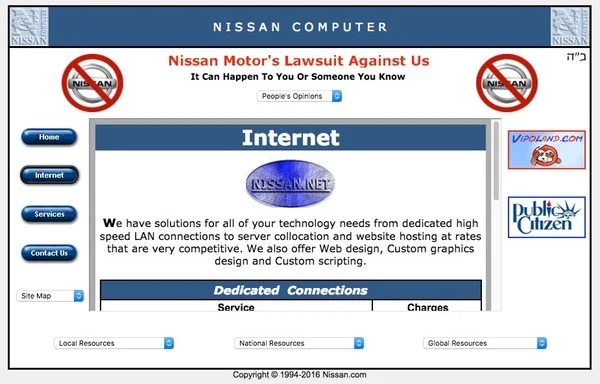
Skipping this protection can go badly wrong, and not just in theory. Someone other than Nissan currently owns nissan.com, according to Bitdefender. They’ve reportedly turned the site into a page criticising the company, after alleged pressure to hand the domain over.
Whoever secures a domain first often holds real power over it. Waiting too long to secure your own names can leave you negotiating from a position of weakness. In the worst case, you’re left with no leverage at all.
Common Mistakes
Only Buying The Exact Match
Owning just your precise business name, while ignoring close misspellings or variants, is a real gap. It leaves an easy opening for competitors to slip into.
Waiting Until There’s A Problem
Deciding to secure domains only after a competitor already grabbed one is far more expensive, and sometimes simply impossible. Act before it becomes urgent.
Letting Registrations Lapse
Forgetting to renew a protective domain can hand it straight to someone else overnight. Set renewals to auto pay, and check them regularly regardless.
Protective Domains – An Example
Owning The Alternative Name
Among others, I own the domain clearbrandmessage.com. This stops competitors from using the term, and it also catches visitors who don’t quite remember my actual name.
A single alternative domain like this costs very little. Yet it quietly closes off a route a competitor could otherwise use against me.

See also