Practical Sales Training™ > How To Get Attention > Rebranding

What is rebranding?
Rebranding is the act of updating the signal your business sends to the market.
It’s not just a new logo, colour palette, or font.
It’s a deliberate shift in how your business is perceived so your outward message matches where the business is now, not where it started.
Rebranding exists to correct drift.
When your offer evolves, but your brand doesn’t, confusion creeps in.
And confused buyers don’t convert.
A well-timed rebrand realigns perception, positioning, and expectation in one move.
How does rebranding work?
Rebranding works by changing the mental shortcut buyers use to judge you.
People don’t analyse brands deeply. They scan them.
They use visual and verbal cues to decide:
-
Is this relevant to me?
-
Is this modern or outdated?
-
Is this premium or budget?
-
Is this for where I am now?
When a brand updates, it sends a clear signal:
“We’ve moved on.”
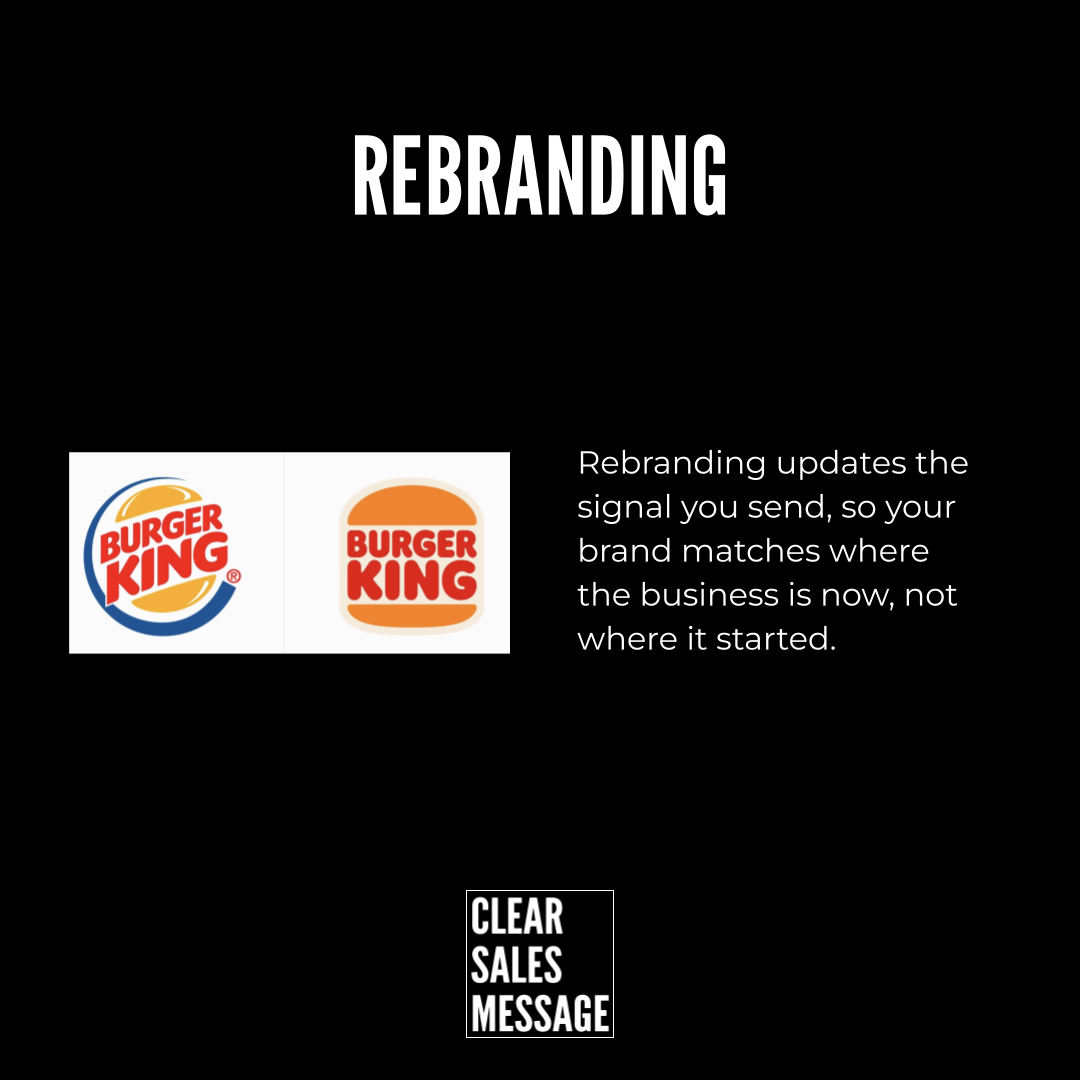
That’s why companies like Burger King didn’t just change their logo for aesthetics.
They simplified it to reflect confidence, heritage, and clarity.
The brand finally matched the business they’d become.
Rebranding works when it reduces friction between:
-
What you are
-
What buyers think you are
How can you use rebranding?
Rebranding is most powerful when used intentionally, not emotionally.
You should consider it when:
-
Your offer has improved but your brand still feels junior
-
You’re attracting the wrong type of buyer
-
Your pricing has increased but your brand doesn’t justify it
-
Your messaging feels harder to land than it used to
Used well, rebranding helps you:
-
Reset buyer expectations before the sales conversation starts
-
Make your message feel more credible without adding proof
-
Signal progress, growth, and maturity instantly
-
Reduce the need to explain or justify your position
Rebranding isn’t about becoming something new.
It’s about catching up with what you already are.
When rebranding goes wrong
Rebranding only works when it reflects reality.
When it’s disconnected from how buyers already see you, it creates friction instead of clarity.
A classic example is Gap.
Gap changed its logo abruptly, without any meaningful change in product, positioning, or customer experience.
The signal changed. The business didn’t.
Buyers didn’t feel progress.
They felt confusion.
The backlash wasn’t about taste.
It was about trust. The new brand didn’t match the mental model people already held, so it was rejected.
Bad rebranding usually happens when:
-
The brand changes before the business does
-
The update is cosmetic rather than communicative
-
Familiarity is removed without a clear replacement signal
-
The brand tries to look “modern” instead of accurate
Rebranding isn’t about novelty.
It’s about alignment.
When the signal changes without substance behind it, buyers feel it instantly.
See also