Practical Sales Training™ > How To Get Attention > Recognisable Spelling
Recognisable Spelling
What Is It
Recognisable Spelling means deliberately changing the spelling of a familiar word, usually to echo your brand name, while keeping it instantly readable.
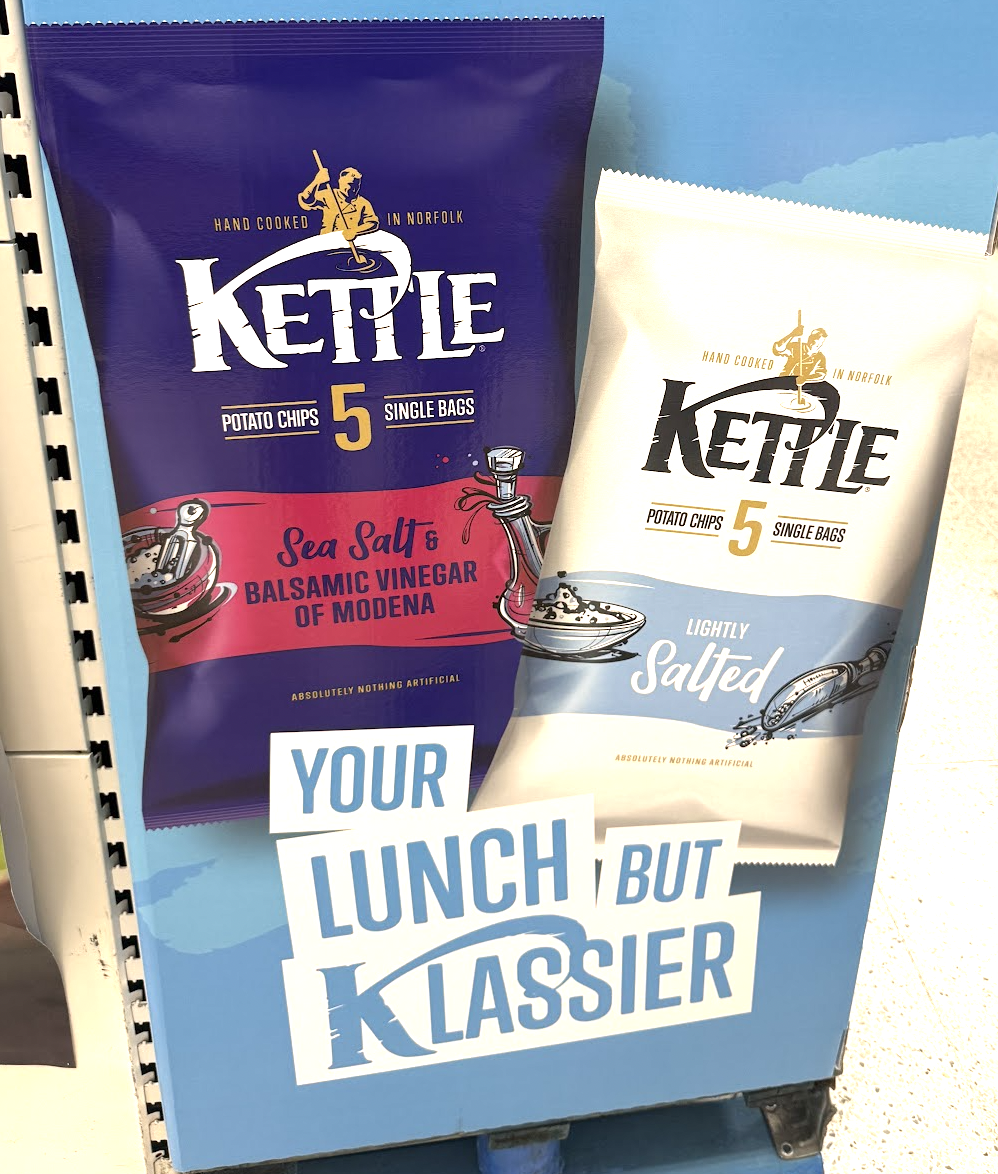
“Klassier” instead of “Classier” is a clear example. The word still works exactly as before. It just now carries your brand inside it.
Why Does It Work
Every time someone reads that altered word, your brand name gets reinforced again, whether they consciously notice it or not. It’s repetition disguised as ordinary language.
A familiar word spelled slightly wrong also snags attention in a way a correctly spelled one never does. The brain expects one thing, gets something close but different, and pauses just long enough to actually register it.
It also makes an ordinary word feel like it belongs to you. Anyone can say “classier.” Almost nobody else can credibly say “Klassier,” because that spelling only makes sense next to your specific brand name.
How Can You Use It
Anchor The Swap To Your Actual Brand Name
A random misspelling means nothing. The altered letter or sound needs to directly echo your brand name or initial, so the connection is obvious even to someone seeing it for the first time.
Keep It Instantly Readable At A Glance
If someone has to pause and work out what the word actually says, it’s failed. The altered spelling should read as the original word immediately, with the brand connection landing a split second later, not instead of it.
Reuse The Same Swap Everywhere, Not Just Once
One clever spelling on one piece of packaging barely registers. Repeat the exact same swap across your packaging, ads and social copy, so people start to recognise your specific version of the word wherever they see it.
When It Works Best
This works best on packaging, shelf displays and short, punchy taglines, anywhere a buyer only has a second or two to notice you. It suits brand names with a strong, distinctive letter or sound that can genuinely carry a familiar word.
When It Becomes Dangerous
It becomes a problem the moment it looks like a genuine spelling mistake rather than a deliberate choice. Buyers forgive cleverness. They don’t forgive what looks like carelessness on a product they’re about to trust with their money.
It’s also risky in formal or technical contexts, where credibility matters more than charm. A playful spelling swap in a legal document or a safety notice undermines the seriousness the moment demands.
Common Mistakes
Altering A Word With No Connection To The Brand
If the swapped letter doesn’t obviously tie back to your brand name, it just looks like a typo. The connection needs to be immediate, not something you have to explain afterwards.
Using It On Too Many Words At Once
One altered word in a sentence feels clever. Three or four in the same line just feels hard to read. Save the technique for a single, well chosen word rather than spreading it across everything.
Forgetting It Needs To Still Be Instantly Readable
Some brands get so attached to the wordplay that the result becomes genuinely hard to parse. If someone has to sound it out, the clever spelling has already cost you more attention than it earned.
Recognisable Spelling – An Example
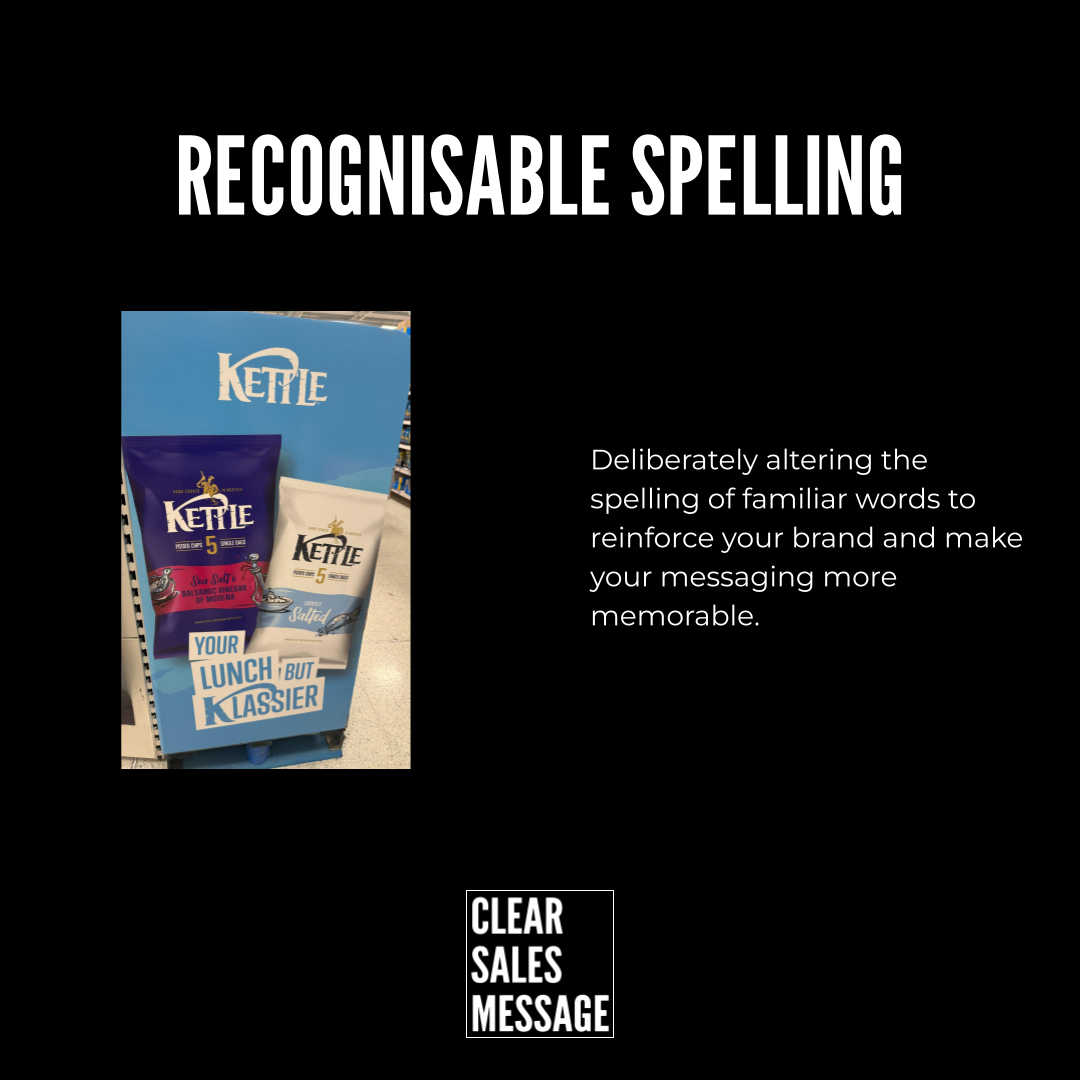
Kettle Chips do this well on their in-store displays, running the line “Your Lunch But Klassier” instead of “Classier.” The swapped K echoes the brand’s own logo, which uses the same bold, slightly worn lettering style throughout the display, tying the wordplay directly back to the packaging sitting right next to it.
See Also