
Practical Sales Training™ > How To Keep Your Clients Happy > Retention Discount

Retention Discount
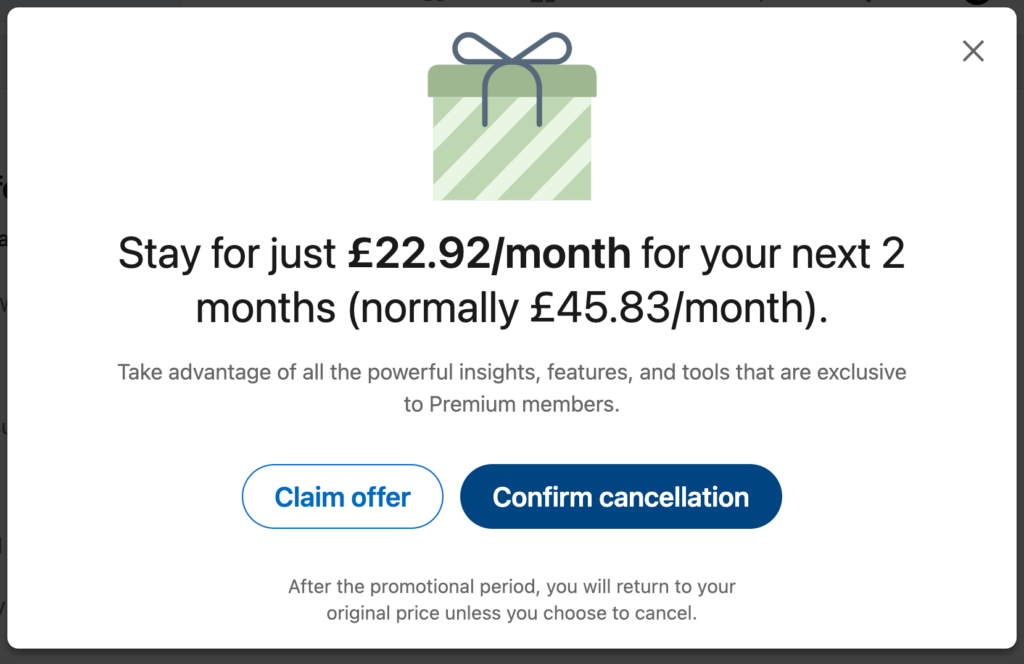
You have probably experienced this yourself. You call to cancel a subscription and, within moments, you are offered a better deal. A lower price, an extra month free, or an upgraded package. Suddenly the decision feels less clear.
That is a Retention Discount at work. For some buyers, it is enough to change their mind. For others, it raises a question that is hard to shake. If they can offer this now, why were they not offering it all along?
Whether a Retention Discount helps or harms depends on how you use it, who you use it on, and whether your existing buyers ever find out about it. It is a tool worth understanding, but also one worth approaching with care.
What Is a Retention Discount?
A Retention Discount is an offer made specifically at the point when a buyer is trying to cancel or threatening to leave. It is not a general promotion. It is a last-resort incentive designed to change the buyer’s decision in the moment.
The offer is usually a price reduction, a free period, or an added benefit. The idea is to make staying feel more attractive than leaving. Because the buyer is already in a cancellation mindset, the offer needs to be meaningful enough to shift that mindset quickly.
This approach is most common in subscription and ongoing service businesses, where losing a client means losing recurring revenue. The Retention Discount is essentially a controlled trade-off: accept a lower margin to avoid losing the relationship entirely.
Why Does a Retention Discount Work?
It works on some buyers because the decision to cancel is rarely final until it is acted on. Many buyers who threaten to leave are still open to staying if something changes. A well-timed offer gives them a reason to reconsider without having to back down completely. Because the discount feels like a response to their feedback, it can also make them feel heard, which helps.
There is also a loss aversion factor. A buyer who is offered a meaningful saving at the point of cancellation has to weigh up what they are walking away from. If the discount makes the ongoing cost feel much more reasonable, the effort of switching to a rival may simply not feel worth it. Because switching has its own costs in time and disruption, a good retention offer can tip the balance towards staying.
However, it does not work on every buyer. Some have already made up their mind and the offer only delays the inevitable. Others feel resentful when a discount appears at the moment of cancellation. Because it implies they were being overcharged before, the offer can confirm their decision to leave rather than reverse it. So the Retention Discount is not a reliable fix. It is a partial one.
There is also a wider risk. If loyal buyers who have been paying full price without complaint discover that others received a discount simply by threatening to cancel, trust erodes. That is a reputational cost that can outweigh the value of the buyers you retained.
How Can You Use a Retention Discount In Sales?
If you decide to use Retention Discounts, the key is to apply them thoughtfully rather than as a default response to every cancellation attempt. Here is how to make them work as well as possible.
Understand Why the Buyer Is Leaving First
Before reaching for a discount, find out what is actually driving the cancellation. If the buyer is leaving because of price, a discount is relevant. But if they are leaving because of a service issue, a discount will not fix the underlying problem. Because a Retention Discount that does not address the real reason for leaving will only buy you a short delay, always diagnose before you offer.
Have the Offer Ready Before You Need It
A Retention Discount that has to be invented on the spot looks desperate. So decide in advance what you are willing to offer, what the thresholds are, and who has authority to make the offer. Because the conversation happens under pressure, having a clear and pre-approved offer means you can respond confidently rather than scrambling for an answer.
Frame It as a Loyalty Reward, Not a Rescue
The way you present a Retention Discount matters as much as the offer itself. Framing it as something you wanted to offer a valued long-term buyer feels very different from framing it as a panic response to a cancellation request. Because buyers are sensitive to feeling managed, language and tone make a significant difference to how the offer lands.
Set a Limit on How Often It Can Be Used
Some buyers will learn that cancelling gets them a better deal and repeat the behaviour. So limit how often a Retention Discount can be offered to the same buyer. Because a buyer who has already received one should not expect another simply by threatening to leave again, having a clear policy protects your margins and your credibility.
Consider Proactive Alternatives
The most effective version of a Retention Discount is one that never needs to happen. Reaching out to buyers before they consider cancelling, with a check-in, a value reminder, or a loyalty reward, reduces the chance of them reaching cancellation in the first place. Because proactive care is always more powerful than reactive rescue, invest in both.
When a Retention Discount Works Best
A Retention Discount works best when the buyer’s main objection is price and their overall experience has been positive. In those cases, a well-timed offer can genuinely change the outcome. Because the buyer still values the relationship and just needs the numbers to work differently, the discount removes the barrier without having to rebuild trust from scratch.
It also works well in markets with high switching costs. When changing supplier means a complex migration, a learning curve, or disruption to operations, buyers are more likely to accept a discount and stay put. The offer just needs to be good enough to make the effort of switching feel unnecessary.
Similarly, it works well when the discount is time-limited. A reduced rate for three months, rather than a permanent cut, allows you to retain the buyer short term while giving you the chance to demonstrate renewed value before the full price resumes.
When a Retention Discount Becomes Dangerous
The biggest danger is the signal it sends to loyal buyers. If word spreads that cancelling is the best way to get a better price, you create a perverse incentive. Buyers who were happy stop being happy when they find out that less loyal customers pay less. That resentment can trigger the very cancellations you were trying to prevent.
There is also a credibility risk. A business that routinely offers discounts at the point of cancellation implies that its standard pricing is negotiable. That perception makes it harder to hold your rates across the board and weakens your pricing position over time.
Finally, a Retention Discount offered to a buyer who has already firmly decided to leave can make the parting worse. Because the offer feels like a final attempt to extract value rather than a genuine gesture, it can leave a bad taste that affects referrals and reviews.
Common Retention Discount Mistakes
Offering It to Everyone Who Cancels
Not every cancellation deserves a retention offer. Some buyers are leaving for reasons that a discount will not fix. Others are not worth retaining at the margin the discount would require. So be selective. Reserve the offer for buyers who are genuinely valuable, who are leaving for solvable reasons, and who are still open to staying. A blanket policy wastes margin and creates expectations.
Offering Too Much Too Quickly
Starting with your best offer leaves nowhere to go if the buyer pushes back further. So begin with a modest offer and leave room to improve it if needed. Because the buyer does not know what your ceiling is, a measured opening position gives you flexibility. Leading with your maximum concession signals desperation and may even encourage the buyer to push for more.
Not Attaching a Time Limit
A Retention Discount with no end date becomes a permanent price reduction. So always attach a clear time limit. Tell the buyer what they are getting, for how long, and what happens when it ends. Because a temporary offer creates a natural review point, it also gives you the chance to demonstrate renewed value before the full rate resumes.
Using It Instead of Fixing the Real Problem
A discount buys time. It does not fix a service problem, a communication breakdown, or a product gap. If buyers are regularly reaching cancellation, the Retention Discount is masking a deeper issue. So track your cancellation reasons carefully. Because the real solution is almost always something other than a lower price, use the retention conversation to understand what actually needs to change.
Retention Discount – An Example
A buyer calls their broadband provider to cancel. Before the call ends, they are offered a significantly lower monthly rate, a free upgrade, and a call back from a loyalty team. The buyer had already compared alternatives and was ready to switch. But the offer is better than anything a rival has quoted, so they stay.
For the business, it worked. But the buyer goes on to tell a friend, who has been a loyal customer for five years at full price and never complained. That friend now wonders whether they too should threaten to cancel. Because the retention offer was visible beyond the original conversation, it created a problem with a buyer who was never at risk of leaving.
That is the double edge of the Retention Discount. Used carefully, it saves relationships. Used carelessly, it damages ones you did not even know were at risk.
See Also
- The Loyalty Effect
- Ascending Loyalty Reward
- 40+ ways to keep your buyer happy
- 30+ ways to encourage repeat business