Practical Sales Training™ > How To Convert > Scale Close
Scale Close
Ask a buyer “Are you ready to go ahead?” and you’ll often get a polite “maybe.” That tells you nothing. But ask “On a scale of one to ten, how ready are you?” and you’ll get a number. And a number gives you something to work with.
That’s the Scale Close. The score shows you where they stand. Then the gap between their number and ten shows you exactly what to talk about next.
What Is The Scale Close?
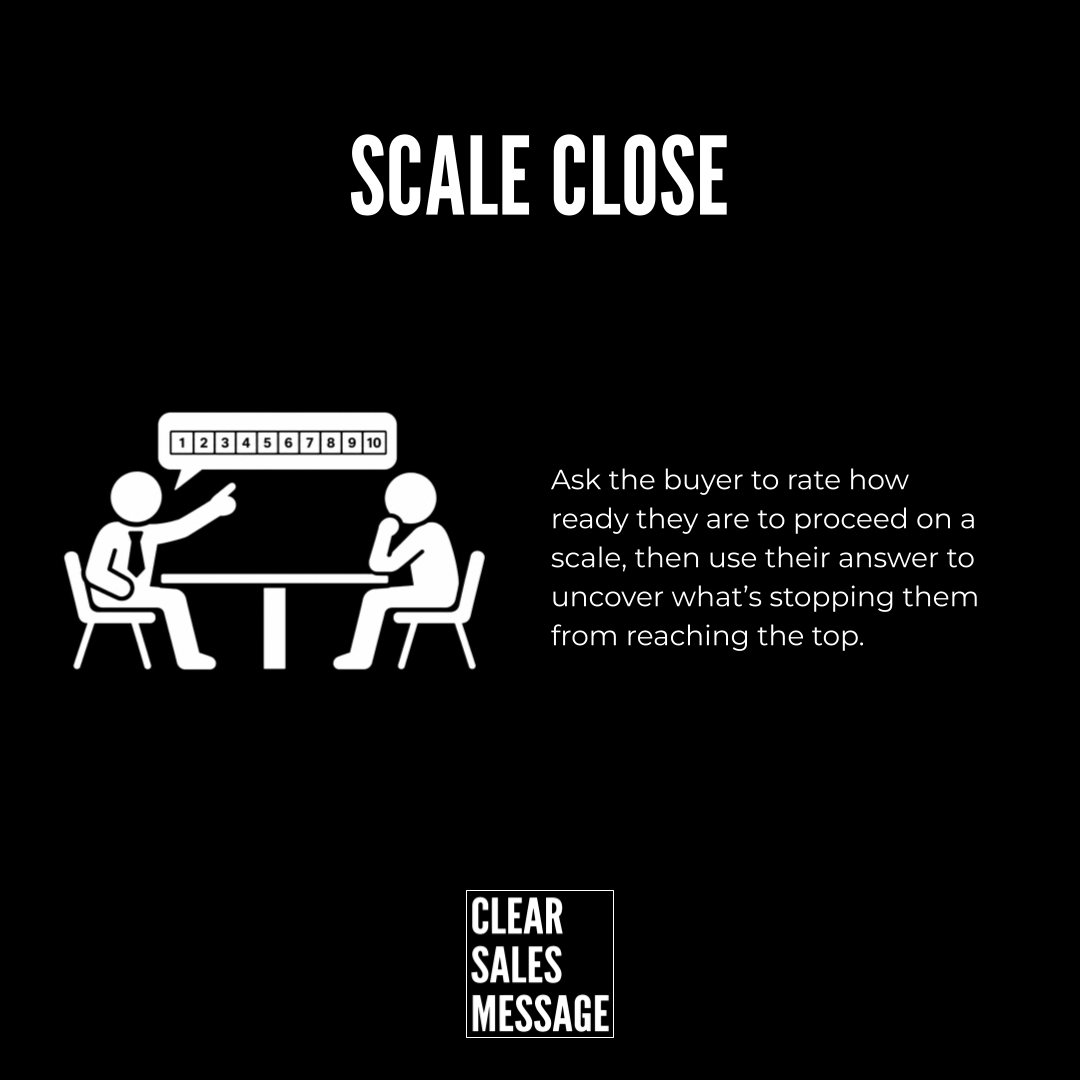
The Scale Close means asking the buyer to rate their readiness to buy. Usually it’s one to ten. Then you ask what would move them closer to ten.
It turns a fuzzy feeling into something clear. A seven means they’re keen but something’s missing. But a four means you’ve got real work to do.
It works well in B2B too. You can ask each person in a buying group for their score. As a result, you quickly see who’s on board and who needs more help.
Why Does The Scale Close Work?
It works because a number is easier to give than a yes or no. Saying “seven” feels low risk. So buyers answer honestly instead of dodging.
It also opens up the real issue. When you ask what would make it a ten, the buyer names the missing piece. In fact, they often tell you exactly what to fix.
Then there’s commitment. A buyer who says “eight” has admitted they mostly want it. So closing the last gap feels small to them.
Finally, it keeps you honest. A low number is a useful warning. So you avoid pushing for a close that isn’t there yet.
How Can You Use The Scale Close?
Here’s how to use it well.
Ask At The Right Moment
Use it once you’ve covered the main points. Ask too early, and the score means little.
Ask Why It Isn’t Lower
Here’s a smart twist. If they say six, ask “Why not a three?” They’ll list the reasons they like your offer. So they sell themselves before you tackle the gap.
Then Ask What Would Make It A Ten
Next, ask “What would need to happen to make it a ten?” Their answer is your to-do list. Then deal with each point clearly.
Re-Score After You Respond
Once you’ve handled their worries, ask again. “Where are you now?” If the number has jumped, you’re ready to close.
Use It In Follow-Ups
A quick email can ask for a score too. For example, “On a scale of one to ten, how close are you to a decision?” As a result, you get a clear update instead of silence.
When Does The Scale Close Work Best?
It works best when the buyer seems interested but unsure. A score shows how far they have to go.
It also shines with data-minded buyers. People who think in numbers find it a natural way to answer.
And it helps in group decisions. Different scores from different people show you where to focus.
When Does The Scale Close Become Dangerous?
It gets dangerous when it feels like a gimmick. Some buyers have heard it before and roll their eyes. So keep it relaxed and chatty.
It also backfires when you ignore a low score. Pushing a buyer who said three straight to a close feels pushy. Instead, slow down and find out why.
Watch out for reading too much into the number. One buyer’s seven is another’s nine. So focus on the reasons behind it.
What Are The Common Mistakes With The Scale Close?
Most mistakes come from asking for a number and stopping there. Here are the ones I see most.
Stopping At The Score
A number on its own changes nothing. So always ask what would move it higher.
Arguing With Their Number
Saying “Surely it’s higher than that?” makes buyers defensive. Instead, accept their score and explore it.
Asking Too Early
A score in the first five minutes tells you little. So wait until they’ve seen enough to judge.
Forgetting To Close At A Ten
When a buyer says ten, some sellers keep pitching. So stop and ask for the order.
Scale Close – An Example
The Recruitment Agency
Say you run a recruitment agency. A hiring manager has heard your pitch for filling three sales roles. They seem keen but haven’t committed.
So you ask, “On a scale of one to ten, how ready are you to work with us?” They say seven. You ask why it isn’t lower. They mention your speed and your track record in their sector.
Then you ask what would make it a ten. They admit they’re worried about fees if a hire leaves early. So you explain your replacement guarantee. Now they say nine, and you agree a start date.
See Also