

Practical Sales Training™ > How to connect with your buyer > Search Phrase

Search Phrase
A web address is easy to forget. Say a phrase out loud instead, and it sticks.
So instead of sending buyers to a link, send them to a search bar.
What Is It
A search phrase means encouraging buyers to search a specific term to find you. So instead of a URL, you give them words worth typing.
This works especially well if your name is hard to spell or pronounce. Since a phrase avoids that problem entirely, buyers just search what they remember.
Why Does It Work
It works because a phrase is simpler to hold onto than a web address. So people remember what they can say out loud far more easily.
This matters most when your own name causes hesitation. Since a tricky name to spell becomes a barrier, a memorable phrase removes it.
How Can You Use It
Pick A Phrase You Can Dominate
Pick a phrase you want to be known for. So choose something specific enough that you can genuinely dominate the results for it.
Then make sure you actually own those results. Since ranking well takes real effort, don’t promote a phrase you haven’t earned yet.
Also Own The Matching URL
Once you’ve chosen your phrase, also buy the matching URL. So if people search it, but also type it directly, you’re covered either way.
That backup matters more than it seems. Since a search result can shift, but a URL you own stays yours.
When It Works Best
This works best when your business name is genuinely hard to spell or remember. So a phrase gives buyers an easier way in.
It also suits situations where you can realistically dominate a specific term. Since a crowded, generic phrase won’t work nearly as well.
When It Becomes Dangerous
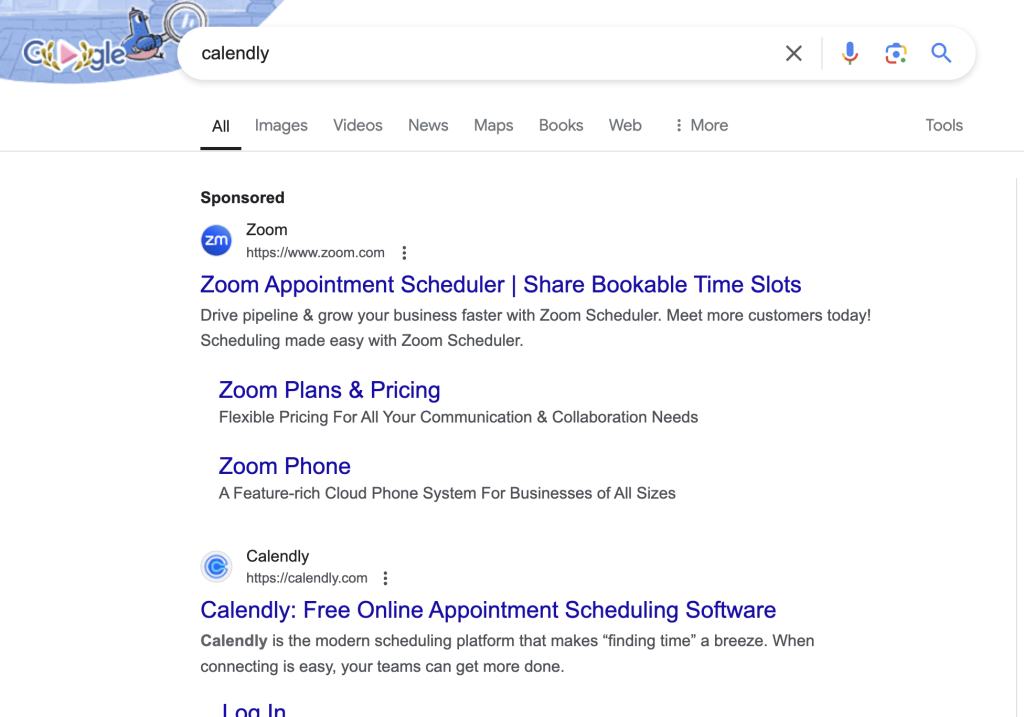
It becomes dangerous when competitors bid on your chosen phrase as an ad keyword. So they can intercept buyers searching for you specifically.
This happens more often than people expect. Since businesses regularly pay to appear above a rival’s own name in search results.
Exhibit A: Zoom bid on the keyword “Calendly” to target Calendly’s own buyers directly.
Common Mistakes
Choosing A Term You Can’t Dominate
Some businesses promote a phrase they can’t actually dominate. So buyers search it and find competitors instead.
Not Also Owning The URL
Some promote a search phrase but never buy the matching URL. So they lose the buyer who typed it directly instead of searching.
Ignoring Competitor Ad Bidding
Some ignore the risk of competitor bidding entirely. So a rival quietly captures buyers who were already looking for them.
Search Phrase – An Example
Dominating “Clear Sales Message”
Clear Sales Message is a strong example of this in practice. We’re the only ones using that exact term, so we dominate the results.
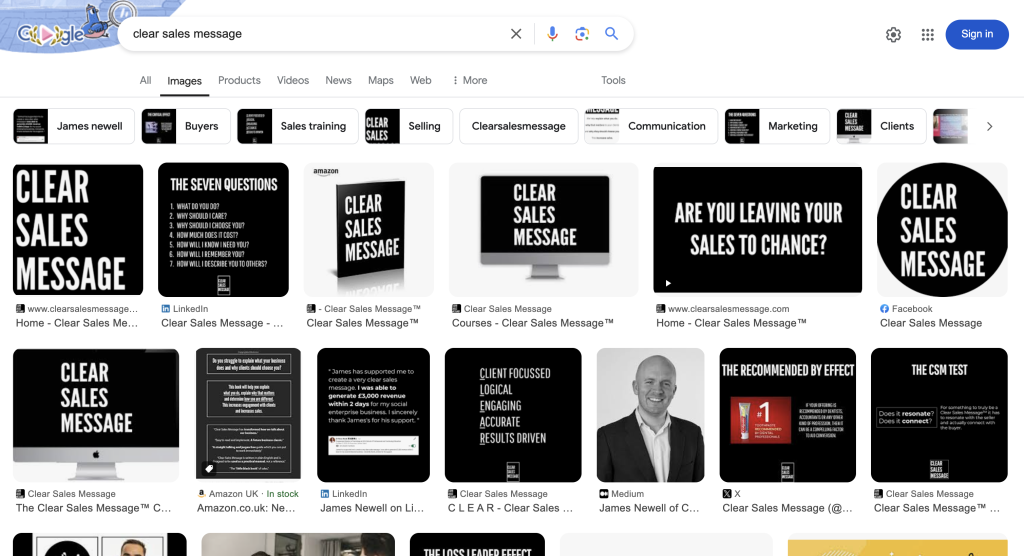
That said, I’d rather send someone to clearsalesmessage.com than have them google it. So if you use a search phrase, own the matching URL too.
For example, I’d happily promote “search for James talks a lot”. But I’d also want to own jamestalksalot.com.
See also
- The Simplified URL Effect
- Action Phrase
- 150+ ways to connect with your buyer
- 100+ ways to seize buyer attention