Practical Sales Training™ > How To Lose The Sale> Servicing Control

What is Servicing Control?
Servicing Control is the deliberate restriction of how a product or service is supported, repaired, or maintained, so that ongoing value flows back to the original provider rather than being handled elsewhere.
It isn’t always presented as a commercial tactic. Often it’s framed as quality control, safety, or protection of performance. But at its core, Servicing Control limits choice after purchase, not before it, shaping how and where customers can continue to engage with the product.
When applied intentionally, it turns a one-off sale into a longer-term revenue relationship.
How does Servicing Control work?
Servicing Control works by making ownership conditional on continued dependency. The product itself may be fully usable, but maintaining it outside approved channels becomes difficult, impractical, or impossible.
This is usually achieved through proprietary parts, restricted access, specialised tools, software locks, or warranties that only remain valid when servicing is done in approved ways. Over time, the customer is nudged away from alternatives, not through force, but through friction.
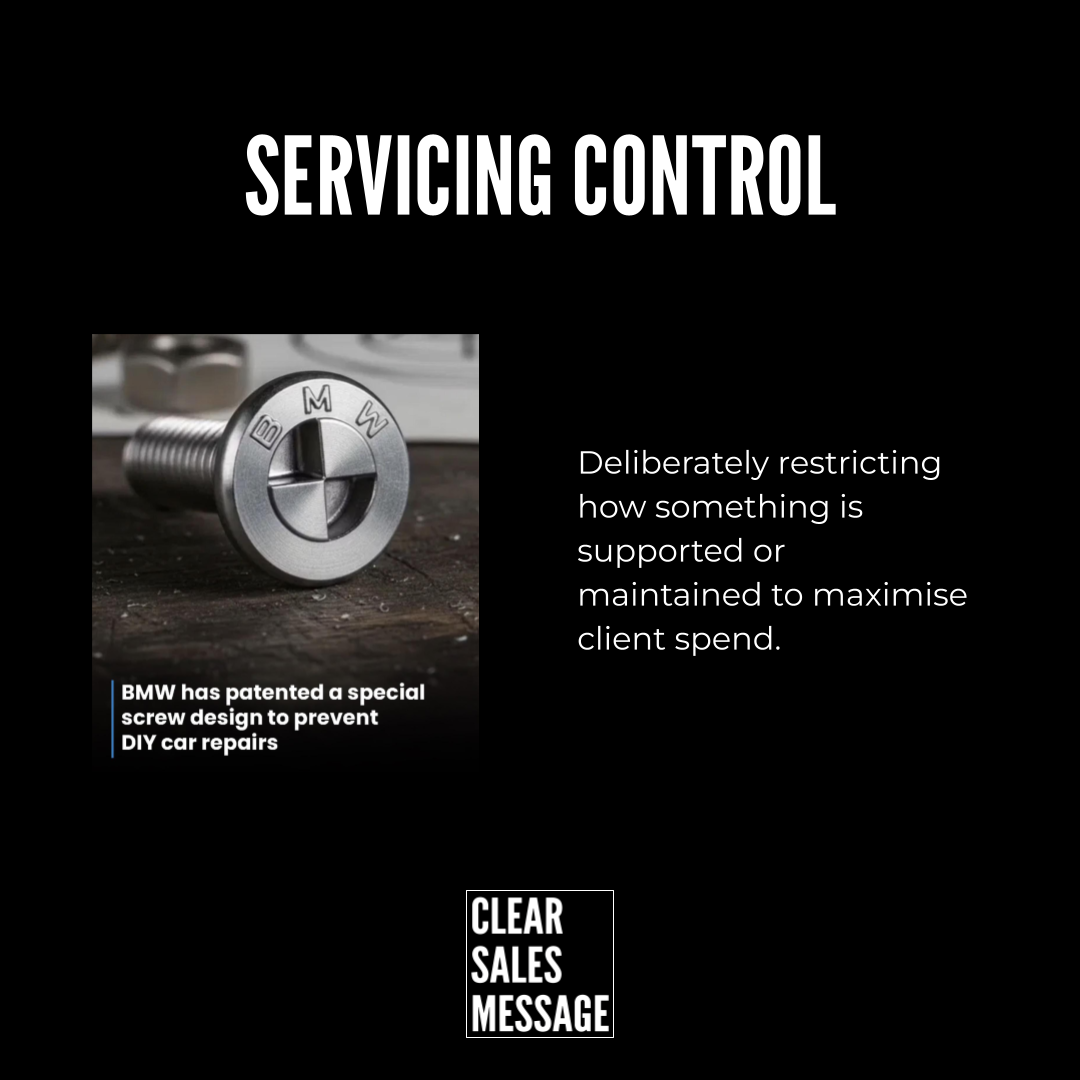
A clear example can be seen in BMW, which has patented fasteners and components designed to prevent DIY repairs and limit third-party servicing. The intent isn’t to stop the car from working. It’s to ensure that when it needs attention, the manufacturer remains central to that process.
Servicing Control changes the relationship from simple ownership to managed dependency, where access and upkeep are part of the commercial design.
How can you use Servicing Control?
Servicing Control is most effective when ongoing performance genuinely matters and when incorrect maintenance could reduce outcomes, safety, or reliability. Used responsibly, it can protect standards and ensure consistency. Used aggressively, it can feel restrictive and erode goodwill.
In commercial terms, it allows you to create predictable, recurring revenue after the initial sale, maintain closer contact with customers, and prevent value leakage to competitors or low-quality alternatives. It’s particularly common in industries where expertise, compliance, or system integrity is part of the value being sold.
The key is intent and framing. When customers feel Servicing Control exists to protect them, it strengthens trust. When it feels like a financial trap, it does the opposite.
Servicing Control isn’t about stopping people from leaving.
It’s about shaping what staying looks like.
Example

See also