Practical Sales Training™ > How People Work > Social Comparison Theory

Social Comparison Theory
Most buying decisions feel rational. But underneath most of them is a very human question: am I doing as well as the people around me?
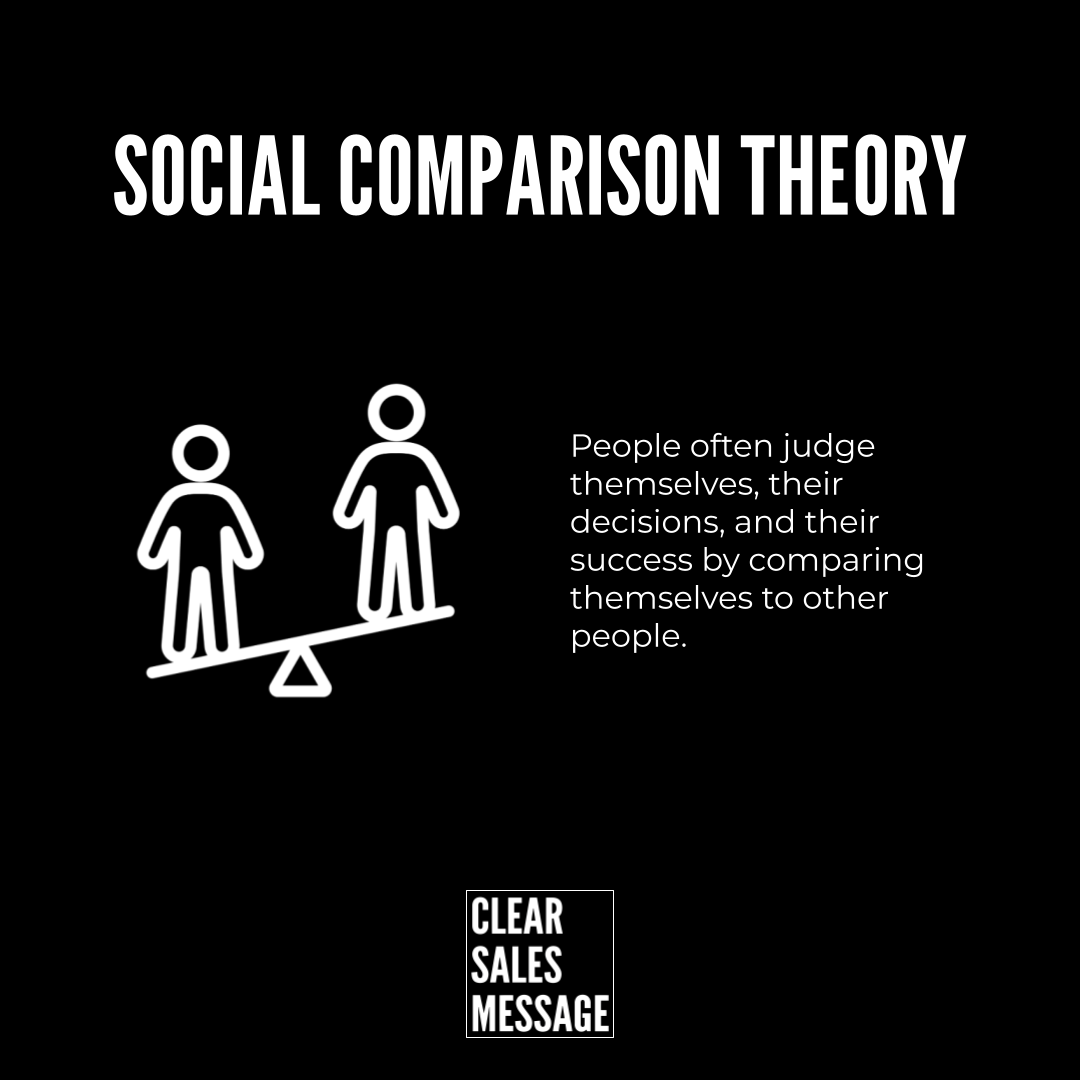
Social Comparison Theory says that people measure themselves against others to work out how they are doing. Not against a fixed standard. Against real people, peers, rivals, and role models. That comparison drives a huge amount of human behaviour, including buying behaviour.
For salespeople, this matters. Because your buyer is not just thinking about whether they need what you sell. They are also thinking about what buying it says about them, and what not buying it says about the people who already have it.
What Is Social Comparison Theory?
Social Comparison Theory was first proposed by psychologist Leon Festinger in 1954. His idea was simple. People have a natural drive to evaluate themselves, and when no clear facts are available, they look to other people as a reference point.
There are two types of comparison. Upward comparison is when you compare yourself to someone doing better than you. Downward comparison is when you compare yourself to someone doing worse. Both serve a purpose. Upward comparison can motivate. Downward comparison can reassure.
In a sales context, both types show up. A buyer might look at a competitor who invested in something and feel the pressure to do the same. Or they might look at a peer who has not invested and feel reassured they are ahead. Either way, the comparison is doing work in the buyer’s head long before you say a word.
Why Does Social Comparison Theory Work?
Humans are social animals. Status, belonging, and relative standing matter deeply, even when people deny it. So when a buyer considers a purchase, part of their brain is running a comparison in the background.
This is why case studies work so well. Showing a buyer that a similar company already made this decision removes doubt and adds social proof. The buyer does not want to be behind their peers. They want to be at least level, and ideally ahead.
Fear of falling behind is often stronger than the desire to get ahead. That asymmetry is important. A buyer who feels they might be lagging will act faster than one who simply sees an opportunity. So framing your offer around what others are already doing can be more powerful than listing features and benefits alone.
How Can You Use Social Comparison Theory In Sales?
Use Peer References Deliberately
Name the kinds of businesses or people who already use what you sell. When a buyer hears that someone like them has already made this decision, the comparison fires instantly. They do not want to be the one who is behind. So referencing similar buyers is not just social proof, it is a comparison trigger.
Frame the Cost of Inaction
If a buyer does nothing, what does that mean relative to their peers? Point to the gap. If their competitors are moving and they are not, that is a comparison that stings. Use it. Not to manipulate, but to make the real cost of delay clear and concrete.
Position Your Buyer as the Smart One
Buyers want to feel ahead of the curve, not behind it. So frame your offer as the thing the best people in their space are already doing. Help them see that buying is what the sharpest operators do. That comparison pulls them forward rather than pushing them from behind.
Make the Comparison Specific
Vague references do not trigger comparison the way specific ones do. “Other companies like yours” is weak. “Three of the top ten firms in your sector have done this in the last six months” is strong. Specificity makes the comparison feel real and close, which is when it has the most pull.
When Social Comparison Theory Works Best
Social Comparison Theory is most powerful when your buyer operates in a competitive space and cares about how they are seen by peers. This includes most B2B buyers, where decisions often get reviewed by others and where being behind a competitor carries real risk.
It also works well with buyers who have strong professional identity. A marketing director who prides themselves on being ahead of trends will respond strongly to comparison-based framing. Because falling behind is not just a business problem for them. For that buyer, it feels personal.
Similarly, it works in any category where there is a visible leader or a clear benchmark. If buyers can easily see what the best in their field are doing, comparison is already happening. Your job is simply to make that comparison explicit and connect it to your offer.
When Social Comparison Theory Becomes Dangerous
Used badly, comparison framing can feel like pressure or manipulation. If a buyer senses you are trying to shame them into buying, trust breaks down fast. The comparison needs to feel like useful context, not a threat.
There is also a risk of picking the wrong reference point. Comparing a small business owner to a FTSE 100 company will not land well. The comparison only works when the buyer sees the reference as a true peer. Get that wrong and the whole frame falls apart.
Another risk is overuse. If every conversation leans on “your competitors are doing this,” it starts to sound like a script. Buyers notice. So use comparison as one tool among many, not as your only move.
Common Social Comparison Theory Mistakes
Making the Comparison Too Vague
Saying “lots of companies do this” triggers nothing. For a comparison to work, the buyer needs to feel it is aimed at someone just like them. So be specific about who, what sector, what size, and what result. Vague comparison is just noise.
Using It as a Scare Tactic
There is a difference between showing a buyer where they stand and making them feel bad about it. The goal is to create useful urgency, not anxiety. Keep the framing forward-looking. Show them the gap, then show them how to close it.
Choosing the Wrong Peer Group
Comparison only works when the buyer sees themselves in the reference. Pointing to companies that are much bigger, much smaller, or in a different space will not land. Know your buyer well enough to pick a reference point they actually care about.
Ignoring Downward Comparison
Most salespeople focus on upward comparison, showing the buyer who is ahead of them. But downward comparison can be just as useful. Helping a buyer see that they are already ahead of most of their peers, and that your offer helps them stay there, is a strong and underused frame.
Social Comparison Theory – An Example
A sales consultant is pitching a training programme to a mid-sized firm. Rather than leading with the features of the course, she mentions that two of the firm’s closest rivals have already rolled out similar training this year. She keeps it factual and matter-of-fact.
That single reference changes the tone of the meeting. The buyer stops asking “do we need this?” and starts asking “how quickly can we get started?” The comparison did not push them into a corner. Instead, it made the decision feel obvious and overdue.
By framing the offer around what peers are already doing, she used Social Comparison Theory to shift the buyer from curious to committed, without any pressure at all.
See also:
- 50+ ways that people work & make decisions
- 150+ ways to connect with your buyer
- Social Proof
- FOMO
- Luxury Version