Practical Sales Training™ > How To Convert > Soft Launch

Soft Launch
A grand opening sounds exciting. But a soft opening beforehand is what makes it go smoothly. You learn what works in private, so nothing surprises you in public.
That’s a soft launch. Instead of assuming everything is ready, you test it first on a small group and fix what you find before the real reveal.
This page covers what a soft launch is, why it beats a big reveal for most businesses, and how to run one well.
What Is A Soft Launch?
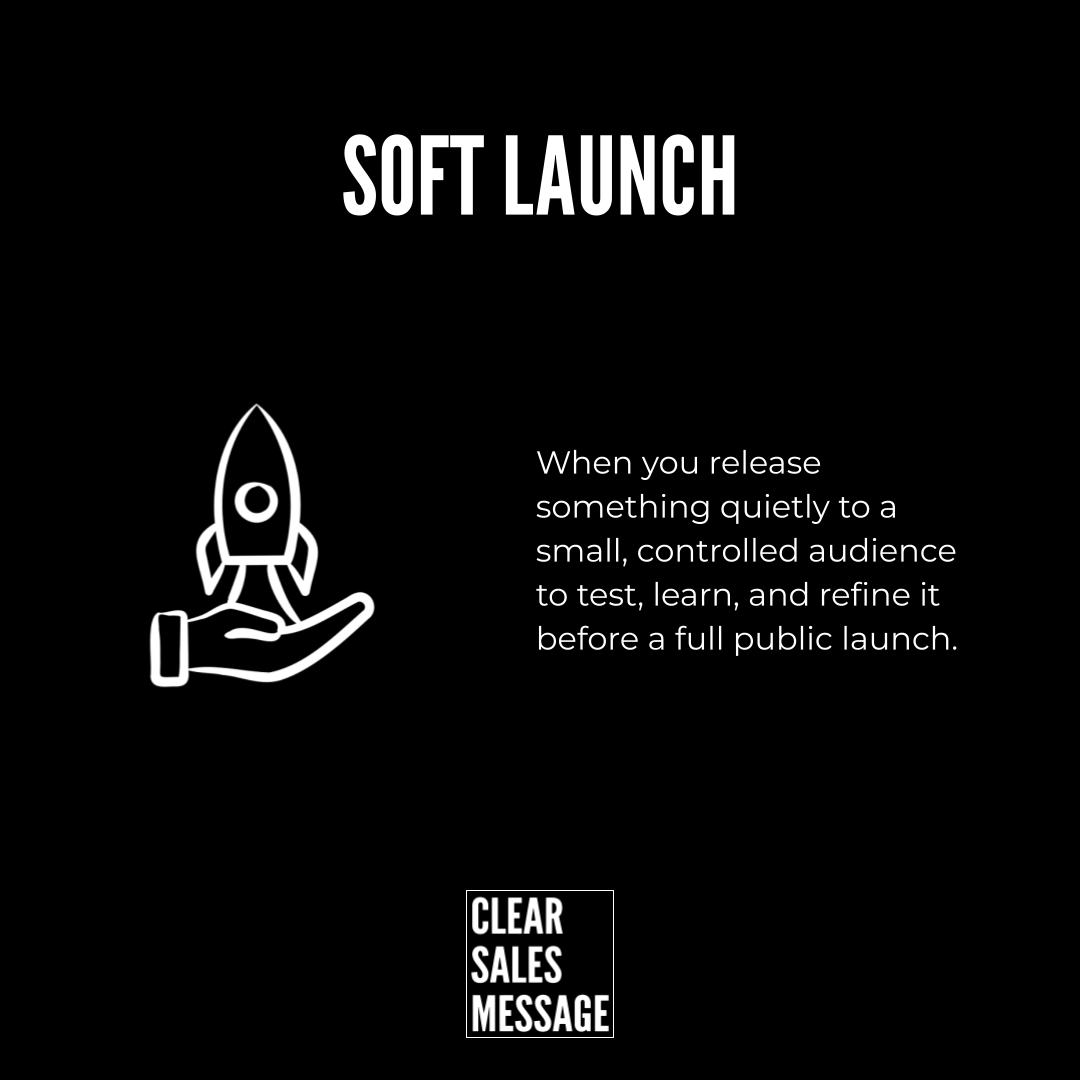
A soft launch is the quiet release of a product, service, or offer to a small, controlled audience before a full public launch.
The purpose isn’t to hide. Instead, it’s to test real-world behaviour, messaging, pricing, and delivery without the pressure or risk of a big announcement.
So instead of trying to get everything perfect upfront, a soft launch puts learning first and scaling second.
Why Does A Soft Launch Work?
A soft launch works by limiting exposure while maximising feedback. Rather than opening to everyone at once, you release to a smaller group first, such as existing customers, a waitlist, a private group, or a specific channel.
This lets you observe how people actually respond, not how you hope they will. During a soft launch you can test positioning and messaging, check whether demand and willingness to pay match expectations, spot any friction or confusion, fix operational or delivery issues, and gather early testimonials and proof.
Because expectations are lower at this stage, mistakes cost less and insights come faster.
How Can You Use A Soft Launch In Sales?
Use It Whenever Risk Matters
A soft launch helps any time you want to reduce risk and build confidence before going public. So you can use one to test a new product or service idea, validate an offer before scaling ads, refine pricing and packaging, improve onboarding and user experience, or build early proof and case studies.
Know Where It Fits Best
Soft launches work especially well for digital products and courses, SaaS tools and platforms, new services or retainers, and events, programmes, or memberships. They’re especially valuable when speed matters more than polish.
Why A Soft Launch Beats A Hard Launch For Most Businesses
A hard launch assumes you already know what works. A soft launch accepts that you probably don’t, and builds in time to find out before it matters.
By learning in private and launching publicly only once the message is clear and the offer is proven, you reduce wasted spend, protect your reputation, and improve conversion when it actually counts.
In short, a soft launch turns guessing into evidence.
When A Soft Launch Works Best
It works best when a product or offer is genuinely new, untested, or different from anything you’ve sold before. So the less certainty you have about how buyers will respond, the more value a quiet first release adds.
It also works especially well when you have a warm existing audience, like customers, a newsletter list, or a community, because they’re more forgiving of early-stage rough edges than cold traffic would be.
When A Soft Launch Becomes Dangerous
It backfires when it becomes an excuse to delay indefinitely, since “we’re still in soft launch” can quietly turn into a permanent reason never to commit to a real push.
It also risks attracting the wrong feedback if the soft launch audience isn’t representative of the actual target buyer, because learning from the wrong people can lead to the wrong fixes.
Common Soft Launch Mistakes
Launching So Quietly Nobody Shows Up
A soft launch still needs enough real participants to generate useful feedback. Too small a group gives you too little signal to act on.
Treating It As Permanent
A soft launch has a job to do and a natural end point. If you never move to a full launch, you’re not testing, you’re stalling.
Ignoring The Feedback You Get
The whole point of a soft launch is to learn and adjust. Collecting feedback but changing nothing wastes the one real advantage a soft launch gives you.
Soft Launch – An Example
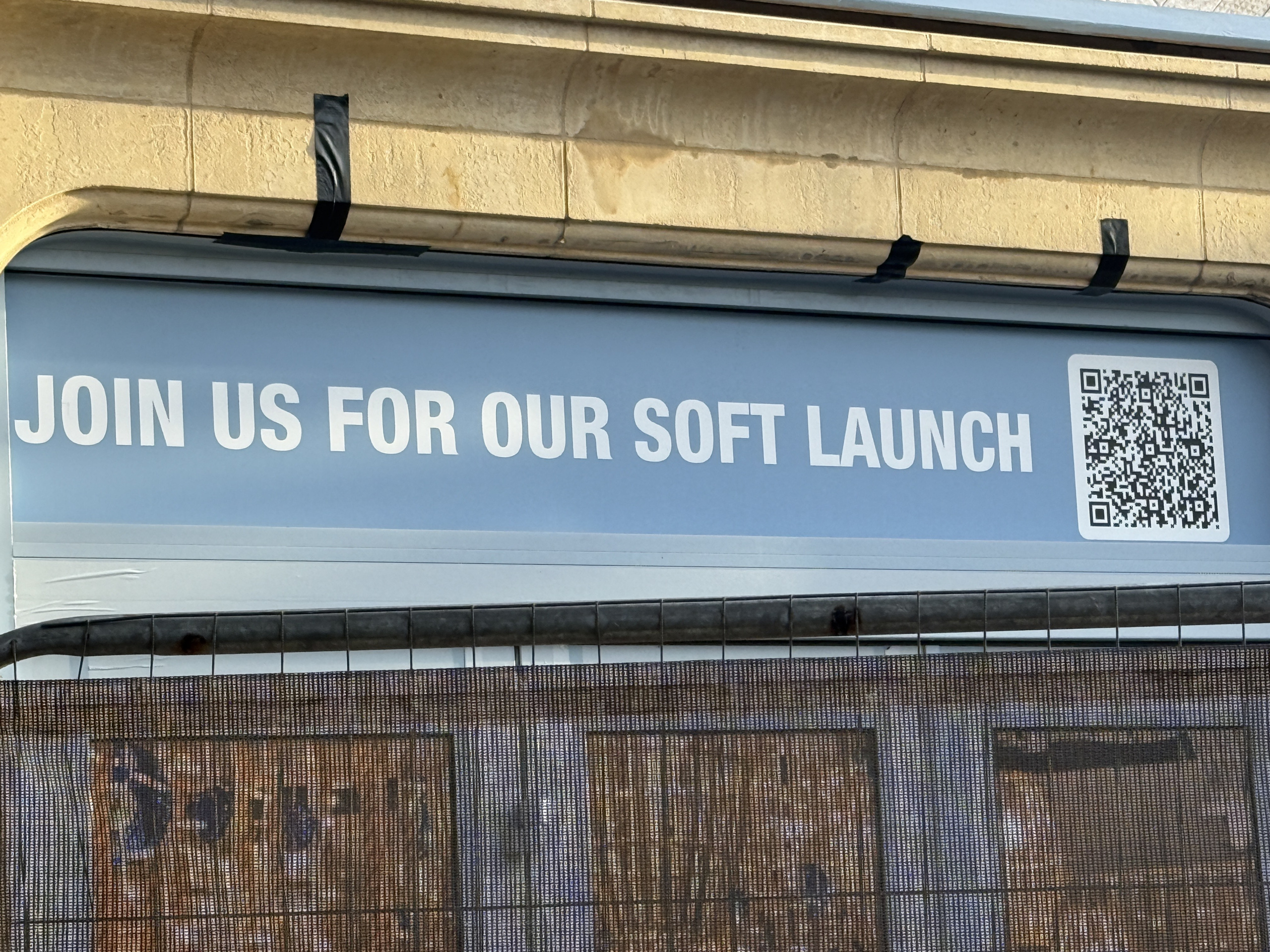
A new restaurant promoted a soft opening before their grand opening. A smaller crowd, lower pressure, a chance to get the kitchen running smoothly and the front-of-house timing right.
Any problems that surfaced during the soft opening, slow service, an unclear menu, a dish that didn’t land, got fixed before the crowds arrived for the real thing. So the grand opening benefited from everything the soft opening taught them.
That’s a soft launch working exactly as intended. The public moment looked polished, because all the learning happened before anyone important was watching.
See also