Practical Sales Training™ > How To Convert > Subtractive Selling

Subtractive Selling
Most salespeople add. They stack features, highlight upgrades, and present the biggest package first. But buyers often don’t need all of it. And deep down, they know it.
So when a seller tells them what they can leave out, something shifts. The buyer relaxes. They trust you more. And they move forward faster than they would have done with a full menu of options in front of them.
It feels counterintuitive. But telling buyers what to subtract often leads to more sales, more loyalty, and more referrals than telling them what to add.
What Is Subtractive Selling?
Subtractive selling is a technique where you increase buyer confidence by telling them what they don’t need. Instead of pushing every feature or service, you remove options that are irrelevant. As a result, the decision feels simpler and safer.
A consultant might say: “You don’t need the full package. The starter plan is enough for your situation.” A car dealer might say: “You don’t need the premium trim. The standard version has everything you want.” A software provider might say: “You don’t need the enterprise plan. The pro tier covers all your needs.”
In each case, the seller puts the buyer’s best interest ahead of the largest possible sale. Because that honesty is rare in sales, it creates an immediate trust signal.
Why Does Subtractive Selling Work?
It works because buyers often feel overwhelmed by choice. Too many options create confusion, delay, or paralysis. When you remove the unnecessary elements, the buyer feels relief. They feel heard. And they move forward faster.
There are four reasons it converts so well. First, it builds trust. You put the buyer’s needs ahead of maximising the sale. So the buyer’s guard drops. Second, it reduces complexity. Fewer options make the decision faster and easier. Third, it prevents buyer’s remorse. Customers feel confident they didn’t overpay. Fourth, it creates authority. Buyers see you as an expert who knows what matters and what doesn’t.
Selling less now often leads to more revenue later. Because customers who feel well-advised come back. They also refer others. So the long-term value of a subtractive sale can exceed the short-term value of pushing the bigger package.
How Can You Use Subtractive Selling In Sales?
You can apply this technique across conversations, proposals, and marketing messages. Here’s how it works in practice.
Sales Calls
Tell prospects what they don’t need before they ask. This is the most direct version. When a buyer compares options, ruling out the ones that don’t fit signals that you’re advising rather than selling. As a result, they trust your recommendation on the right option far more than if you’d presented them all equally.
Proposals
Remove add-ons that aren’t relevant and explain why. A proposal that says “we’ve excluded X because it doesn’t apply to your situation” signals careful thinking. Because most proposals just list everything available, one that actively removes options stands out as honest and considered.
Websites and Pricing Pages
Highlight which plans aren’t right for certain buyers. A clear note like “you don’t need this unless you’re a large enterprise” helps smaller buyers choose with confidence. It also reduces the anxiety of picking the wrong option. That confidence speeds up conversion.
Email Campaigns
Reassure customers that a simpler product may be all they need. An email that says “if you’re a small team, you probably don’t need our enterprise plan” builds goodwill fast. It shows you understand your audience. And because it’s the opposite of what most marketing emails say, it gets read.
Tips for Success
Be genuine. This technique works because it feels authentic, not manipulative. Always explain why something isn’t needed so the buyer understands your reasoning. Focus on the customer’s situation, not your agenda. And use it as a long-term play. Because even if you sell less today, you build trust that brings buyers back and sends others your way.
When Subtractive Selling Works Best
It works best when buyers face too many options. Complexity creates hesitation. So when you remove the noise, the path forward becomes clear. The buyer makes a decision they feel good about. And a buyer who feels good about their decision is far more likely to return.
It also works well in high-trust relationships. When a buyer already has some confidence in you, a subtractive recommendation reinforces that strongly. They expected you to push the bigger sale. You didn’t. That moment creates a lasting impression of integrity.
Similarly, it works well for businesses with tiered pricing. When you clearly explain which tier fits which type of buyer, you remove the guesswork. As a result, buyers self-select more accurately. Fewer objections. Less follow-up needed.
When Subtractive Selling Becomes Dangerous
It becomes a problem when it tips into underselling. There’s a difference between advising a buyer toward the right option and always recommending the cheapest product to avoid a harder conversation. The goal is to match the buyer to what genuinely fits. So if the bigger plan truly is right for them, say so.
It can also misfire when the rationale isn’t clear. Telling a buyer they don’t need something only builds trust if you explain why. Without the reasoning, it can feel like you’re withholding options. So always pair the subtraction with the explanation. Because the “why” is what makes it feel like expertise rather than avoidance.
And it can backfire when used as a manipulation tactic. Some sellers use the appearance of honest advice to push a specific product regardless of fit. Buyers sense that quickly. When they do, the trust effect reverses entirely. The technique destroys exactly what it was meant to build.
Common Subtractive Selling Mistakes
Not Explaining the Reasoning
Telling a buyer they don’t need something without saying why can feel dismissive. The explanation is the most important part. It shows your recommendation comes from understanding their situation, not personal preference. So always follow the subtraction with a clear reason.
Using It to Avoid Difficult Conversations
Some sellers default to smaller recommendations because they’re uncomfortable asking for larger budgets. That’s not subtractive selling. That’s conflict avoidance. The technique only works when the smaller recommendation is genuinely the right fit. So make sure you’re advising on the buyer’s needs, not managing your own discomfort.
Applying It Without Understanding the Buyer
Subtractive selling depends on knowing what the buyer actually needs. If you recommend they skip a feature without understanding their situation, the advice is guesswork. It may be wrong. And wrong advice, however honest it sounds, erodes trust. So ask the questions first. Then subtract based on what you’ve learned.
Treating It as a One-Off Tactic
The real power is cumulative. One honest recommendation builds goodwill. A consistent pattern of honest recommendations builds a reputation. So use it as a way of operating, not a tactic to deploy occasionally. Because the long-term return of never overselling far exceeds the short-term cost of any single smaller sale.
Subtractive Selling – An Example
A software company uses subtractive selling directly on their pricing page. Next to the Enterprise Plan at £999 a month, a clear message reads: “You don’t need this unless you’re a large enterprise.” Next to the Pro Plan at £499 a month, it reads: “This is what you actually need.” The buyer doesn’t have to work out which option fits. The seller has already done it for them.
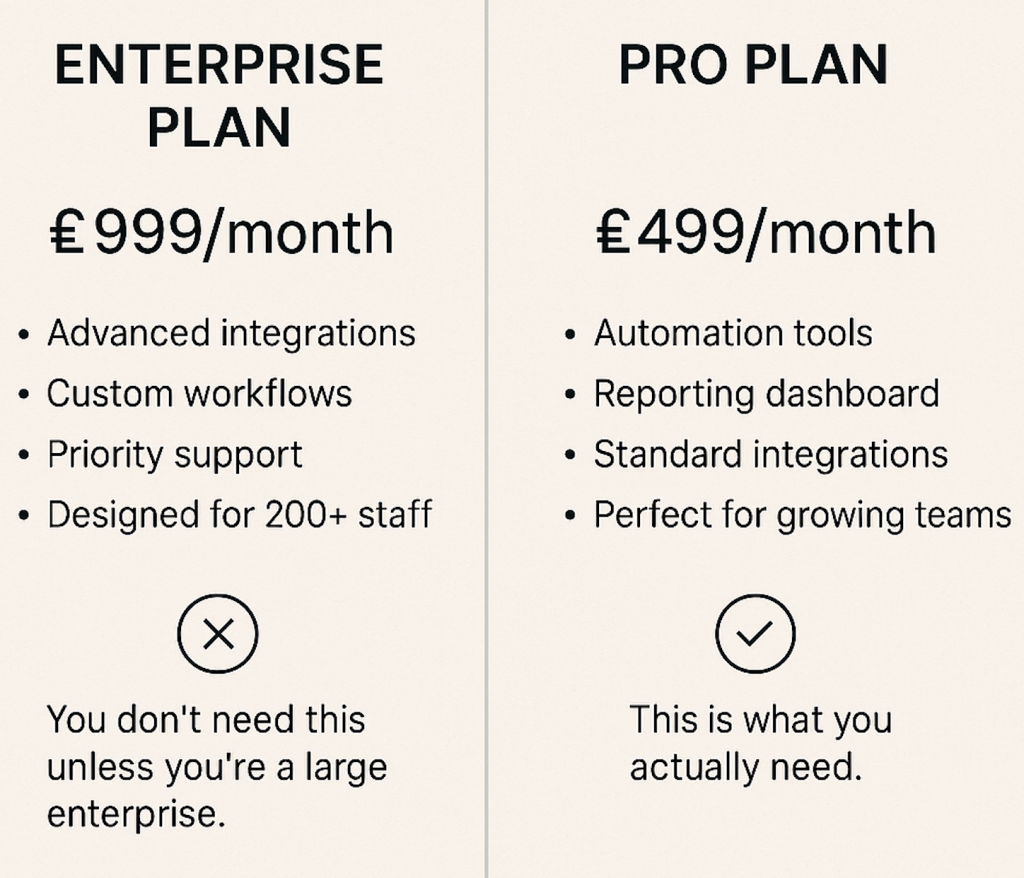
The result is a pricing page that feels honest rather than pushy. Because the seller has already ruled out the expensive option for most buyers, the remaining choice is easy and confident. That’s subtractive selling at its best: less complexity, more trust, and a decision the buyer feels good about making.
See also