Practical Sales Training™ > How To Get Attention > The 3D Effect

The 3D Effect
Most posts sit flat on the screen. Same layer, same depth, same nothing. Then one post looks like it’s leaning out toward you, and your thumb stops before your brain even decides why.
That’s the 3D effect. It’s a design trick, not a filter, and it works because it breaks a pattern your eye has seen a thousand times.
What Is The 3D Effect?
The 3D effect is visual content designed to look like it’s jumping off the screen. Clever shadows, depth, and perspective make a post appear to break the flat boundaries of a normal image. That alone grabs attention and encourages people to engage.
Unlike a standard flat graphic, a 3D-style post creates a sense of motion and realism. That’s what makes someone pause, look closer, and actually take action, instead of scrolling straight past.
Why Does It Work?
These posts combine a few techniques. Depth and shadow create a layered, “pop-out” appearance. Perspective tricks simulate real-world movement. Smart design choices make key elements, like text, a product, or a face, leap forward off the screen.
Your brain notices depth automatically, because it’s wired to scan the real world for shape and distance. So when a flat image suddenly appears to have depth, it briefly confuses that instinct, and confusion is exactly what makes someone stop and look again.
This works especially well on fast-scrolling platforms like Instagram, Facebook, LinkedIn and TikTok, where every post competes for a fraction of a second of attention.
How Can You Use The 3D Effect?
Promote Offers And Discounts
A flat discount graphic is easy to ignore. A 3D version of the same offer demands a second look, since the depth alone makes it feel more urgent and important.
Launch New Products Or Services
A product launch needs visual impact to earn attention. The 3D effect gives a new product presence it wouldn’t get from a plain product photo.
Announce Events, Webinars Or Openings
An announcement competes with dozens of others in the same feed. Depth and shadow make yours the one that actually gets noticed and clicked.
Boost Brand Awareness
Eye-catching, shareable content spreads further than flat content ever does. People share what surprises them, and a 3D post does that instantly.
Stand Out From Your Competitors
If every competitor in your feed uses flat graphics, a 3D post makes you the obvious outlier. That contrast alone can lift engagement without changing your message at all.
When It Works Best
The 3D effect works best on fast, visual platforms where attention is scarce and competition is high. It also performs well for a single, punchy message, like an offer or a launch, rather than a long explanation.
It’s especially effective the first few times an audience sees it, since novelty is doing a lot of the work. A brand new to the technique will usually see a bigger jump in engagement than one that’s used it for months.
When It Becomes Dangerous
Overuse this effect and the novelty disappears fast. Once an audience has seen ten 3D posts from you, the eleventh stops standing out at all, and you’re back to competing on the same flat playing field.
It also becomes a problem if the effect distracts from the actual message. A dazzling 3D graphic with an unclear offer just confuses people, since they remember the visual trick but forget what you were selling.
Common Mistakes
Using It On Every Single Post
Constant use kills the surprise that makes this effect work. Save it for your most important posts, so it still stands out when it matters.
Letting The Effect Overpower The Message
A striking visual means nothing if nobody remembers what you were offering. Keep your core message clear and simple underneath the design.
Ignoring Platform Differences
A 3D effect that looks great on Instagram might feel out of place on LinkedIn. Match the style to the tone your audience expects on that specific platform.
The 3D Effect – An Example
A Post Designed To Jump Off The Feed
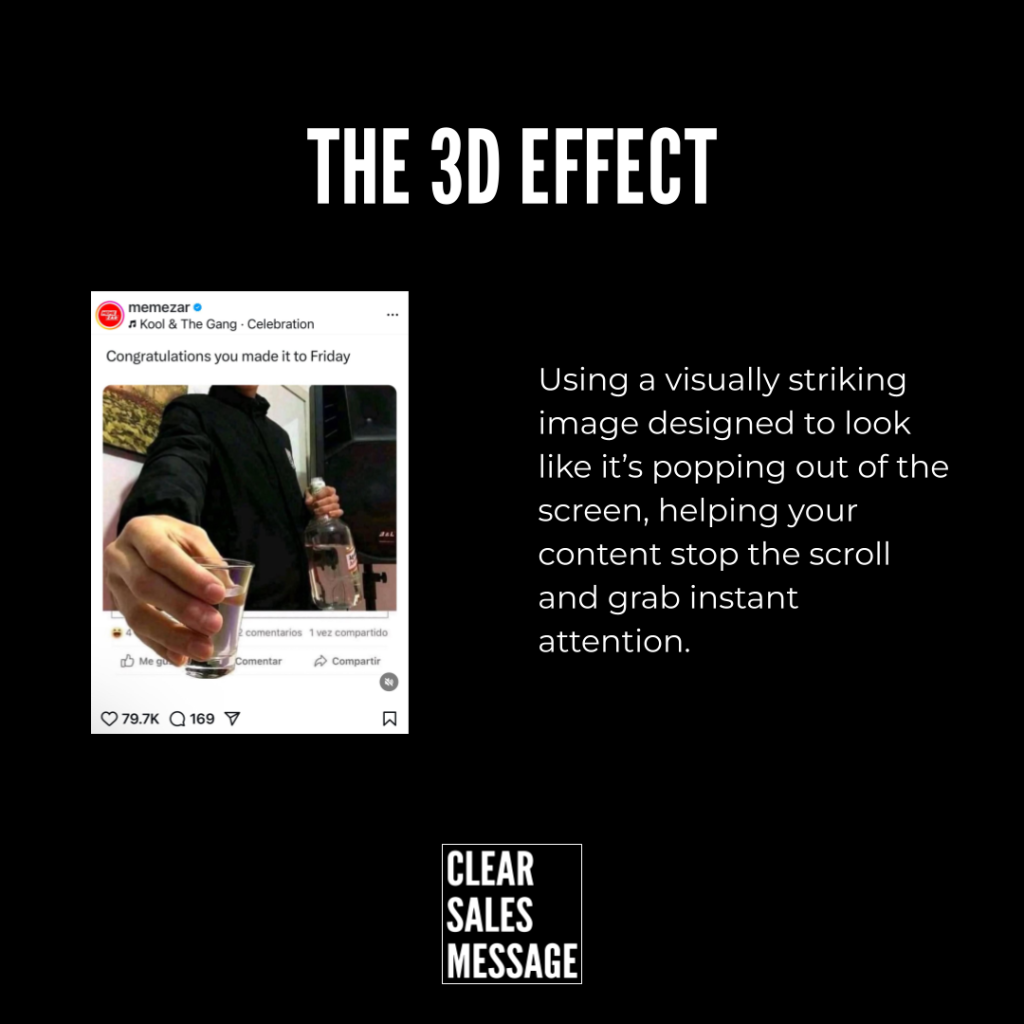
This Instagram post uses depth and shadow so it looks like it’s jumping straight out of the screen. Scrolling past a feed of flat images, this is the one that makes a thumb pause mid-scroll, before the viewer has even registered what the post is about.

See Also