Practical Sales Training™ > Wordplay > The Bracket Effect
The Bracket Effect
Most sales copy sounds the same. Bold claims, polished language, and not a hint of personality. Buyers tune it out because it feels like it was written by a committee.
The Bracket Effect fixes that with a single punctuation mark. It lets you say the quiet part out loud, add a moment of humour, or tell the truth in a way that feels human.
It is a small technique with a big impact. And once you start noticing it, you will see it everywhere.
What Is the Bracket Effect?
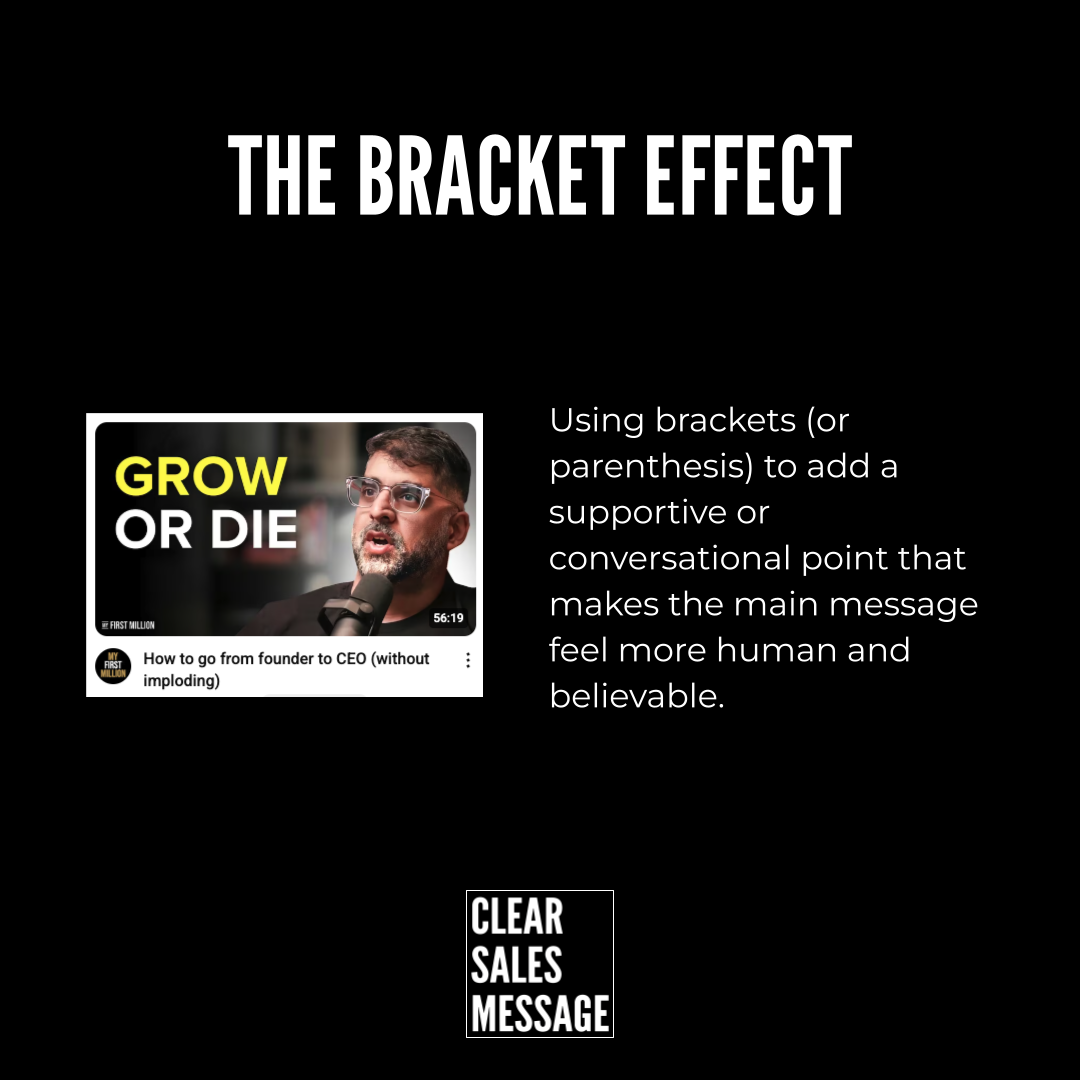
The Bracket Effect is when you use brackets ( ) to add a quick aside to your message. Think of it as your main point followed by a whisper of truth.
The aside inside the brackets changes the tone. It can add humour, honesty, or context. But the key thing is that it feels like a private comment from a real person, not a line from a press release.
That shift in tone is what makes it work. Your reader gets the message and the personality at the same time.
Why Does the Bracket Effect Work?
Brackets change the rhythm of a sentence. They make readers pause, lean in, and pay closer attention to what comes next. That pause creates a moment of connection.
The voice inside the brackets feels different from the rest of the copy. It sounds more like something a person would say to a friend than something a brand would publish. So buyers respond to it differently too.
There are three things the Bracket Effect adds. Honesty – you say the quiet part out loud. Humour – you lighten a serious claim. Humanity – you sound less like a business and more like a person who gets it.
How Can You Use the Bracket Effect In Sales?
Headlines and taglines
A bracketed aside at the end of a headline adds personality without losing the main point. For example: “We make sales simple (finally).” The bracket says what your buyer has been thinking all along.
Email subject lines and openers
Brackets stand out in a crowded inbox because they break the usual pattern. “You’ll sell more (and sleep better).” feels warmer and more direct than a standard subject line, so open rates go up.
Social media captions
On social, personality is everything. A bracketed comment at the end of a post makes it feel less like an advert and more like a person sharing something real. “No fluff (just words that work).” does more work than a paragraph of explanation.
Defusing a bold claim
If you make a strong promise, brackets let you add the honest small print without killing the energy. For example: “Guaranteed results (if you actually follow the plan).” It shows confidence and keeps you credible at the same time.
When the Bracket Effect Works Best
It works best when your copy risks sounding too polished or too safe. A bracketed aside cuts through that gloss and reminds the reader there is a real person behind the words.
It is also powerful when you want to pre-empt a doubt. Buyers often have a quiet objection they have not said out loud. Naming it in brackets shows you already know what they are thinking, which builds trust fast.
Similarly, it works well in any context where warmth matters more than formality. Proposals, follow-up emails, and social posts all benefit from a moment of genuine personality.
When the Bracket Effect Becomes Dangerous
The risk is overusing it. One well-placed bracket lands like a wink. Three or four in the same piece starts to feel like a gimmick, so the reader stops trusting the tone.
It can also misfire in formal settings. A bracketed joke in a board-level report or a legal proposal will feel out of place. Always match the technique to the context and the buyer.
The other danger is using brackets to hide something. If the aside undermines the main claim rather than supporting it, buyers will notice. The bracket should add honesty, not create doubt.
Common Bracket Effect Mistakes
Making the aside too long
The power of the Bracket Effect is in the contrast between a short, sharp aside and the main message. However, if the bracketed comment runs to two sentences, it loses that punch. Keep it brief.
Using it without a clear purpose
Every bracket should do a job – add humour, add honesty, or pre-empt a doubt. Instead of adding a bracket just to seem playful, ask what it is actually doing for the reader. If there is no good answer, cut it.
Forgetting the reader
The aside only works if your buyer finds it relatable. A joke that lands with one audience falls flat with another. So always write the bracketed comment for the specific person you are trying to reach, not for yourself.
The Bracket Effect – An Example
Here are some examples of the Bracket Effect in action. Each one adds a layer of personality that the main message alone could not deliver.
- “We make sales simple (finally).”
- “Guaranteed results (if you actually follow the plan).”
- “Clarity that converts (because confusion kills sales).”
- “You’ll sell more (and sleep better).”
- “No fluff (just words that work).”
- “We’re not for everyone (just the ones who want results).”
Notice how each bracket adds a second voice. That voice is what makes the message feel honest rather than just clever.
See Also