
Practical Sales Training™ > How To Convert > The Consequence Effect

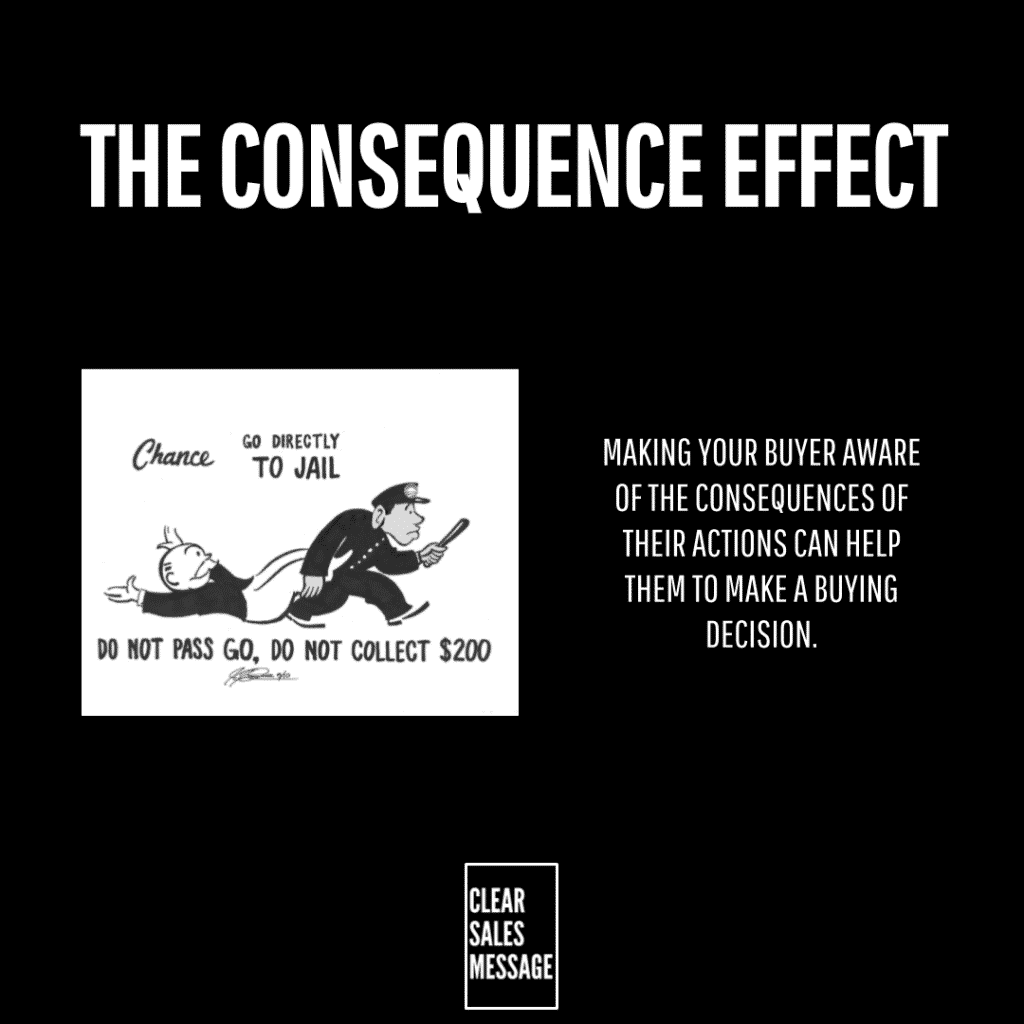
The Consequence Effect
Most poor decisions don’t feel poor at the time. So they feel cheap, easy, or quick, right up until the consequence shows up later.
The Consequence Effect brings that hidden cost forward, so the buyer sees it before they commit, not after.
And once it’s visible, the “easy” choice often doesn’t look so easy anymore.
What Is The Consequence Effect?
The Consequence Effect is all about reminding your buyers that their actions and choices have consequences. So instead of letting a decision feel risk-free, you make the real outcome visible.
It’s not about scaring buyers. It’s about being honest with them, before they find out the hard way.
Why Does The Consequence Effect Work?
It works because many of us make poor choices when the consequences stay hidden. So bringing those consequences to the front of a buyer’s mind changes how they see their own decision.
If you had to sign something to say you agree to put on weight every time you drink a Coke, you’d think twice. Right? That’s the principle at work here. Visibility changes behaviour.
How Can You Use The Consequence Effect In Sales?
When speaking with buyers, you need to remind them that their actions have consequences. From cheaper alternatives to lesser alternatives, to delaying or taking no action at all, consequences await. This applies especially to buyers considering a cheaper alternative or doing it themselves.
Will doing it themselves take longer?
Doing something yourself will almost always take longer than using a professional. That’s why the professionals are in business in the first place.
Do they have the skills or resources?
There’s a great saying: “you either hire a professional or you become one.” A buyer who decides to do it themselves now has to spend time and money learning things, or acquiring the tools they need.
Will the cheaper alternative meet their needs?
Many cheaper alternatives aren’t fit for purpose. They won’t actually meet the buyer’s needs, but the lower price point blinds them to this fact.
Will they need to buy anything else?
Many cheaper alternatives need extra purchases to actually meet a buyer’s needs. If you fly BA, you pay one price for your flight. If you fly Ryanair, you pay less, but food, luggage, and a host of other things become add-on charges. So the cheaper flight isn’t the same thing for less, it’s a less effective alternative entirely.
How long will it last?
Many cheaper alternatives don’t last as long or work as fast. Cheaper shoes wear out quicker. Cheaper laptops break faster and work slower. So cheaper often just means slower.
When The Consequence Effect Works Best
It works best when the buyer is genuinely weighing a cheaper or DIY alternative against your offering, since that’s exactly the moment hidden consequences matter most.
It also works well when you can point to real, specific consequences rather than vague warnings, because specifics carry far more weight than a general caution.
When The Consequence Effect Becomes Dangerous
It becomes dangerous if it tips into scare tactics or exaggeration, since buyers can sense when a consequence has been overstated just to push a sale.
It can also backfire if the consequences you describe aren’t genuinely true for that buyer’s situation, since a false warning damages trust fast once it’s spotted.
Common Consequence Effect Mistakes
Being vague about the actual consequence
A general warning like “it might not work out” rarely lands. So be specific about what could actually go wrong.
Tipping into fear-mongering
Honesty works. Scaremongering doesn’t. So keep the tone factual rather than alarmist, even when the consequence is significant.
Forgetting to offer the better path
Pointing out a consequence without offering a solution leaves the buyer stuck. So always follow it with how your offering avoids that outcome.
The Consequence Effect – An Example
A £200 website versus a £2,000 fee
Imagine you’re a web design agency, and a potential buyer is considering hiring their cousin’s friend to build a £200 website instead of paying your £2,000 fee. Using the Consequence Effect, you might say:
“I completely understand you want to save money. The only thing to consider is whether the £200 site will actually achieve what you need. If it crashes or needs constant fixes, you might end up paying more in the long run, not to mention the lost customers if the site isn’t reliable.”
Here, you’re bringing the hidden consequences, poor quality, future costs, and lost business, to the surface. So the buyer is forced to re-evaluate their decision with the full picture in front of them.
See also
- The Comparison Effect
- The Law of Inaction
- 180+ ways to improve conversion
- 100+ ways to get your buyer to take action