Practical Sales Training™ > How To Lose The Sale> The Fake Unlimited Effect

What is it?
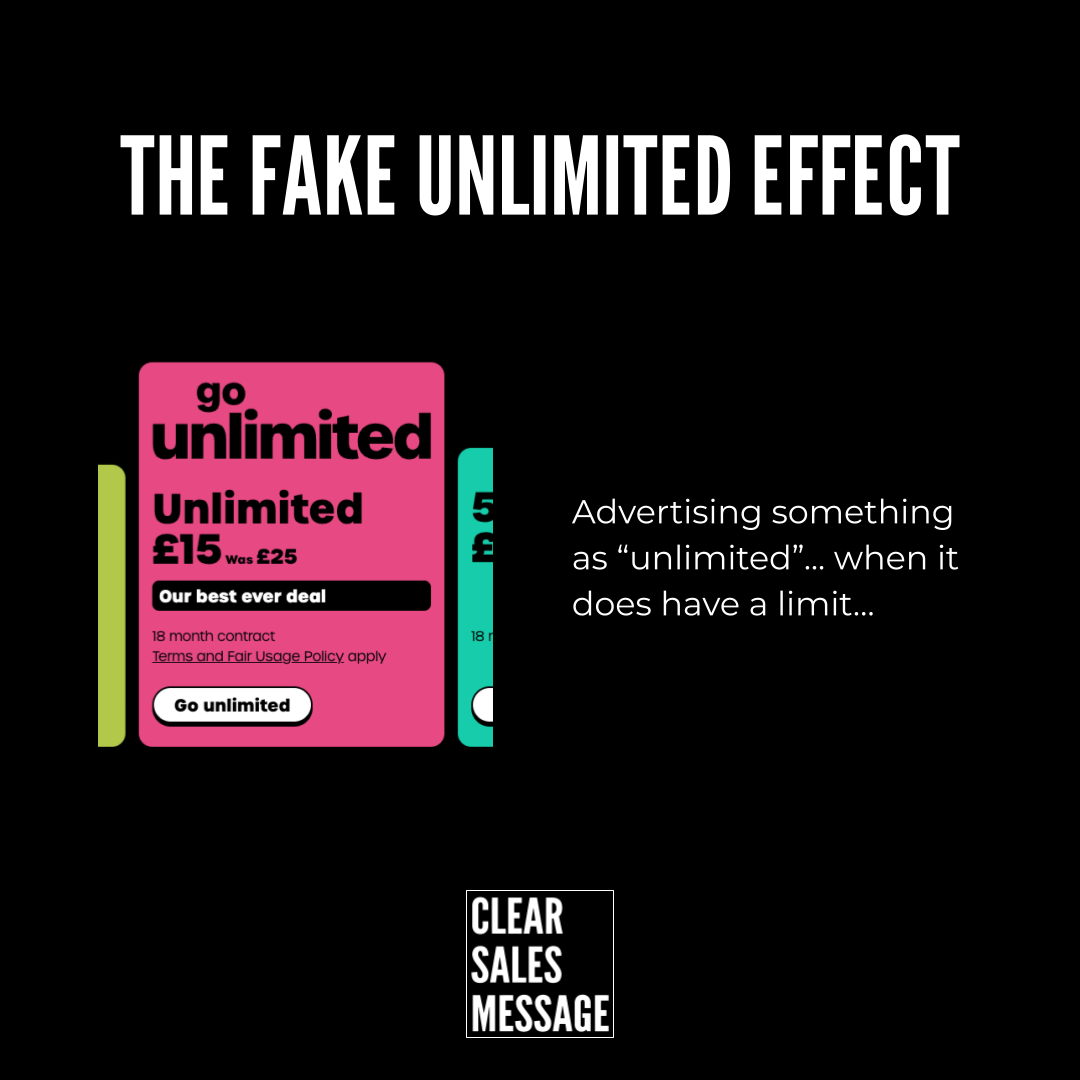
The Fake Unlimited Effect happens when a product or service is promoted as “unlimited,” but in reality, there’s a hidden or practical limit that restricts the experience. It’s a marketing tactic designed to make buyers feel safe and unrestricted, but it often comes with fine print that tells a different story.
You’ll see it in mobile phone plans that promise unlimited data but slow your connection after a certain amount of usage. You’ll find it in “unlimited” support packages that only operate during office hours, or “unlimited” design subscriptions that only process one request at a time.
On the surface, the word “unlimited” suggests freedom and abundance, but when the buyer discovers the truth, that sense of freedom quickly turns into frustration and distrust.
How does it work?
The word “unlimited” is powerful because it removes fear. Buyers hate restrictions, surprise charges, and limitations they don’t understand. By saying “unlimited,” you’re telling them they’ll never run out — and that emotional safety makes it much easier for them to say yes.
But this same emotional promise becomes the source of disappointment when the hidden limit appears. When a buyer realises that “unlimited” doesn’t really mean unlimited, the trust they placed in you is instantly broken. They feel misled, and their perception of your brand shifts from generous to deceptive.
The Fake Unlimited Effect works at first because it triggers optimism. It fails in the long run because it breaks that optimism and replaces it with doubt.
How you can use it (to lose the sale)
If you want to create short-term sales and long-term damage, you can do it easily by using the Fake Unlimited Effect. Just make a big “unlimited” promise, hide the limits in the small print, and hope the buyer doesn’t notice until after they’ve paid.
When they eventually hit the limit – when their data slows, when their “unlimited” support goes unanswered, or when their requests are suddenly queued – they’ll feel tricked. That feeling of being tricked doesn’t just lose you one sale; it destroys repeat business, referrals, and reputation.
The truth is, most buyers don’t expect perfection. They expect honesty. If your offer isn’t truly unlimited, it’s better to say what is unlimited – access, usage, revisions, or time within reason – rather than pretending there are no limits at all.
By being clear about the boundaries, you still get the power of a generous offer without the backlash of a broken promise.
Example
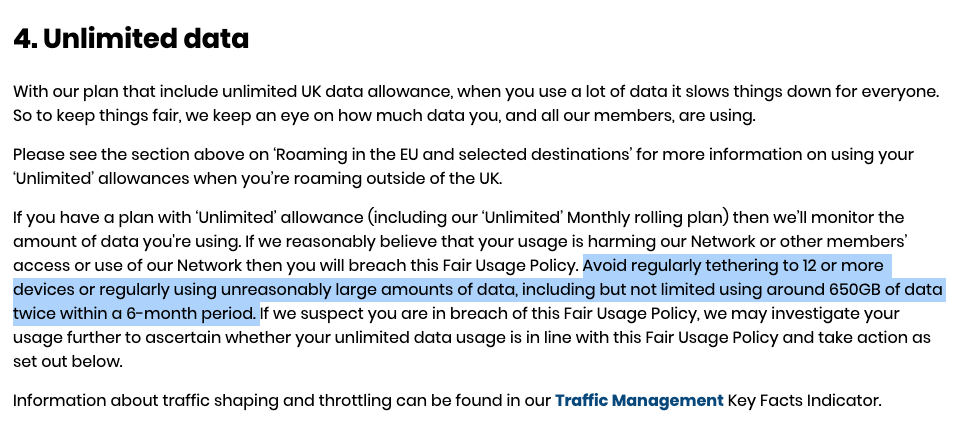
Many mobile phone providers promote “unlimited” plans and then have small print about fair usage which implies there IS a limit…

See also