Practical Sales Training™ > How To Get Attention > The “Middle Name” Effect

The “Middle Name” Effect
The middle name effect is a simple trick. You add a short phrase between your first and last name. It could be a belief, a promise, or a specific skill. So people see it every time your name appears.
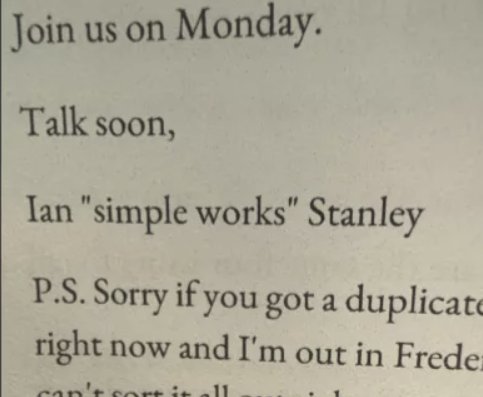
Ian “simple works” Stanley uses it in his email sign-off. The phrase sits right between his first and last name. It tells you exactly what he stands for. He never has to write a single line of copy.
Why Does It Work
Your name is one of the most repeated pieces of text you own. It shows up in emails, invoices, signatures, and introductions. But most people waste that space. They just use their name.
Add a phrase in the middle, though, and it becomes a small billboard. Every email you send trains the reader to link you with one idea. You never have to say it out loud.
Repetition also builds trust. The more often someone sees the same phrase next to your name, the more it feels true. So this isn’t a one-off trick. It’s a quiet, constant reminder.
How Can You Use It
Pick one belief and stick to it
Choose a phrase that sums up how you work or what you believe. Keep it short enough to read in one glance. Then use the same phrase everywhere, not a different one each month.
Test it in your own signature first
Add the phrase to your email sign-off before you use it anywhere else. Send it for a week. Notice if people mention it, quote it back, or ask about it.
Use quotation marks to set it apart
Wrap the phrase in quote marks, the way Ian “simple works” Stanley does. This signals it isn’t part of your legal name. It reads as a chosen line, not a typo.
When It Works Best
This works best when you write often and want one message to stick. Email newsletters, cold outreach, and regular client updates all repeat your name constantly. Each repetition reinforces the phrase a little more.
It also works well when your belief is genuinely different from your competitors. A generic phrase gets ignored, but a sharp one gets remembered.
When It Becomes Dangerous
The effect breaks down fast if you change the phrase often. Buyers need repetition to build the association. Swap it every few weeks, and nothing sticks at all.
It can also backfire if the phrase is vague or overused. Even words like “results driven” or “customer focused” say nothing specific. So buyers skim straight past them.
Finally, watch how it sounds read aloud. A phrase that looks clever on a screen can still sound awkward in conversation. If a colleague can’t say it naturally, it probably needs a rewrite.
Common Mistakes
Choosing something too vague
A vague phrase blends into every other signature in someone’s inbox. Be specific about what you do or believe. Specific phrases stick, and vague ones vanish.
Never testing how it reads out loud
A phrase that works in writing doesn’t always work when spoken. Read it out loud before you commit to it. A clumsy sound in your mouth will feel clumsy to a reader too.
Forgetting to update it once it’s stale
Even a strong phrase can wear out after years of use. If it no longer fits what you do, retire it. Otherwise, it starts working against you instead of for you.
The “Middle Name” Effect – An Example
This example comes from an email, quoted inside a book about writing emails. The author uses the technique in his own sign-off.
See Also