
Practical Sales Training™ > How To Get Attention > The Named Process Effect

The Named Process Effect
A process without a name is just something you do. Give it a name, and suddenly it’s something you own.
So the Named Process Effect turns routine work into something buyers notice.
What Is It
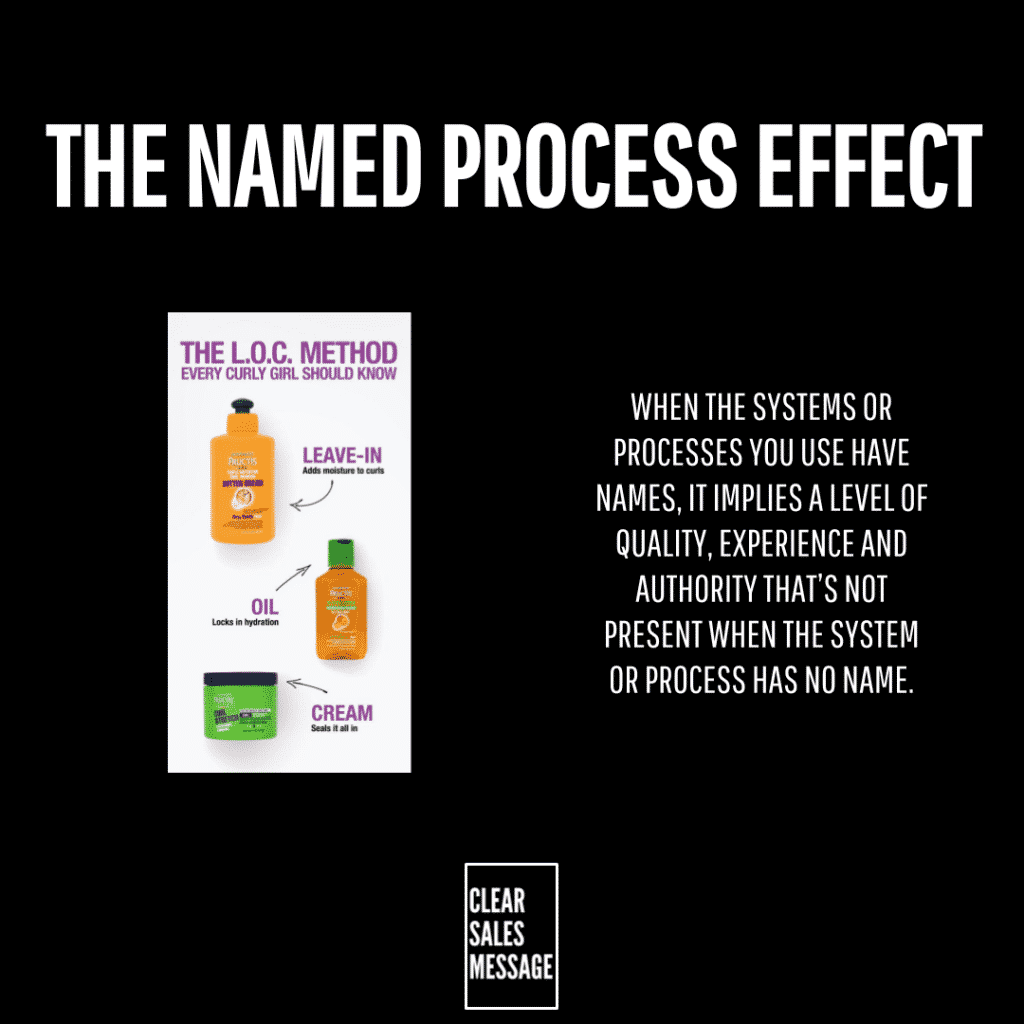
The Named Process Effect means giving your process or system an actual name. It adds credibility and memorability to something that would otherwise stay invisible.
Why Does It Work
It works because we only name things we care about. Or things that carry real value. A named process implies quality and authority. So an unnamed one never gets that same credit.
It also makes something intangible feel tangible. Also, a process is hard to picture. So a named process is something you can refer back to, and buyers remember.
How Can You Use It
Build A Name Your Team Can Actually Use In A Call
A name only earns its place if you can say it fast, mid-conversation. If your team has to define it every time, it’s not earning its place.
So test it out loud before you commit. If it takes a full sentence just to introduce, simplify it further.
Make The Acronym Do Double Duty
If your process fits an acronym, build each letter around a real step. So the name works internally as a checklist. At the same time, it also works externally as a pitch.
That gives you two returns from one name. So it means consistent delivery inside the business, and a clean story outside it.
When It Works Best
This works best right when a buyer asks how you actually do the work. That’s the exact moment they’re checking whether you have a method, or you’re improvising.
It also works best when the name reflects something real. A name with no real process behind it collapses fast. So the first follow up question exposes it.
When It Becomes Dangerous
This becomes dangerous the moment the name promises consistency you don’t deliver. A named process implies every client gets the same experience. So if that’s not true, a buyer who notices feels misled. More misled than if you’d never named anything at all.
It also backfires if the name is too clever. An acronym nobody can pronounce adds friction instead of removing it. So does a term that needs explaining every time.
Common Mistakes
Naming A Process You Don’t Actually Follow
Slapping a name on inconsistent delivery sets an expectation you can’t keep. So only name what you can genuinely repeat, client after client.
Choosing Cleverness Over Clarity
An obscure or overly clever name forces buyers to keep asking what it means. So a name should need explaining once, not on every mention.
The Named Process Effect – An Example
So Neil Rackham built one of sales training’s best known named processes: SPIN Selling. Each letter stands for a stage: Situation, Problem, Implication, Need payoff.
The name itself does real work. So it gives sales teams a shared shorthand for a specific questioning sequence. Buyers of the training also get something concrete to picture. It beats a vague promise of better questions.
So decades later, people still reference SPIN by name. Most other sales frameworks from the same era faded away.
See also