Practical Sales Training™ > How To Lose The Sale > The Negative Pose Effect

The Negative Pose Effect
You can say all the right things and still lose the sale. Because while your words are saying one thing, your body might be saying another. And buyers read body language before they process what you’re saying.
A shrug, crossed arms, or slouched posture sends a signal. It’s not always conscious. But the buyer picks it up anyway. As a result, they feel less confident in you, even if they can’t explain why.
The Negative Pose Effect is the cost of that disconnect. It’s one of the most common and least noticed ways to lose trust in a sales situation.
What Is the Negative Pose Effect?
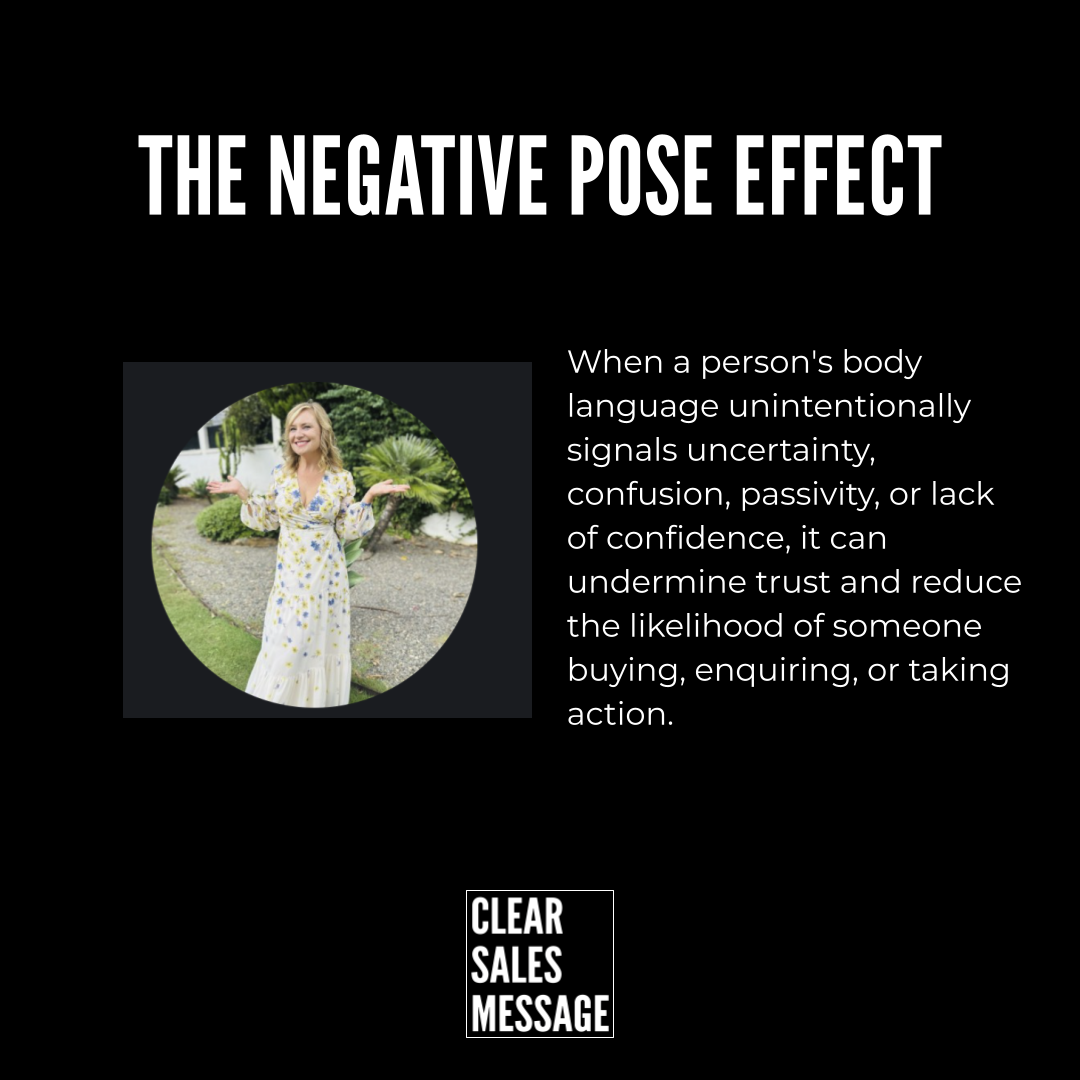
The Negative Pose Effect happens when a person’s body language unintentionally signals uncertainty, confusion, passivity, or lack of confidence. It can undermine trust and reduce the likelihood of someone buying, enquiring, or taking action.
The key word is unintentionally. Most people don’t shrug because they want to look unsure. They shrug out of habit, nerves, or simply because they haven’t thought about it. But the buyer doesn’t know that. They just see the signal. And the signal says something the words don’t.
Body language operates at a level below conscious thought. So even when a buyer doesn’t notice a specific pose, the cumulative effect of negative signals shapes how they feel about the interaction. That feeling influences their decision far more than most sellers realise.
Why Does the Negative Pose Effect Work Against You?
Buyers make judgements about trust very quickly. Research suggests the first impression is formed in seconds. A significant part of that impression comes from posture, gesture, and eye contact, not from what’s said.
When body language and words don’t match, buyers feel the mismatch. They may not be able to name it. But they experience it as a vague sense that something is off. Because that feeling attaches to you and your offer, it makes them less likely to commit. So the message fails not because it’s unclear, but because the delivery undermines it.
Similarly, negative poses are contagious. When you project low energy or uncertainty, the buyer mirrors it. Their confidence in the conversation drops. Their willingness to engage reduces. As a result, the whole interaction becomes harder than it needs to be.
The Most Common Negative Poses In Sales
Here are the poses that do the most damage, and why they send the wrong signal.
The Shrug
The shrug signals “I’m not sure,” “who knows,” or “maybe.” Those are not signals a buyer wants to see from the person asking them to trust a product, service, or recommendation. Even a casual shrug during a small moment in the conversation creates a residue of doubt. So use a firm nod or a clear gesture instead, because certainty is reassuring and doubt is contagious.
Crossed Arms
Crossed arms signal defensiveness and emotional distance. Even when the intention is simply to feel comfortable, the buyer reads it as closed off or resistant. It creates a barrier, literally and psychologically. Instead, keep your arms open and relaxed. Because open body language signals that you’re engaged, confident, and receptive.
Hands in Pockets
Putting your hands in your pockets signals nervousness, discomfort, or disengagement. It makes you appear less invested in the conversation. Because hands are a primary channel for expressing enthusiasm and emphasis, hiding them removes a powerful tool. Keep your hands visible and use them to support your points rather than conceal them.
Looking Down
Looking down during a conversation signals low confidence and uncertainty. It reduces your perceived authority. When you look away from the buyer, you break the connection that trust is built on. So maintain eye contact where natural. If you need to check notes, do so briefly and return your gaze to the buyer quickly.
Slouched Shoulders
Slouching signals low energy, lack of conviction, or defeat. It makes your offer feel less compelling before you’ve said a word. However, sitting or standing tall signals confidence and purpose. It tells the buyer that you believe in what you’re presenting. So correct your posture before you enter a meeting or step in front of a camera. Because it shapes how everything else lands.
How Can You Use the Negative Pose Effect In Sales?
Use it as a checklist. Before every meeting, presentation, video, or photo, ask yourself what your body is communicating. Here’s how to apply it across different situations.
In Meetings and Calls
Sit or stand straight. Keep your arms open. Make consistent eye contact. Avoid fidgeting. These habits signal confidence and engagement. As a result, the buyer feels more at ease and more trusting of what you say. The content of your pitch matters. But delivery is what makes it land.
In Photos and Profile Images
Your profile photo is often the first impression a buyer forms of you. So the pose in that photo sends a signal before you’ve said or written anything. A shrug, a downward gaze, or a closed posture in a profile image can subtly communicate that you don’t know the answers or lack conviction. Choose a photo where you look direct, open, and confident. Because that image works for you or against you on every platform where it appears.
In Video and Presentations
Video amplifies body language. Gestures, posture, and eye contact are all more visible on screen than in person. So before recording, check your setup. Sit straight, look into the camera rather than the screen, and keep your hands visible and still unless using them to gesture. Also, watch back a recording of yourself occasionally. Because what feels natural on your end may read very differently to the viewer.
In Networking and Events
At events, body language is working constantly, even when you’re not speaking. Standing with open posture signals you’re approachable. Leaning in slightly signals interest. However, hovering, looking around the room, or standing with arms crossed sends the opposite message. So be deliberate about how you carry yourself even in the moments between conversations.
When the Negative Pose Effect Causes the Most Damage
It causes the most damage in the first few minutes of an interaction. That’s when buyers are forming their impression and deciding whether to trust you. A negative pose at that moment creates a starting point of doubt that the rest of the conversation has to overcome.
It also hits harder in visual formats. A photo, a video, or a live presentation gives the buyer time to read your body language in detail. So a shrug in a meeting room is bad. A shrug in a profile photo is worse, because thousands of people may see it before you’ve even spoken to them.
Similarly, it’s damaging in high-value or high-stakes sales situations. When a buyer is deciding whether to commit to a significant investment, their confidence in you as a person matters enormously. Because they’re buying your expertise as much as your product, your posture needs to reflect that expertise clearly.
Common Negative Pose Effect Mistakes
Not Watching Yourself Back
Most people have never watched themselves on video or seen themselves in a meeting. So they have no idea what their default body language looks like. Record yourself on a call or in a practice pitch. Watch it back without sound first, since that forces you to focus entirely on what your body is communicating. Because what you see may surprise you.
Assuming Nerves Don’t Show
Nervous habits like fidgeting, self-touching, or rapid blinking are visible even when you feel like you’re holding it together. So manage nerves before they reach the buyer. Take a breath before entering the room. Slow down your speech. Plant your feet. Because physical stillness signals calm, even when you don’t feel it.
Neglecting Photos and Thumbnails
Profile photos, website images, and video thumbnails all carry a body language signal. However, most people choose photos based on how they look rather than what the pose communicates. So before you use any image professionally, ask what the body language in it says. A smiling, open, forward-facing pose builds trust. A shrug, a turned away head, or a downward gaze does the opposite.
Treating It as Less Important Than Words
Content preparation gets most of the attention in sales. But delivery shapes how that content lands. A well-prepared pitch delivered with closed, low-energy body language will underperform the same pitch delivered with confidence and openness. So spend time on both. Because what your body says is just as important as what your words say.
The Negative Pose Effect – An Example
The image below shows a woman using a shrug pose in her profile picture. Her arms are out, her palms face upward, and her expression is uncertain. The pose communicates “I don’t know” or “who can say?” It’s the kind of photo that might feel friendly or casual in another context. But as a professional profile image, it subtly signals that she doesn’t have the answers. As a result, buyers who land on that image before making contact start the interaction with a small but real seed of doubt.

The fix is simple. Swap it for a photo where the pose signals confidence, warmth, and certainty. Because a profile image is working for you or against you every single time someone sees it. So make sure it’s working for you.
See also