
Practical Sales Training™ > How To Convert > The Outlet Effect

The Outlet Effect
Old stock sitting on your website drags everything down. It clutters your main range, and makes your brand look like it’s discounting everywhere.
The Outlet Effect solves that. So you give leftover, out of season or imperfect stock its own separate home.
What Is It
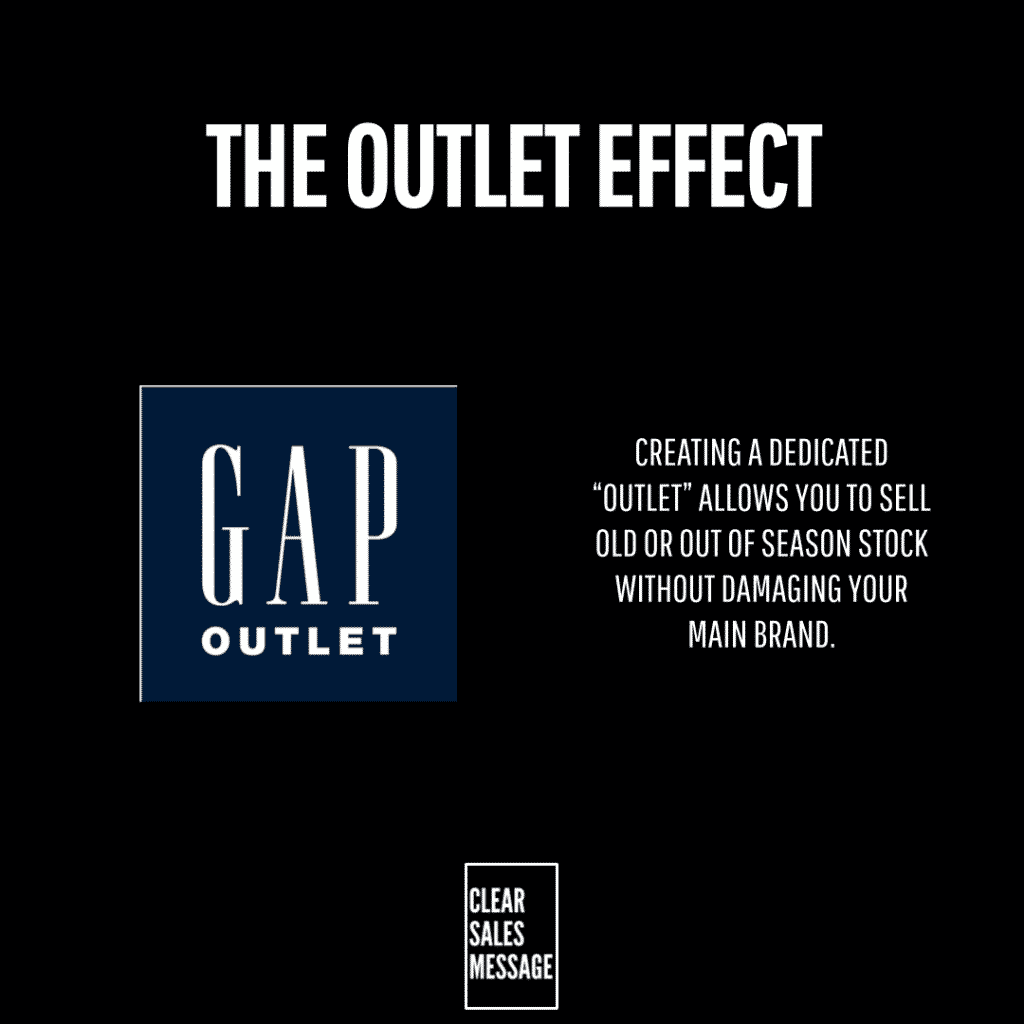
The Outlet Effect means giving stock a separate outlet. That includes anything old, out of season, or imperfect. Your main brand stays untouched.
So you keep the two experiences apart. Full price stays full price, and discounted stock lives somewhere else entirely.
Why Does It Work
Buyers already understand what an outlet is. So it doesn’t confuse or dilute how they see your main brand.
You could mix outdated lines into your current range. But an outlet reaches a different buyer instead. Someone who wants to buy, but can’t stretch to your full price.
So you capture that sale instead of losing it. And your main brand keeps its position.
How Can You Use It
Separate Your Outlet From Your Main Store
If you sell physical products, look at your older stock. How do you deal with anything out of season? Also, could it live in its own outlet store or outlet website?
Keep The Branding Consistent But Distinct
Use the same core branding, so buyers still trust it’s genuinely you. But make it visually and verbally clear this is the outlet.
When It Works Best
This works best when you have a steady stream of ageing or surplus stock. So an outlet gives it a home, instead of letting it sit unsold.
It also works well for price sensitive buyers. They want your product, but need a lower price to say yes.
When It Becomes Dangerous
An outlet becomes risky when buyers can’t tell it apart from your main brand. So confusion about which price is real damages trust fast.
It also backfires if you offload faulty stock without saying so. So that turns a smart pricing move into a complaint.
Common Mistakes
Blurring The Line Between Outlet And Main Store
Mixing outlet stock into your main range confuses buyers instantly. So keep the two clearly separate, in name and in presentation.
Hiding Why The Price Is Lower
Buyers accept a lower price when they understand why. So always be upfront about condition. Say if it’s refurbished, out of season, or just older stock.
The Outlet Effect – An Example
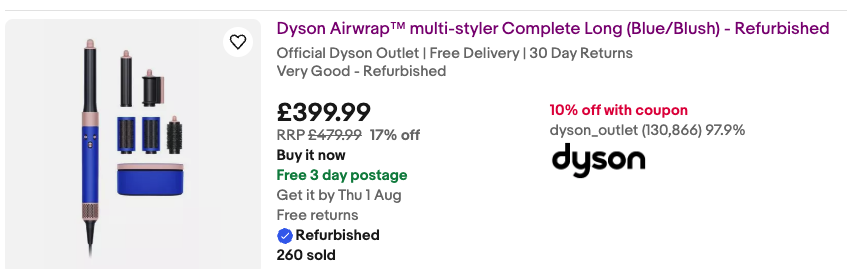
Dyson runs its own outlet store through eBay. It sells refurbished stylers under a dedicated outlet account. So that’s separate from its main listings.
The listing spells out exactly why the price is lower. Also, it’s marked refurbished, with a clear discount against the original price.
So that separation lets Dyson clear older stock. And it protects the price and reputation of its full price range too.
Amazon and eBay use the same idea at a bigger scale. So both run entire outlet or refurbished sections. That hits a lower price point.
[PLACEHOLDER: the-outlet-effect-example-optimized.webp — uploaded to this chat only, no WordPress src/wp-image ID yet. Once uploaded to the media library, insert as:  here, either replacing the image above or alongside it — confirm which.]
See also