Practical Sales Training™ > How To Lose The Sale > The Price Before Value Trap
The Price Before Value Trap
Every sale has a sequence. Get it right and the price feels fair. Get it wrong and the price feels like a wall. The Price Before Value Trap is what happens when you lead with the number before the buyer understands what they are getting.
It is one of the most common mistakes in sales. And it is easy to make. A pricing page, a proposal, an email with a quote up front. In each case, the buyer sees the cost before they see the case for it.
The fix is simple. But most people never make it. Because they assume the buyer will read everything before forming a view. They won’t.
What Is The Price Before Value Trap?
The Price Before Value Trap happens when a buyer sees your price before they understand what they are getting. Without context, the number has nothing to sit next to. So the brain does what brains do. It judges.
Even a fair price feels high when there is no value behind it yet. The buyer has no frame of reference. They cannot weigh the cost against the benefit because they have not seen the benefit. So the number alone becomes the decision.
This is a sequencing problem. The content is often good. But the order kills it. Because price without value is just a number. And numbers on their own trigger resistance, not excitement.
Why Does The Price Before Value Trap Work Against You?
When a buyer sees a price first, it anchors their thinking. Everything that follows gets filtered through that number. Instead of building up to the cost, you are spending the rest of the conversation defending it.
The brain looks for shortcuts when making decisions. So a price with no context becomes a signal. And that signal is almost always “too much.” Not because it is, but because there is nothing yet to show it is not.
However, when you reverse the order and lead with value, the same price lands differently. By the time the buyer sees the number, they already understand what they are getting and why it matters. As a result, the cost feels like a reflection of worth rather than a point of pain.
How Can You Avoid The Price Before Value Trap In Sales?
The answer is always sequence. Value first. Price last. Structure every piece of sales communication so the buyer understands what they gain before they see what it costs.
Explain the Outcome First
“We help you increase qualified leads by 40%” before “Our package starts at £2,000.” The outcome earns the price. But only if the buyer hears it first.
Show Proof Before Pricing
Share results, case studies, or testimonials before you talk about cost. When buyers can see that it works, the price becomes much easier to accept. Social proof builds the value that justifies the number.
Describe the Work Involved
Give buyers a sense of the process and expertise behind your offer. When they understand what goes into it, the price makes sense. Most buyers have no idea what is involved. So tell them before you charge them.
Frame the Comparison
“It costs less than hiring one new salesperson” gives instant perspective. Comparisons reframe price in terms the buyer already understands. That makes the number feel smaller, even if it has not changed.
Delay the Number
In proposals or on websites, move pricing to the end of the page or the end of the conversation. Build the case first. When the price finally appears, the buyer is ready for it instead of reacting to it cold.
When The Price Before Value Trap Hurts Most
It hurts most in written communication. On a website, in a proposal, or in an email, there is no one there to manage the reaction. The buyer reads at their own pace and forms their view before you can step in.
It also hits hard with new buyers who have no prior experience with you. An existing client has context. They know what you do and what it is worth. But a new prospect has nothing to go on. So the price is their only reference point, and that is a dangerous place to start.
Similarly, high-ticket offers suffer most. The higher the number, the more value needs to come first. Because the gap between what the buyer expects and what they see is largest at the top end of any price range.
When The Price Before Value Trap Becomes Dangerous
It becomes truly damaging when the buyer does not tell you they have reacted badly. They just go quiet. No reply, no follow-up, no reason given. The sale dies silently and you never know why.
It also creates a credibility problem. When a buyer sees a high price with no context, they may assume you are overcharging. That doubt can stick even after you explain the value. First impressions in sales are hard to undo.
But the deeper danger is that you keep making the mistake without realising it. Because when deals go quiet, most salespeople assume the buyer was not serious. In fact, the sequence was just wrong from the start.
Common Price Before Value Trap Mistakes
Putting Pricing at the Top of a Proposal
Many proposals open with a summary page that includes the investment. The buyer sees the number before they have read a single word of justification. Instead, build the case through the whole document and put the price near the end.
Publishing Prices With No Context
A pricing page that leads with numbers and no explanation of what the buyer gets is a trap waiting to happen. Add outcomes, proof, and process before you show the cost. Give the number somewhere to land.
Answering “How Much?” Too Early
When a buyer asks for the price early in a conversation, it is tempting to give it. But if they do not yet understand the value, the number will land badly. So acknowledge the question and redirect: “I will get to that. Let me show you what you actually get first.”
Assuming Buyers Will Read in Order
Buyers scan. They skip to the number, the headline, or the summary. So you cannot rely on them reading your value case first. Structure your content so the value is impossible to miss before the price appears.
The Price Before Value Trap – An Example
The coaching pricing table shown here is a good example of the trap in action. The buyer sees three packages: 3 months, 6 months, and group. Each one shows a price straight away. The 6-month package starts at $5,000.
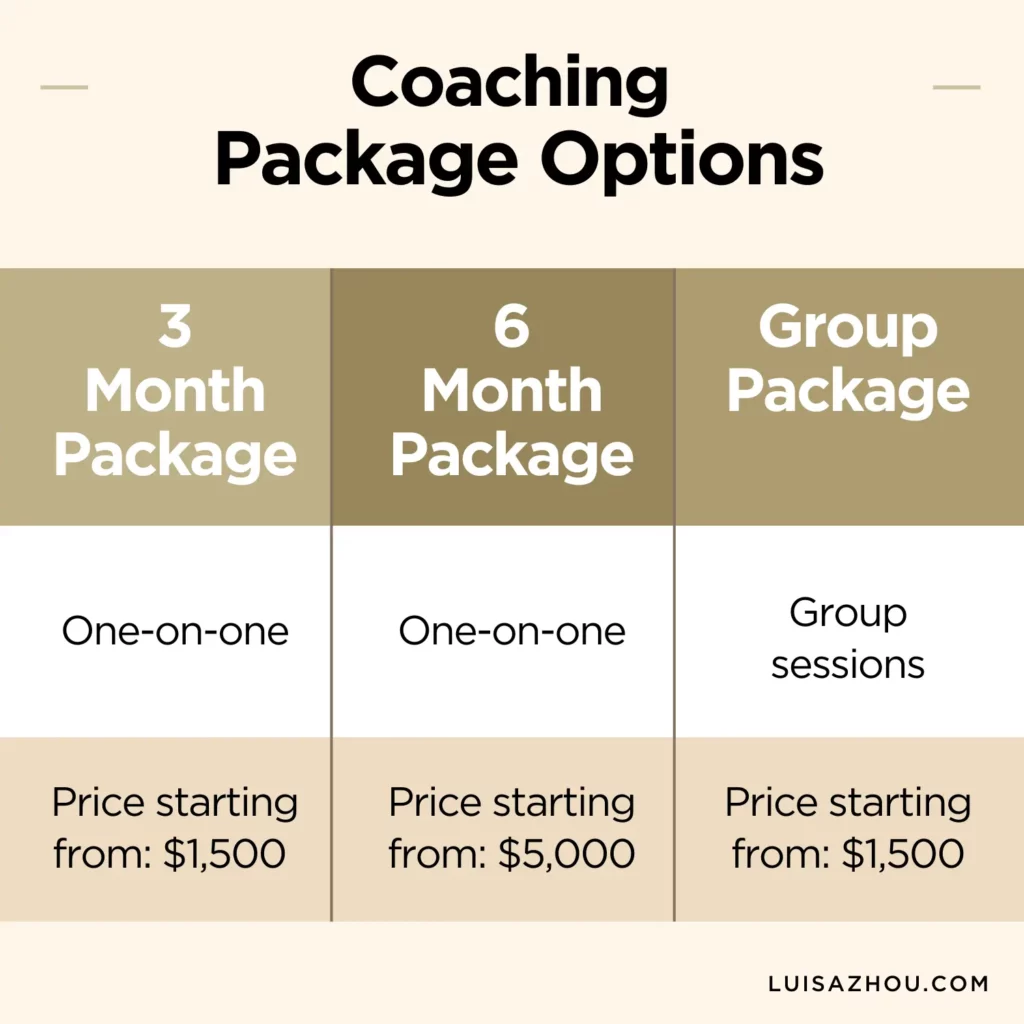
But what does the buyer actually get? The table says “one-on-one” or “group sessions.” That is it. There is no outcome described. No result promised. No proof of what past clients achieved. So the price sits there with nothing to justify it.
For a buyer who does not already know the coach, $5,000 with no context is a hard sell. However, if the same page led with results, testimonials, and a clear explanation of the process, that number would feel very different by the time the buyer reached it.
That is the whole trap. The price is not the problem. The sequence is. Lead with value first and the number takes care of itself.
See Also