Practical Sales Training™ > How To Get Attention > The Sticker Effect

The Sticker Effect
Most marketing costs money every time it runs. But a sticker keeps working long after you hand it over. It sits on a laptop, a water bottle, a car bumper, and your brand gets seen by people you never paid to reach.
The Sticker Effect is simple. You give a customer a free sticker. They choose to display it. And because they chose it, the signal is stronger than any ad you could buy. It says: this person likes this brand enough to wear it.
That is the real power here. It is not just visibility. It is social proof in a physical form. And it costs almost nothing to create.
What Is The Sticker Effect?
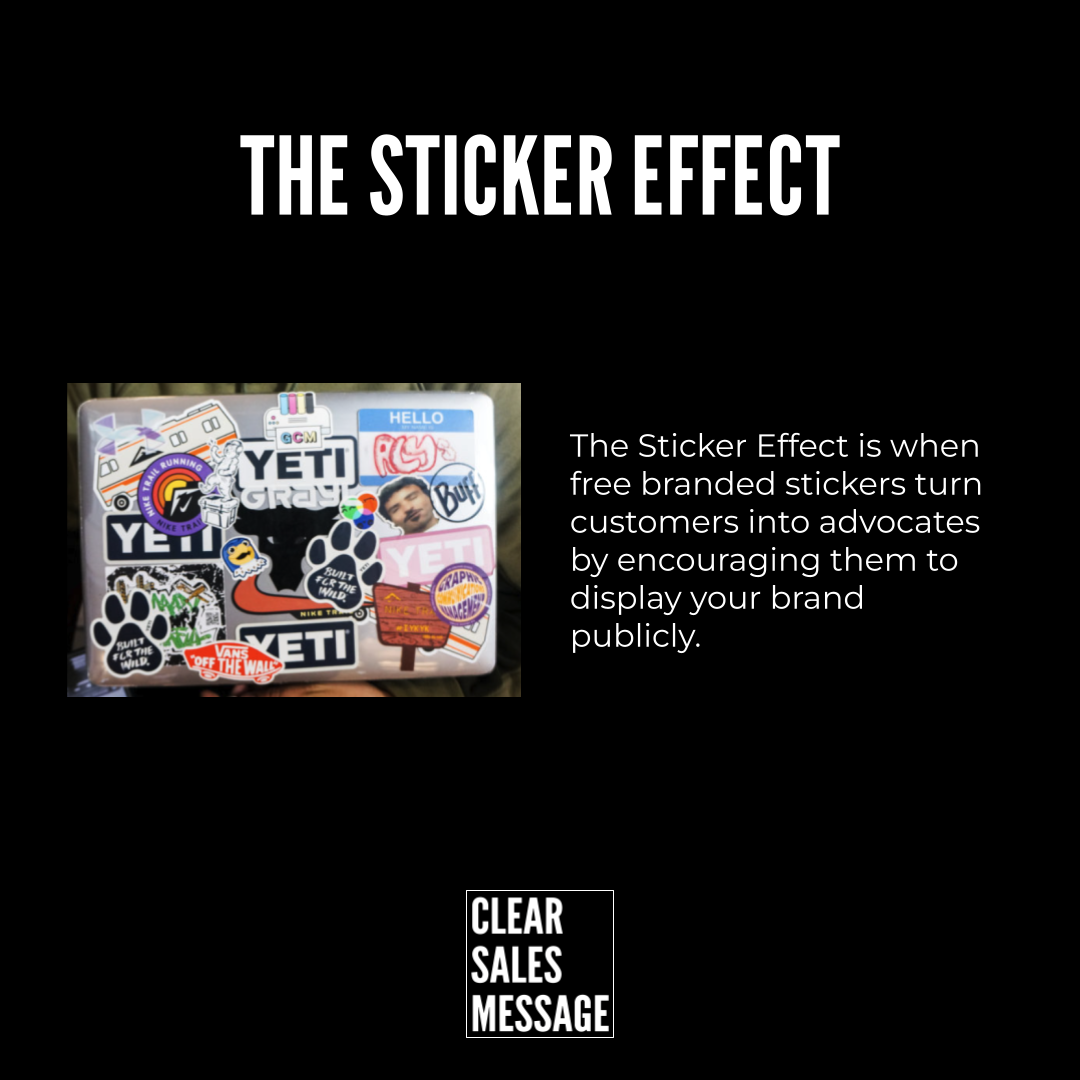
The Sticker Effect is when free branded stickers turn customers into advocates by encouraging them to display your brand in public. Nobody pays the customer to show it off. They do it because they want to. That voluntary act is what makes it so valuable.
Brands like YETI, Apple, Vans, and Supreme have built cult followings partly through this. When someone plasters their laptop with YETI stickers, they are not just a customer. They are a fan. And fans spread the word far more convincingly than any sales team.
However, the Sticker Effect is not just for big brands. Any business can use it. The key is making the sticker something people actually want to display.
Why Does The Sticker Effect Work?
It works because of identity. People display stickers to say something about who they are. So when someone sticks your brand on their laptop, they link their identity to yours. That connection is far more powerful than a passive impression.
There is also a psychological principle at play called consistency. Once someone displays your brand, they are more likely to keep buying from you. Stopping would feel inconsistent with the signal they have already sent.
On top of that, other people see the sticker. A single sticker on a laptop in a coffee shop might reach dozens of eyes in a week. And because a real customer put it there rather than an advertiser, it carries far more trust. In fact, peer signals consistently outperform paid media when it comes to buyer trust.
The cost per impression is also remarkably low. A sticker might cost 10p to produce. But it could deliver thousands of brand impressions over its lifetime. As a result, few marketing tools come close to matching that return.
How Can You Use The Sticker Effect In Sales?
Include stickers with every order
If you sell a physical product, put a sticker in the box. Keep it simple and clean. Make it something people would want on a laptop or a bag. The easier it is to display, the more likely they will use it.
Give them out at events
Trade shows, conferences, and networking events are ideal. People collect stickers at events, and a good design will make the cut. So focus on design quality and make sure your brand name reads clearly.
Use them as a reward
Give stickers to loyal customers or as a thank-you for referrals. This adds value to the relationship and raises the chance they display the sticker with pride. Because people treat gifts differently from freebies.
Create limited edition versions
A limited sticker feels more special than a standard one. As a result, people are more likely to keep it and display it. Similarly, a series of stickers gives customers a reason to collect them, which deepens brand engagement.
Make the design do the work
Your sticker competes with every other sticker a person owns. Therefore, invest in the design. A sticker that looks great will get displayed. A bland one will go in a drawer and stay there.
When The Sticker Effect Works Best
It works best when your brand already has some warmth attached to it. People display brands they feel proud of. So if customers genuinely like you, the sticker becomes a badge. But if your brand has no emotional pull yet, the sticker alone will not create it.
It also works well in communities. Tech, sport, fitness, travel, music, and outdoor brands all benefit because their customers share a strong sense of identity. For example, a cycling brand sticker on a bike frame sends a clear signal to other cyclists. That social signal drives awareness within exactly the right audience.
Similarly, it works well when people use the product in public. A water bottle, a laptop, a helmet, a skateboard. These are all high-visibility items. In contrast, a sticker on a kitchen appliance that never leaves the home delivers far fewer impressions.
When The Sticker Effect Becomes Dangerous
The biggest risk is a poor design. A cheap or ugly sticker reflects badly on your brand. If people would not be caught dead displaying it, you have wasted the opportunity and possibly damaged how they see you.
It also becomes a problem when the brand behind the sticker has a bad reputation. Because the person displaying it puts their own reputation on the line too. So if your brand lets customers down, a sticker can actually speed up the spread of negative sentiment.
However, the subtler danger is making the sticker feel like advertising rather than identity. If it looks too salesy or too corporate, people will not want to wear it. The sticker has to feel like something worth owning, not something someone handed you at a checkout.
Common Sticker Effect Mistakes
Making it too small to notice
A tiny sticker does not get seen. You need a design that reads clearly from a normal viewing distance. So size matters as much as design.
Putting just a logo on it
Logos alone rarely earn a display spot unless the brand is already famous. Instead, give the sticker a concept, a phrase, or an image that people connect with. The logo can still appear on it, but it should not carry the whole design.
Giving them to the wrong people
A sticker in the hands of someone who does not care about your brand is a wasted sticker. So target your best customers and your most engaged fans. They are the ones who will actually display it.
Only doing it once
Stickers wear out. Other stickers cover them. As a result, refreshing your design over time keeps the effect alive and gives loyal customers a reason to re-engage.
The Sticker Effect – An Example
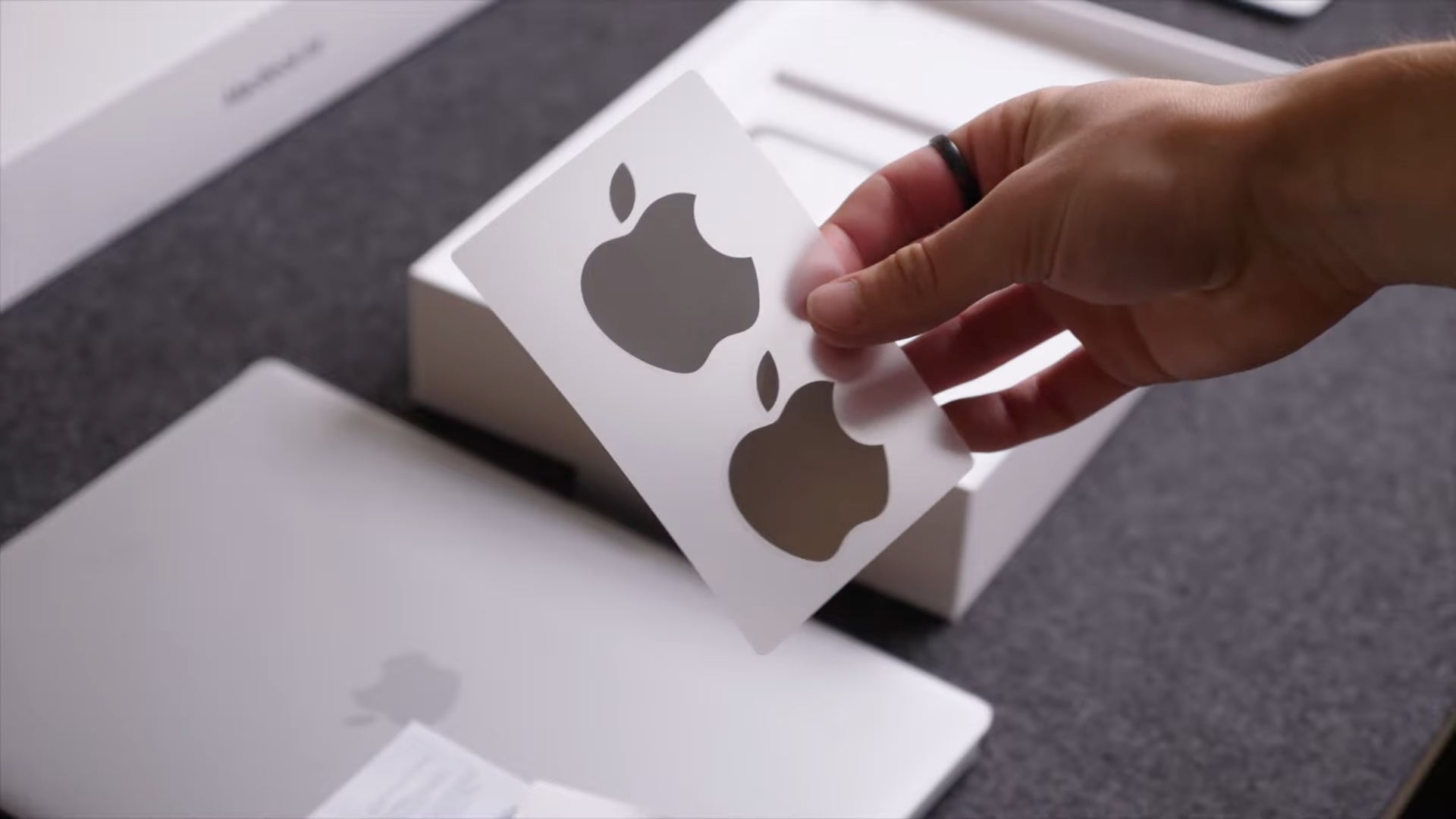
Apple is the most famous example of the Sticker Effect in action. For years, every Mac came with two Apple logo stickers. People put them on their cars, notebooks, and laptops. As a result, the Apple logo became one of the most displayed brand marks in the world, and it cost Apple almost nothing to get there.
But you do not need to be Apple. A small craft brewery that includes a sticker pack with every online order can get its logo onto hundreds of laptops and water bottles across the country. Because the customers who order online tend to be the most loyal, and loyal customers are the most likely to show it off.
See Also: