Practical Sales Training™ > How People Work > The Waiting Trap
The Waiting Trap
Nobody said no. Nobody raised an objection. And yet, three weeks later, the deal has gone completely quiet.
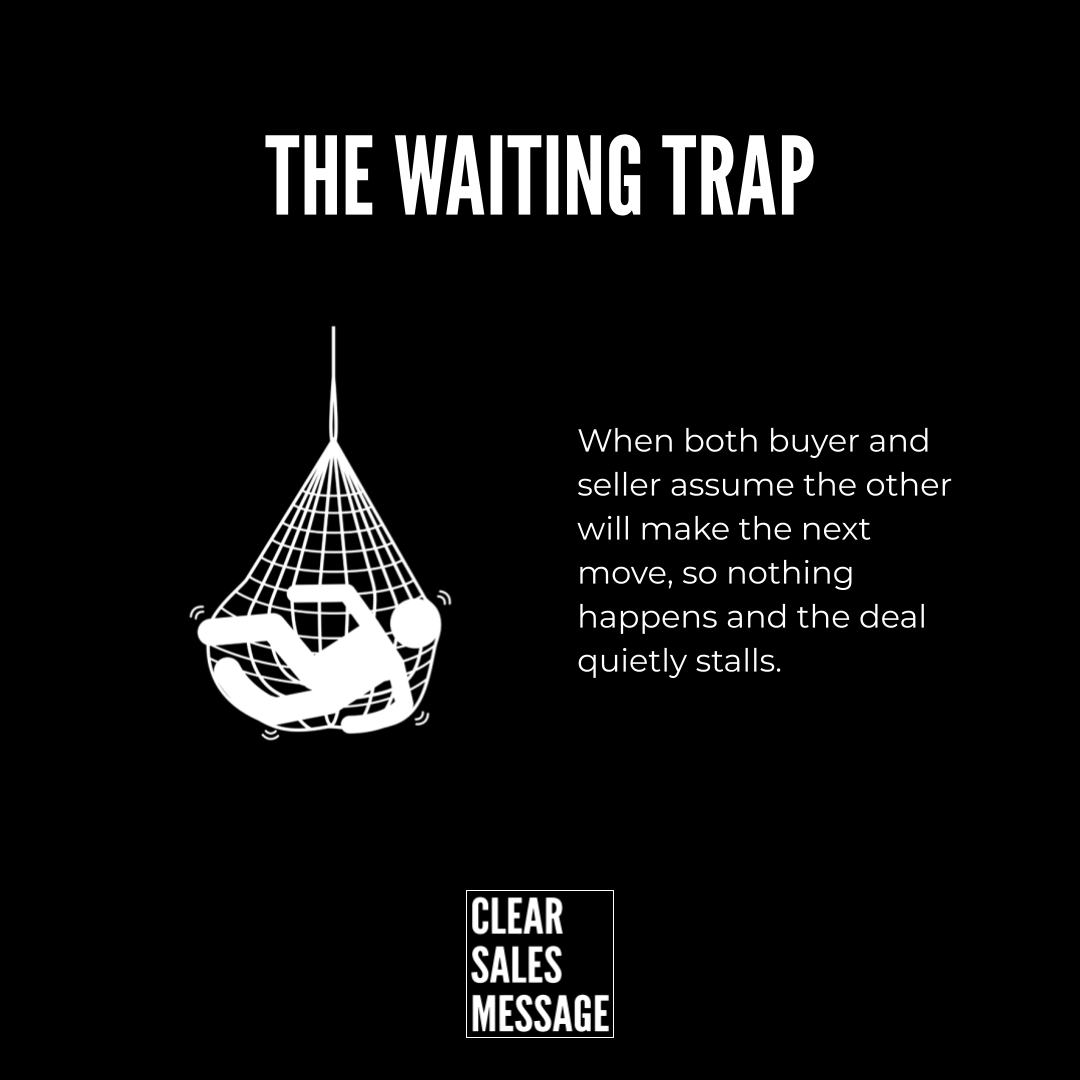
That’s The Waiting Trap. Both sides assume the other will make the next move, so neither one does, and the silence slowly kills momentum that a single message could have saved.
This page covers what The Waiting Trap is, why polite hesitation causes it, and how to remove it from your own sales process.
What Is The Waiting Trap?
The Waiting Trap happens when both the buyer and the seller assume the other person will make the next move. Nobody says no, no objection gets raised, and nothing feels wrong in the moment. Yet nothing moves forward either.
Instead of a clear stop, the deal slowly loses momentum. Follow ups get delayed, urgency fades, and attention drifts elsewhere. So the opportunity doesn’t disappear because someone rejected it. It disappears because nobody attended to it.
Why Does The Waiting Trap Happen?
The Waiting Trap usually comes from politeness and assumption. Buyers often hesitate because they don’t want to seem demanding or premature. Sellers hesitate too, because they don’t want to pressure someone who looks interested but undecided.
So both sides pause, each expecting movement from the other. That pause feels harmless at first, but it quietly drains energy from the decision. Without a clear next step, time stretches, priorities shift, and the original context loses its relevance.
Because nothing negative happens, nobody treats the lack of progress as a real problem. But deals run on momentum. And when momentum stops, decisions rarely restart on their own.
How Can You Use This In Sales?
Remove Ambiguity After Every Conversation
The simplest fix is removing ambiguity. Every conversation should end with clarity about what happens next, and who’s responsible for it. When the next step feels obvious, waiting stops feeling polite and starts feeling unnecessary instead.
Treat Guidance As Part Of Your Value
It also helps to see that guiding momentum is part of the value you bring. Buyers generally don’t resent direction. Instead, they resent confusion, uncertainty, and the feeling that progress is drifting without anyone steering it.
Replace Vague Check-Ins With Specific Ones
Instead of vague check-ins, clear and specific follow ups keep the deal moving. So when movement feels normal and expected, silence becomes the exception, rather than the default state of every deal.
The Waiting Trap isn’t caused by resistance or indecision. It’s caused by a lack of leadership. So when someone steps up and takes responsibility for progress, momentum returns and decisions move forward naturally.
When The Waiting Trap Is Most Likely
It shows up most often after a genuinely good first conversation, the kind where both sides feel positive but nobody pins down a concrete next step. That good feeling alone is rarely enough to carry a deal forward on its own.
It also appears in longer sales cycles with multiple stakeholders, since more people involved means more chances for everyone to quietly assume someone else is driving things forward.
When The Waiting Trap Becomes Dangerous
It becomes dangerous when enough time passes that re-engaging feels awkward, as if too long has gone by to simply pick the conversation back up. That awkwardness itself becomes a second reason to keep delaying.
It also costs you when a competitor steps in during the silence with a clearer next step of their own, turning your hesitation into someone else’s opening.
Common Waiting Trap Mistakes
Ending Calls Without A Clear Next Step
A warm, friendly call that ends with no concrete action leaves both sides guessing who moves next. Always agree on the next step before hanging up.
Mistaking Politeness For Progress
A pleasant, friction-free conversation can feel like progress even when nothing actually moved forward. Don’t confuse a good mood with a real decision being made.
Waiting Too Long To Follow Up
The longer silence stretches, the harder it becomes to re-open a conversation without it feeling forced. Follow up while the context is still fresh, not once it’s already gone cold.
The Waiting Trap – An Example
A sales call ends on a genuinely good note. The buyer says they’ll “have a look internally” and get back in touch. The seller says they’ll “check in soon.” Both sound reasonable. Neither sets an actual date.
Two weeks pass. The buyer assumes the seller will follow up, since that’s usually how it works. The seller assumes the buyer is still considering it, and doesn’t want to seem pushy by chasing too soon. Neither one is wrong exactly, but neither one moves either.
By the time anyone reaches out again, the buyer’s priorities have shifted onto something more urgent. That’s The Waiting Trap closing quietly. No objection ever killed the deal. The silence did.
See also