Practical Sales Training™ > How To Keep Your Clients Happy > Usage Review
Usage Review
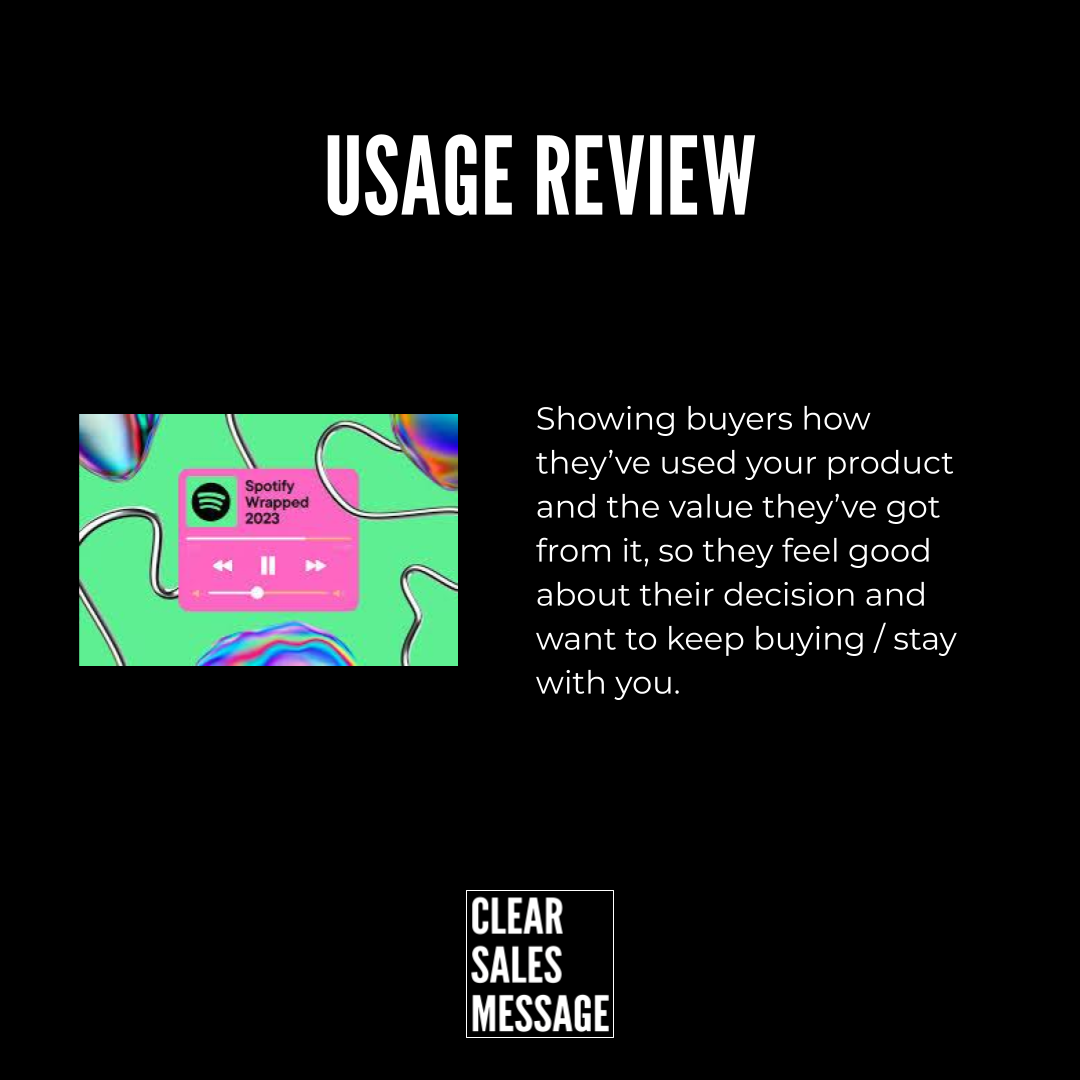
Every December, millions of people open Spotify Wrapped and feel a strange surge of pride about their own listening habits. Nobody asked Spotify to sell them anything. The app just showed them proof, and that proof did the rest.
That’s a Usage Review. Instead of asking a buyer to trust that something worked, you show them exactly how it did.
This page covers what a Usage Review is, why it stops value from feeling invisible, and how to use one to build loyalty without pushing for a sale.
What Is A Usage Review?
A Usage Review is a simple summary that shows a buyer how they’ve used a product or service, and the value they’ve received from it over time.
Think of it like Spotify Wrapped for customers. Instead of guessing whether something was worth it, buyers can clearly see what they used, how often, and what that usage led to. So this reassurance builds confidence, satisfaction, and long-term loyalty.
A good Usage Review doesn’t sell harder. Instead, it makes the buyer feel smarter for buying.
Why Does A Usage Review Work?
A Usage Review works by turning customer activity into an easy-to-understand story.
First, you collect the usage data. This might include logins, features used, time saved, actions taken, results achieved, or milestones reached.
Next, you translate that data into simple language. Instead of charts and dashboards, the review highlights clear outcomes, such as how often someone used the product, which features delivered the most value, what progress they made, and what changed compared to before.
Finally, you present the review as a moment of reflection. It shows the buyer evidence that their decision was sensible, useful, and worthwhile. The goal is clarity, not complexity.
How Can You Use A Usage Review In Sales?
Use It At Key Moments
Usage Reviews work well at key moments in the customer journey to keep buyers happy and engaged. You can use one to reinforce value before a renewal or upsell conversation, reduce churn by reminding customers why they bought, strengthen trust through transparent proof of use, create a positive emotional moment tied to your brand, or encourage deeper adoption without any pressure.
Time It Around Natural Milestones
They work especially well when delivered periodically, such as monthly, quarterly, or annually, or right after a key milestone. So when buyers can see their own progress, they’re far more likely to stick around.
Why Usage Reviews Matter For Buyer Happiness
Buyers don’t cancel because a product stops working. They cancel because the value becomes invisible. So a Usage Review makes value visible again.
By clearly showing usage and outcomes, you remove doubt, reduce buyer’s remorse, and replace uncertainty with confidence. That feeling of “this was a good decision” is what keeps buyers happy, loyal, and open to whatever comes next.
When A Usage Review Works Best
It works best for products or services people use regularly enough to build up genuine, trackable activity, since a near-empty summary undermines the whole point of showing proof.
It also works especially well close to a renewal or upsell point, because reminding a buyer of real value right before that decision often does more than any pitch could.
When A Usage Review Becomes Dangerous
It backfires the moment it reveals usage so low that it accidentally proves the opposite of what you intended, making a buyer question their purchase rather than feel good about it.
It also risks feeling like a thinly disguised sales pitch if every review ends with an upsell attached, since that undercuts the genuine, reflective tone the format depends on.
Common Usage Review Mistakes
Sending One With Almost Nothing To Show
A review built on minimal activity highlights low usage rather than real value. Wait until there’s genuinely something worth reflecting on.
Turning It Into A Sales Pitch
Ending every review with an upsell undermines the reflective tone that makes the format work. Let the proof stand on its own first.
Overloading It With Data
Dense charts and dashboards defeat the purpose of a simple, clear story. Translate the numbers into plain language a buyer can read in seconds.
Usage Review – An Example
Spotify Wrapped is the obvious example here. Once a year, Spotify turns months of listening data into a simple, shareable summary: top artists, total minutes listened, favourite genres, and more.
Nobody asked for that data. Spotify just handed it over, framed as a fun moment of reflection rather than a sales pitch. The result became one of the most shared marketing moments of the year, purely because it made users feel good about their own choices.
That’s a Usage Review working at its absolute best. The proof of value came straight from the buyer’s own activity, and that made it far more convincing than anything Spotify could have said about itself.

See also