Practical Sales Training™ > How To Convert > Wanted Advert
Wanted Advert
What Is It
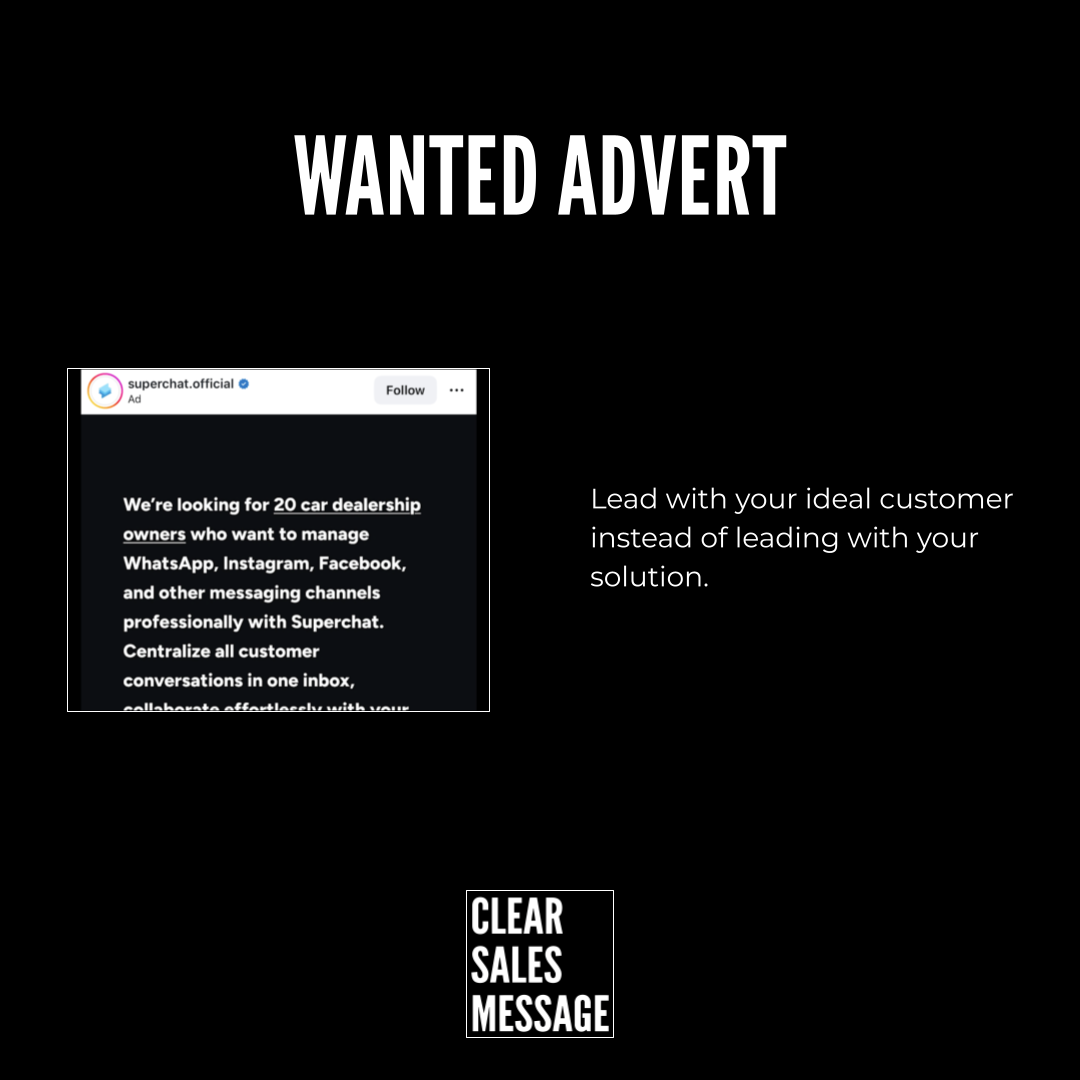
A Wanted Advert flips a typical ad on its head. Instead of leading with your product or your offer, you lead with a description of exactly who you’re looking for.
“We’re looking for 20 car dealership owners who…” or “Looking for 10 dads in Windsor who want to…” reads more like a job posting or a personal ad than a sales pitch. That’s the whole point.
Why Does It Work
Specific language makes people self select fast. The moment someone reads a description that matches their exact situation, they stop scrolling, because it clearly wasn’t written for everyone.
It also flips who’s doing the choosing. A normal ad asks someone to buy something. A Wanted Advert makes them feel like they’ve been personally spotted and asked to apply, which lowers their guard before you’ve said anything commercial at all.
Naming an exact number adds a quiet sense of scarcity too. “Looking for 10” reads as a genuine, limited search. “Looking for people” reads as an ad, and buyers switch off ads without thinking twice.
How Can You Use It
Name An Exact Number, Not A Vague Group
“Looking for 20” beats “looking for businesses” every time. A real number implies a real, limited search rather than an open ended pitch aimed at anyone who’ll listen. Pick a number you can genuinely justify and stick with it.
Describe Their Situation, Not Their Job Title
“Dads in Windsor who want to get fit without giving up beer and takeaways” says far more than “men aged 30 to 50.” Describe the actual life someone is living right now, not the demographic box they happen to sit in.
Make Responding Feel Like Applying, Not Buying
Keep the reply mechanism as low friction as the framing promises. A simple “comment IN and I’ll send you the details” keeps the tone consistent, while a hard “buy now” button undoes everything the headline just built.
When It Works Best
This works best on cold, paid social audiences who scroll past normal ads without a second glance, and in niche or local targeting where a specific description genuinely matches a real, identifiable group of people.
When It Becomes Dangerous
It becomes a problem when the described buyer doesn’t match who you actually serve well. If someone applies expecting a personal fit and gets treated like any other lead, the goodwill this technique builds disappears instantly.
It’s also risky if you run the same “looking for 20” ad for months without it ever seeming to fill up. Buyers notice when a supposedly limited search never actually runs out.
Common Mistakes
Describing Everyone Instead Of Someone Specific
A description broad enough to fit almost anyone stops working the moment it goes out. The whole mechanism depends on someone reading it and thinking, that’s specifically me, not maybe me.
Undermining It With A Hard Sell Straight After
If the ad feels personal but the landing page feels like a normal sales funnel, the contrast breaks trust fast. Keep the same tone all the way through, at least until the actual offer is on the table.
Reusing The Same Number Forever
“Looking for 20” only works if 20 sounds achievable and current. An ad still “looking for 20” a year later reads as a template, not a genuine search, and the scarcity it implied quietly stops meaning anything.
Wanted Advert – An Example
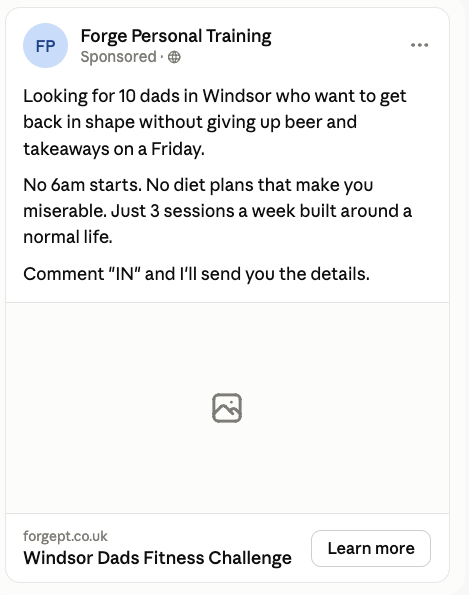
It doesn’t get more direct than specifically advertising the ideal buyer you are looking for and calling them out. This personal training ad names an exact number of dads in a specific town, describes their actual frustration with early starts and restrictive diets, and asks for a simple comment to respond, rather than a hard sales pitch.
See also: