
Practical Sales Training™ > How People Work > Decision Fatigue

Decision Fatigue
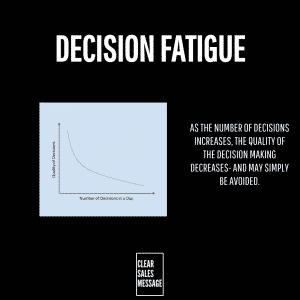
Every decision takes effort. Your brain spends energy on each one. The more choices you face, the harder it gets to choose well. By the end of a long day, or a long sales process, your buyer’s ability to decide clearly has dropped.
This is Decision Fatigue. It happens to everyone. And it matters in sales because a tired buyer is far more likely to delay, avoid, or say no.
The good news is that you can design your sales process to reduce the burden. When you cut decisions down, you make it easier for your buyer to say yes.
What Is Decision Fatigue?
Decision Fatigue is the drop in decision quality that happens after a person has made too many choices. It comes from cognitive load, the mental effort used to weigh options. Once that load builds up, the brain looks for shortcuts, avoids complexity, or shuts down entirely.
You see it in everyday life. Someone spends three hours comparing laptops and ends up buying nothing. A buyer sits through a two-hour demo with too many options and says they need to think about it. Then a prospect gets a long proposal and goes quiet.
In each case, the overload is the problem. The decision was not too hard. It just came too late, with too much else already in the way.
Why Does Decision Fatigue Work?
The brain treats decisions like a battery. Each one drains a little power. Early in the day, buyers are sharp and engaged. But as decisions pile up, that sharpness fades. They start to default to the safe choice, delay the call, or avoid the question.
This links directly to Overchoice. When too many options appear at once, the brain stalls. More choice does not mean more confidence. It often means less. So presenting a simpler path cuts through the noise and helps your buyer move forward.
Timing also matters. A buyer who has made ten decisions today is not in the same place as one who is fresh. So piling choices at the end of a meeting asks a tired brain for its hardest task.
How Can You Use Decision Fatigue In Sales?
Reduce the number of decisions
Go through your sales process and count how many decisions you ask the buyer to make. Then cut them. Can you combine steps? Is there a sensible default you can set rather than asking them to build from scratch? Every decision you remove is one less drain on their energy.
Use defaults and popular options
A default option gives the buyer a ready-made answer they can accept or change. Labels like “most popular” or “recommended” do the same. They tell the buyer what most people choose, which gives them permission to stop weighing and just decide. This works because it shifts the effort from your buyer to you.
Time your asks carefully
Ask for the big decision early, when your buyer is fresh. Save the smaller details for later. A key ask at the end of a long meeting comes at exactly the wrong time. Instead, lead with the decision that matters most and follow up with the rest.
Simplify your proposals
A proposal with too many line items, too many options, and too much to read creates a wall of choices. So trim it. Give a clear steer. State what you suggest and why. When the buyer sees one clear path, they can move forward without burning out before they sign.
When Decision Fatigue Works Best
Decision Fatigue hits hardest when your buyer is already stretched. Long sales cycles, complex buying groups, or deals that run during a busy quarter all add to the load. So this concept is most useful when selling something that involves a lot of back and forth.
It also works well in ecommerce. A streamlined checkout flow, fewer form fields, or a “recommended” tag all cut friction for tired buyers. Even a small cut in the number of choices can lift sales.
When a buyer seems engaged but keeps stalling, Decision Fatigue is worth checking. It may not be doubt about you at all. They may just be worn out from everything else.
When Decision Fatigue Becomes Dangerous
Removing too much choice can backfire. If a buyer feels they had no say, they may push back later or feel boxed in. The aim is to cut needless decisions, not remove all input. Buyers still want to feel in control of the outcome.
There is also a risk of going too far with a complex deal. If you strip out choices the buyer genuinely needs to make, you may create confusion later. So be careful about which decisions you remove versus which ones you streamline.
Finally, do not mistake stalling for Decision Fatigue. Sometimes a buyer delays because the answer is no, and cutting friction will not fix that. It will not help buyers who are not ready.
Common Decision Fatigue Mistakes
Giving too many options at once
Showing a buyer five packages, three add-ons, and a two-page pricing table is a fast way to trigger Decision Fatigue. More options feel like more value, but they often create more delay. So trim your offer to what the buyer actually needs, and guide them to the right starting point.
Saving the big question for the end
Asking for a decision at the very end means asking a tired brain for its hardest task. Instead, try to surface the key question earlier, when energy and focus are higher. This does not mean rushing. It means placing the decision before the fatigue sets in.
Not making a clear steer
When you lay out options without a clear view, you hand all the weight to the buyer. But many buyers want to know what you think. So give them a steer. Tell them what most clients in their position choose, and why. This cuts the load and shows you understand their situation.
Decision Fatigue – An Example
The clothing store that simplified its choice
An online clothing store noticed customers were abandoning their carts after long browsing sessions. Over 200 styles of jeans, each with many variations, meant shoppers hit the checkout already worn out.
So the store created a “Most Popular” section with five best-selling styles. They added “Recommended for You” labels and cut steps from the checkout flow. Conversions rose by 20% as a result. The store did not improve its products. It just removed the friction of too many decisions.
See Also