
Practical Sales Training™ > How People Work > Correlation & Causation

Correlation & Causation
What Is It
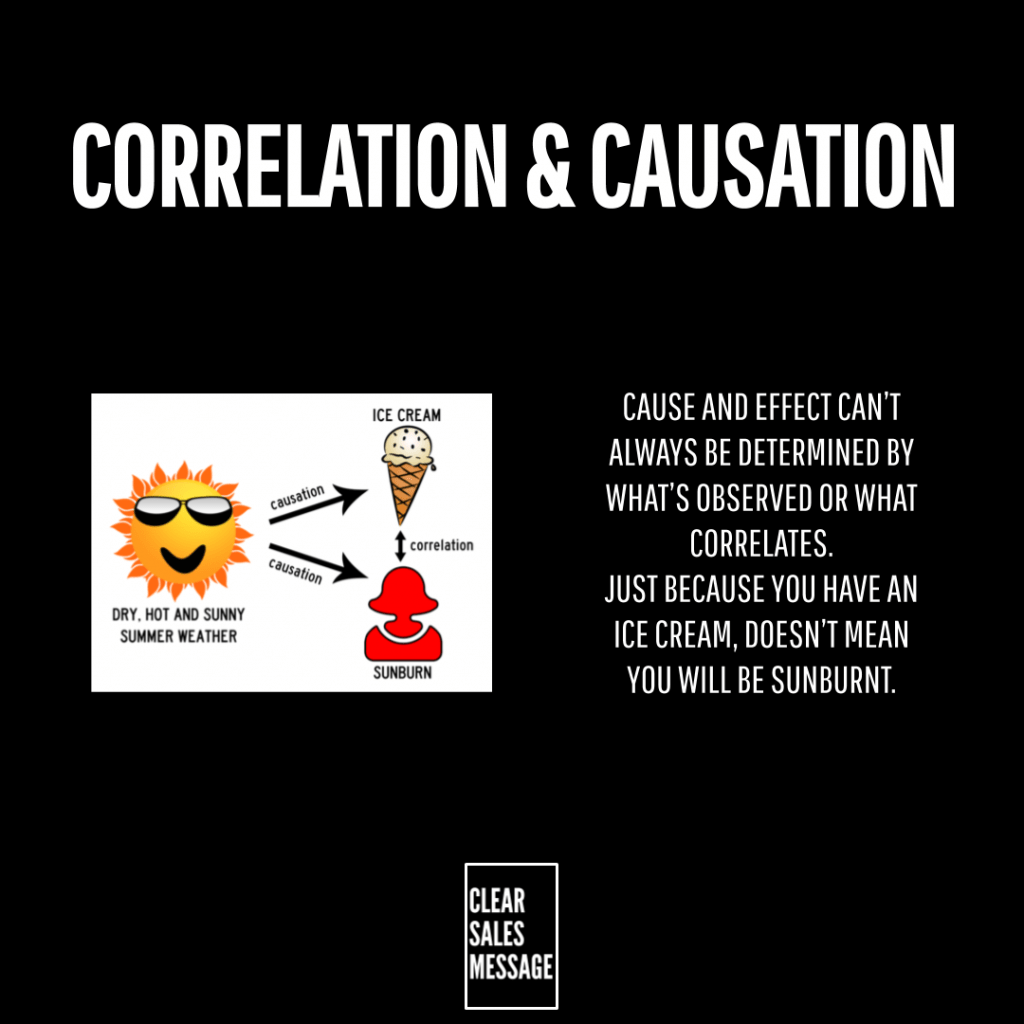
Correlation and causation sound the same. They aren’t.
Correlation means two things happen together. In fact, causation means one thing actually causes the other. Buyers mix these up constantly, especially when they’re sizing you up.
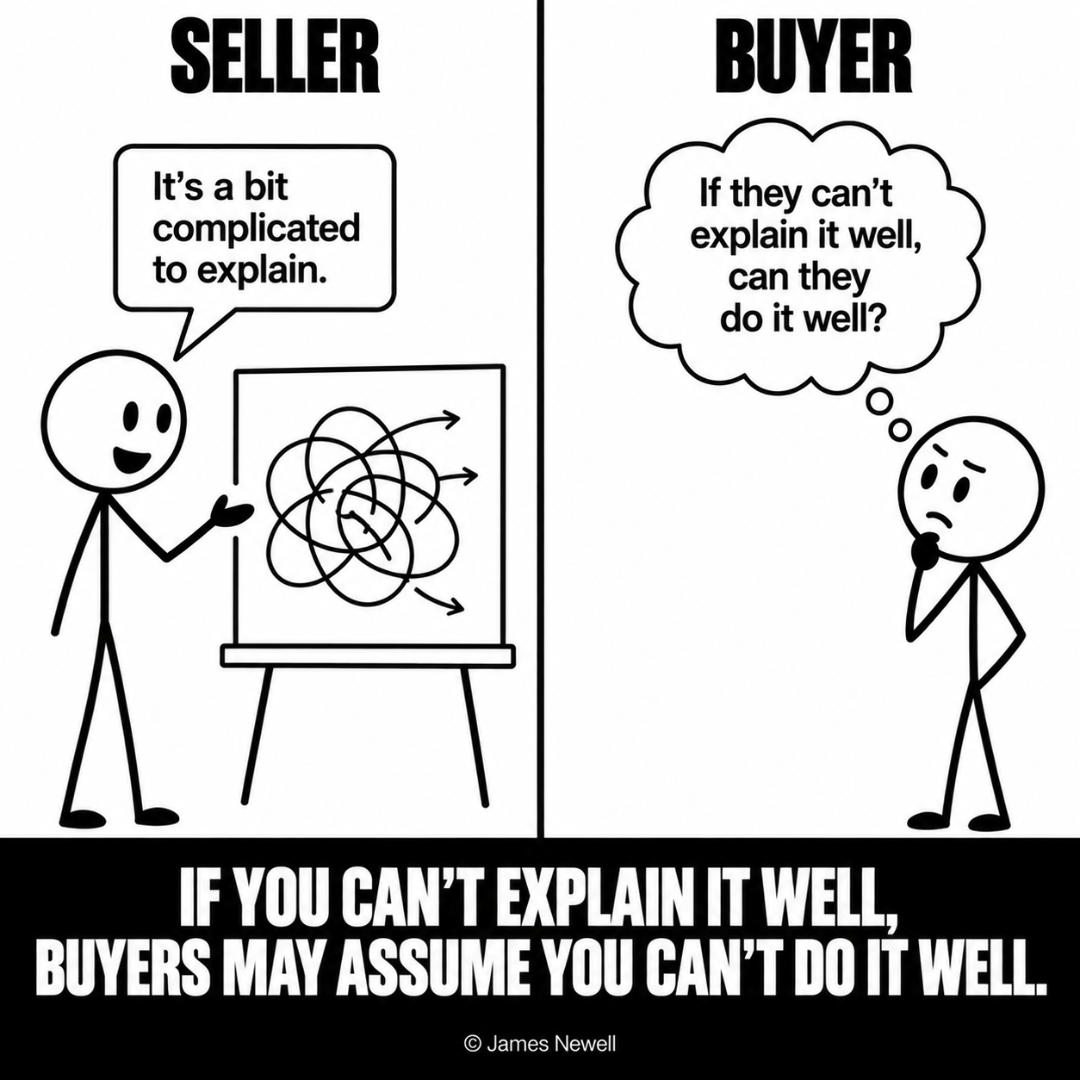
Here’s the trap. Your ability to explain what you do has nothing to do with your ability to actually do it. But buyers rarely see it that way.
They spot a correlation, since you can’t explain it clearly. So they jump to causation, assuming you can’t do it well either. Still, that leap is wrong. But it happens fast, often before you get a chance to prove them wrong.
Why Does It Work
This matters because it costs you deals you never even see slipping away.
Without a Clear Sales Message, buyers start to doubt you. That doubt spreads fast, too. Psychologists call this emotional contagion, and it’s why one shaky answer can undo months of good work.
Your buyer isn’t really testing your technical skill when they ask a question. They’re testing how sure you sound instead. If you hesitate or ramble, they read that as a warning sign, even when your actual work is excellent.
It’s an unfair leap. But it’s also predictable, so you can prepare for it.
How Can You Use It
Correlation and causation also show up everywhere in your business. But the biggest risk sits in one place. That’s how clearly you explain your offer.
Prepare For The Obvious Questions
Buyers still ask the same handful of questions again and again. If you stumble on these common questions, you hand them a reason to doubt you. So write your answers down. Practise saying them out loud. Make them short enough to repeat half asleep at 7am.
Sound As Confident As You Actually Are
You already know your own work is good. So make sure your voice matches that. Slow down, use plain words, and drop the hedging. So real confidence removes friction. It stops buyers questioning something that was never in doubt.
Explain What Makes You Different
Buyers can’t compare you to competitors they’ve never even heard of. So tell them exactly why you’re the better choice. Use plain, specific language instead of vague claims. Skip lines like “we’re the best.” Instead, name the one thing you do that others don’t. Say it early.
When It Works Best
This concept matters most, right when a buyer starts sizing you up. That’s usually your first conversation, or your first piece of content. So early impressions stick. In fact, if you nail your explanation from the start, you build trust fast.
It also matters in written sales copy, proposals, and pitch decks. There, a buyer reads your words without hearing your tone. So clarity has to do all the work.
When It Becomes Dangerous
The danger shows up since you assume your skill speaks for itself. It doesn’t, not to a buyer who’s never seen you work.
Technical experts fall into this trap often. They’re so deep in their own expertise that plain explanations feel beneath them. But buyers don’t see it that way. They just see confusion. And confusion reads as incompetence.
It also gets dangerous in high stakes moments, like a big pitch or a tricky objection. Even one answer can undo trust.
Common Mistakes
Assuming Results Will Speak For You
Even great work doesn’t sell itself. So someone still has to explain it, and that’s you.
Overexplaining Instead Of Simplifying
Piling on technical detail doesn’t prove competence. Instead, it usually just confuses the buyer more. And confused buyers rarely buy.
Treating Every Question As An Attack
Buyers ask questions out of curiosity, not doubt. So answer calmly, and you build trust instead of tension.
Correlation & Causation – An Example
Hypothetical Example
A web developer builds fast, secure websites. That part isn’t in question. But in meetings, they struggle to explain it in plain terms. So the client walks away thinking the worst: “If they can’t explain this clearly, maybe they’re not that good.”
That thought is wrong. The developer’s communication skills have nothing to do with their coding skills. But the buyer’s perception links the two anyway. And that perception is what costs the sale.
So the developer fixes it. Instead, they build one simple way to explain the value, and start saying this:
“We build websites that load twice as fast, so you keep more visitors and rank higher on Google.”
So that one sentence rebuilds trust straight away. It also shows the real value behind the technical work.
See Also