
Practical Sales Training™ > How People Work > Emotional Contagion

Emotional Contagion
You have probably walked away from a purchase that felt off. The product was fine, the price was fair. But something about the person selling it made you uneasy. You could not quite explain it. So you walked away.
That was Emotional Contagion at work. Feelings transfer between people, often with no words at all. Your buyer reads your energy, your body language, and your tone. They pick up on what you feel about your own offering.
If you believe in what you sell, that confidence spreads. But doubt spreads just as fast. In sales, your emotional state is part of the product.
What Is Emotional Contagion?
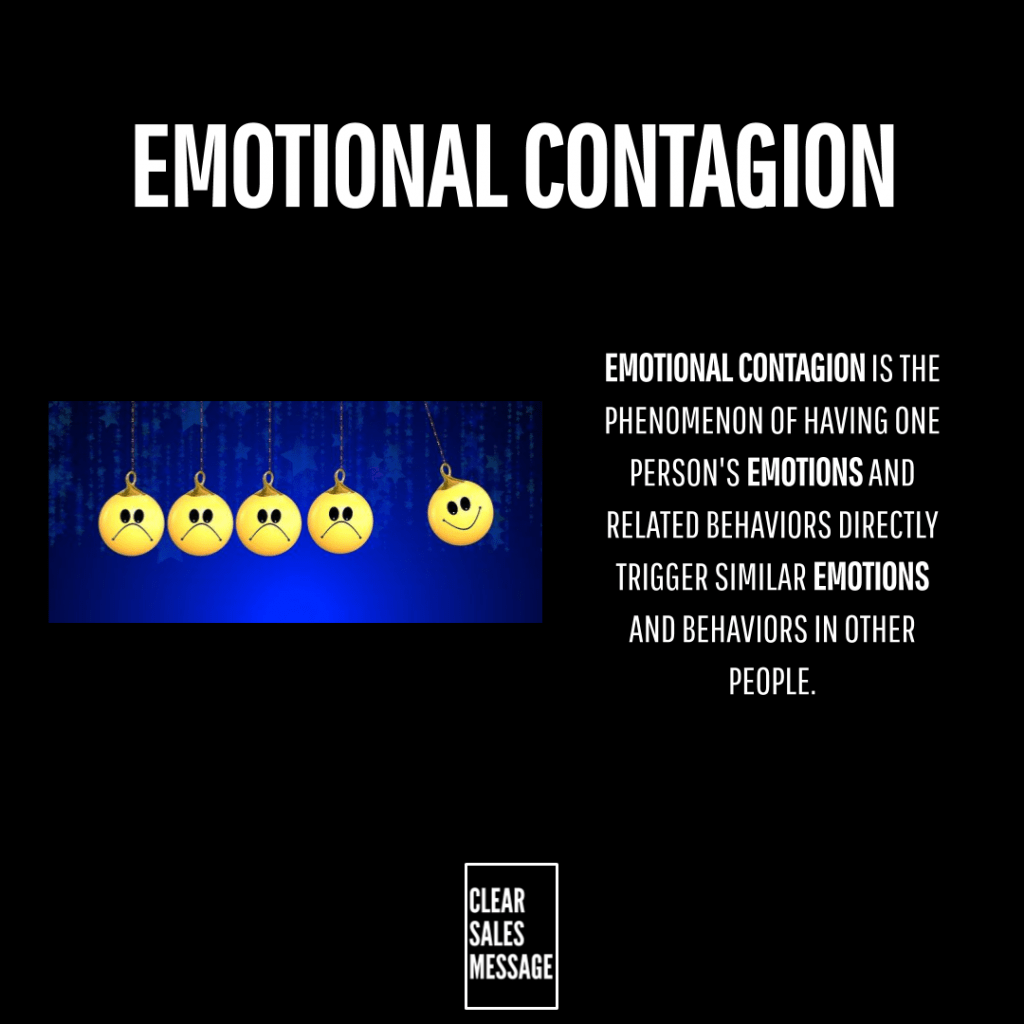
Emotional Contagion is when one person’s feelings influence another’s, often without either of them noticing. We pick up on micro-expressions, tone shifts, posture, and pace. Our brains then mirror what we detect and adjust our own mood to match.
It happens everywhere, not just in sales. When someone enters a room full of energy, the mood lifts. Tense and guarded people make others cautious. Our brains evolved to read the emotional signals of the people around us. It is a survival instinct, and it runs all the time.
In a sales setting, this matters enormously. Because your buyer is reading you whether you like it or not. And if what they read does not match what you say, they trust what they read.
Why Does Emotional Contagion Work?
The brain contains mirror neurons, which fire when we observe someone else’s emotional state. When you watch someone laugh, the same part of your brain activates as if you were laughing yourself. This happens below the level of conscious thought, so buyers often cannot explain why they feel uncertain. They just do.
This is why confidence, certainty, and expertise matter so much in selling. Your buyer cannot always verify your claims. But they can feel whether you believe them. A seller who hesitates when talking about price sends a signal. One who flinches when a buyer pushes back sends another. Those signals land before logic gets a chance to respond.
The good news is that positive emotions spread just as readily as negative ones. When you are genuinely confident and clear about what you offer, that energy transfers. Buyers feel safe. They feel they are in good hands. And that feeling moves them forward.
How Can You Use Emotional Contagion In Sales?
Fix your doubt before you get in front of a buyer
If you think your price is too high, your buyer will feel it. Doubt the fit and they will sense that too. So before any sales conversation, check in with yourself. Where do you feel wobbly? That wobble will leak out. Work on it before the call. Know your numbers, know your value, and remind yourself of the results you deliver.
Use your energy to lead the tone
Walk into the conversation with the feeling you want the buyer to have. If you want them to feel confident and excited, bring that first. Your tone, pace, and presence set the emotional frame for everything that follows. Buyers mirror what they receive, so give them something worth mirroring.
Hold your price with confidence
How you talk about price sends a strong signal. When you hedge around it or drop it with a wince, you signal that it is a problem. But when you state it clearly and calmly, you signal that it is fair and worth it. The buyer takes their cue from you. So say the number without flinching and let it land.
Stay steady when buyers push back
Pushback does not mean rejection. But if you visibly tense up or rush to fill the silence, you send a signal that something is wrong. Hold your ground calmly. A composed response to pressure tells the buyer you have been here before and you are not rattled. That calm is contagious too.
When Emotional Contagion Works Best
Emotional Contagion is strongest in face-to-face settings, because the buyer can read every signal in real time. Body language, eye contact, vocal tone, and even breathing patterns all carry emotional data. So in meetings, presentations, and demos, your presence matters as much as your content.
It also applies on video calls, where buyers still pick up on facial expressions and energy even through a screen. A seller who looks uncertain on camera reads as uncertain. The medium changes but the mechanism does not.
Even in written communication, emotional tone comes through. An email that apologises, hedges, or over-explains sends a different signal to one that is clear, calm, and direct. So Emotional Contagion applies across every channel you use.
When Emotional Contagion Becomes Dangerous
The risk cuts both ways. Your confidence can lift a buyer, but their doubt can drag you down if you are not careful. Some buyers arrive sceptical, stressed, or closed off. When you absorb their energy and match it, the conversation stalls. So stay grounded and do not mirror what does not serve the sale.
Faking confidence also backfires. Buyers detect a performance quickly. An unconvincing show of certainty can do more damage than honest uncertainty. The goal is genuine belief in what you offer, not a front. If you are not there yet, the work is to get there.
Finally, be careful in group settings. If one person in a buying committee expresses doubt out loud, others may catch that feeling. Address it quickly and calmly rather than letting it spread around the room.
Common Emotional Contagion Mistakes
Letting your doubt about price leak out
When a seller hesitates before quoting a price, buyers read it as a sign the price is not justified. So work on your relationship with your own pricing. Know why it is fair and what it delivers. When you own the number, you say it without a wince, and buyers respond to that calm.
Matching the buyer’s negative energy
If a buyer is flat or resistant, it is tempting to tone yourself down to match. But this rarely helps. Instead, hold a steady, warm tone and let your calm do the work. You do not need to be overly upbeat. Just grounded. A buyer who meets someone settled and clear will often shift their own state over time.
Ignoring the signals you are sending
Many sellers focus entirely on what they say and miss the signals they send. Record yourself in a practice call. Watch how you hold your body, how you react to questions, and where you hesitate. The gap between what you intend to convey and what actually comes across is often bigger than you think.
Emotional Contagion – An Example
The estate agent who changed his energy and changed the outcome
An estate agent was showing a property to a couple. The house was good and the price was fair. But the agent kept hedging: “Not sure it’s worth the asking price.” The buyers felt uneasy. The deal fell through. Not because of the house. Because the agent’s doubt spread to the buyers.
The same agent changed his approach on the next viewing. He walked in calmly and said: “This is a solid investment. It’s in a growing area and the owners have priced it well.” The buyers felt reassured. They made an offer that week.
Nothing had changed except the agent’s energy. That is Emotional Contagion in action.
See Also