
Practical Sales Training™ > How To Convert > The Consumable Effect

The Consumable Effect
Most products need something extra to keep working. So if you don’t sell that something, your customer simply buys it elsewhere.
The Consumable Effect closes that gap. You stock what your buyer will need next, so they never have to leave you to find it.
And every time they come back for more, you stay exactly where you wanted to be.
What Is The Consumable Effect?
The Consumable Effect is all about providing the consumable items your client will need, making buying from you the most convenient option. So instead of stopping at the main product, you cover what comes next too.
It turns a single sale into an ongoing relationship, simply by being there when the next need arises.
Why Does The Consumable Effect Work?
It works because you’re providing consumable items your client will need, without making them go anywhere else to buy them. So convenience becomes the deciding factor, not just price.
It’s a variation on the Ready to Use Effect and The Path of Least Resistance. Both lean on the same idea: remove friction, and buyers stay with you.
How Can You Use The Consumable Effect In Sales?
Stock what your product actually needs
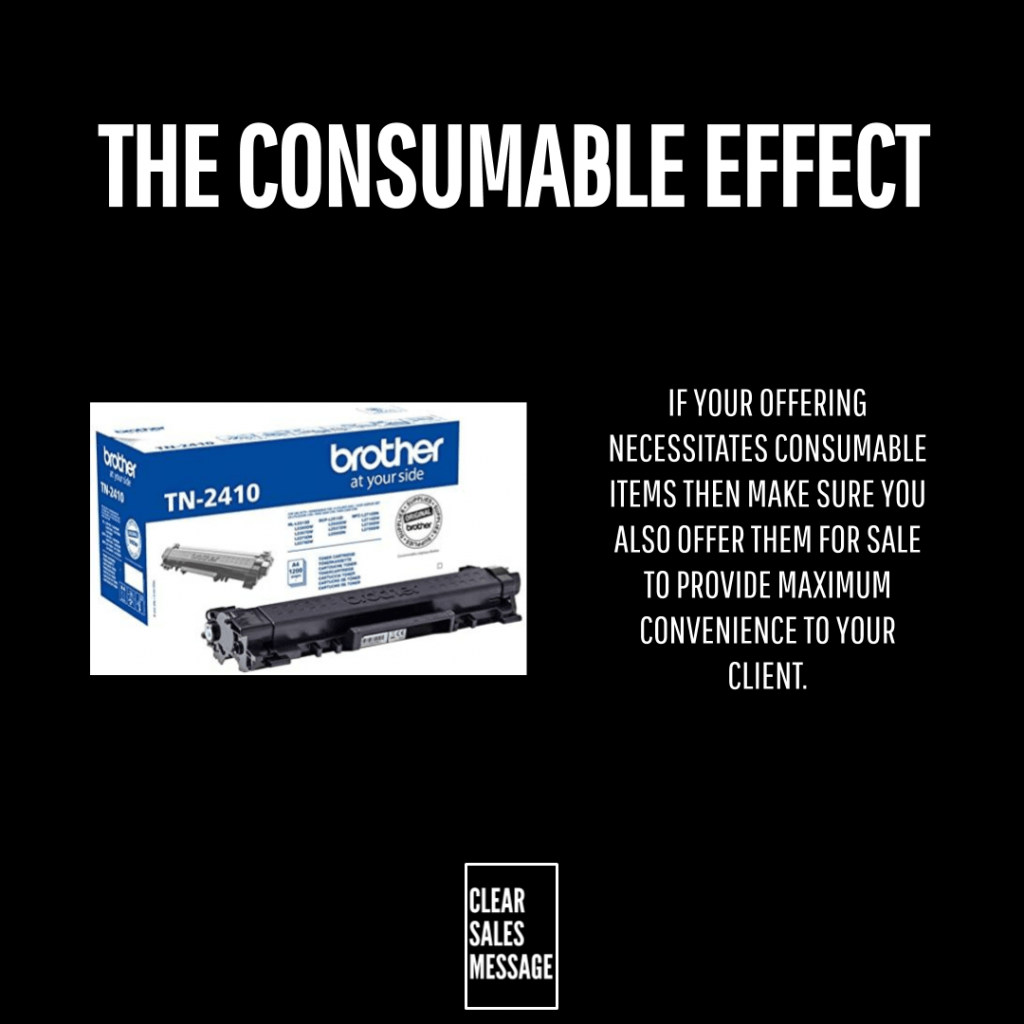
You simply need to stock and sell the consumable items that your client will need. If you sell printers, you can sell toner. If you sell plants, you can sell plant food.
Make it easy to find
It’s pretty straightforward, but the added convenience for your buyer gets magnified when these items sit right next to the main product, rather than requiring a separate search.
Treat it as an ongoing relationship
Each consumable purchase is a small touchpoint. So use it to keep buyers engaged, rather than treating it as a one-off afterthought.
When The Consumable Effect Works Best
It works best for products that genuinely require ongoing supplies or maintenance, since that’s exactly where repeat purchases become predictable.
It also works well when your consumables are priced fairly, because buyers stay loyal when convenience doesn’t come with a noticeable markup.
When The Consumable Effect Becomes Dangerous
It becomes dangerous if you overprice the consumables, since buyers who feel taken advantage of will actively seek out cheaper alternatives elsewhere.
It can also backfire if your consumables are hard to find or poorly stocked, because that defeats the entire convenience argument you’re trying to make.
Common Consumable Effect Mistakes
Pricing consumables too high
A steep markup on consumables pushes buyers elsewhere. So keep pricing fair enough that convenience genuinely wins.
Not stocking the full range
If you only sell some of what a buyer needs, they’ll still have to shop elsewhere. So cover the full picture, not just the obvious item.
Making consumables hard to find
If buyers can’t easily locate or reorder what they need, the convenience advantage disappears. So make repeat purchasing as simple as possible.
The Consumable Effect – An Example
A coffee machine business selling pods and supplies
Imagine you own a coffee machine business. Instead of just selling the coffee machines, you also sell coffee pods, descaling solutions, and cleaning brushes.
A customer who buys a machine from you will naturally need these consumables. So by stocking them, you become their one-stop shop, rather than a single transaction they’ll forget about by next week.
See also