
Practical Sales Training™ > How To Convert > The Refill Effect

The Refill Effect
The first sale is the hardest. Getting a buyer to try something new takes effort, trust, and usually a decent amount of marketing spend. So once you have that buyer, the smartest thing you can do is make it easy, and appealing, for them to come back.
The Refill Effect does exactly that. By offering a refill version of your product at a lower cost, you give loyal buyers a reason to return that is built into the product itself. They bought the bottle. Now they need to top it up. And because your refill is cheaper and better for the planet, there is no reason to go anywhere else.
It is a simple idea, but it changes the relationship between buyer and brand. Because the refill creates a reason to return, repeat business stops being something you have to chase and starts being something the product generates on its own.
What Is The Refill Effect?
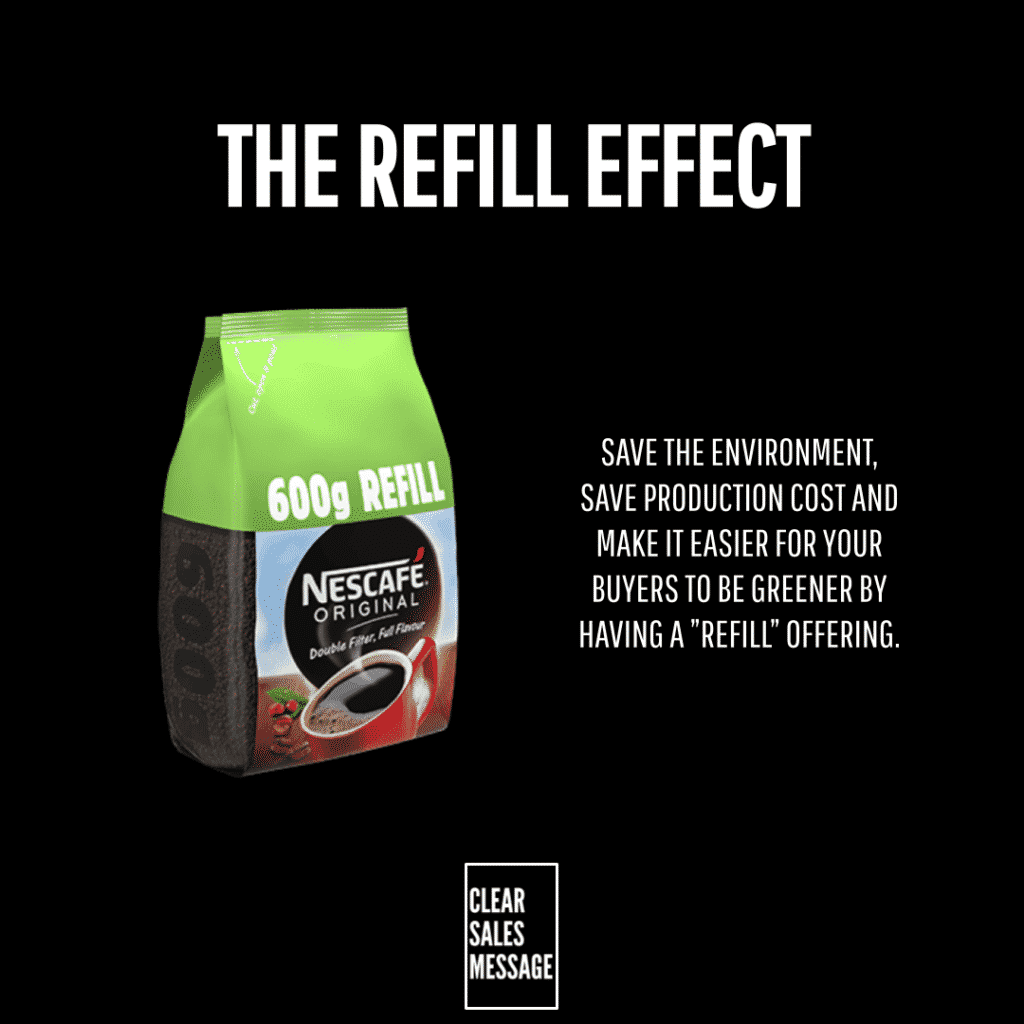
The Refill Effect is when a physical consumable product is sold not only in its standard packaging but also as a refill option with reduced packaging. The buyer purchases the original product once and then replenishes it using the refill, rather than buying a whole new unit each time.
The refill is cheaper to produce because it uses less packaging. That saving is passed on to the buyer, which makes the refill more attractive than buying full-price again. Because the buyer already has the original container, the refill is the logical next step. The product itself creates the loyalty loop.
This model works across a wide range of physical product categories. Cleaning products, beauty and skincare, food and drink, office supplies, and pet products all lend themselves to the Refill Effect. If your product gets used up and needs replacing, a refill option is worth considering.
Why Does The Refill Effect Work?
It works for several reasons, and they all point in the same direction. The buyer saves money. They reduce waste. And they do not have to think too hard about the decision, because the refill is simply the obvious next step after the original purchase.
The cost saving is the most immediate driver. A refill with less packaging is cheaper to make and sell. That lower price point makes it easy for the buyer to justify buying again, often in a larger quantity than the original. So the refill does not just bring buyers back. It often increases the average spend per visit.
The eco factor adds another layer. Buyers who care about reducing waste are actively looking for brands that offer lower-packaging options. A refill signals that your brand takes that seriously. Because eco-conscious buying is growing, especially among younger buyers, a refill option is increasingly a commercial advantage rather than just a nice gesture.
There is also a switching cost effect. Once a buyer has your original container, switching to a rival means starting again from scratch. But continuing with your refill is cheaper, easier, and more familiar. Because the path of least resistance leads back to you, the Refill Effect quietly locks in loyalty without any pressure or hard selling.
How Can You Use The Refill Effect In Sales?
Start by asking a simple question: is your product something buyers use up and need to replace? If the answer is yes, a refill option is worth exploring. Here are the key ways to make it work.
Design the Original Product With Refilling in Mind
The original packaging should be something buyers want to keep. A well-made bottle, a sturdy container, or a premium dispenser all give the buyer a reason to refill rather than replace. Because the container has value in itself, the buyer is motivated to maintain it rather than throw it away. That motivation is what makes the refill loop work.
Price the Refill to Reward Loyalty
The refill needs to feel like a better deal than buying again at full price. That does not mean the margin has to suffer. Less packaging means lower production costs, so a refill priced below the original can still deliver a strong return. Because the buyer sees the saving clearly, the decision to refill rather than shop around becomes an easy one.
Make the Refill Easy to Find and Order
A refill that is hard to locate or order will not be used. So put it front and centre on your website, in your packaging inserts, and in your follow-up emails after the original purchase. Because the buyer is most likely to think about the refill when they are running low, make sure your refill option is easy to find at exactly that moment.
Promote the Eco and Cost Benefits Together
Do not make buyers choose between saving money and doing good. The Refill Effect delivers both, so lead with both. A message like “spend less and use less packaging” speaks to the practical buyer and the eco-conscious buyer at the same time. Because both motivations are real and both are served by the refill, your messaging can appeal to a wider audience without any compromise.
Use Subscriptions to Automate the Repeat Purchase
If your refill is something buyers need regularly, a subscription option removes the friction of reordering entirely. The buyer signs up once and the refill arrives before they run out. Because the repeat purchase is automatic, you remove the moment where a buyer might consider switching. A subscription model built around a refill product is one of the strongest loyalty structures available.
When The Refill Effect Works Best
The Refill Effect works best for products that are used regularly and run out at a predictable rate. The more often a buyer needs to replenish, the more valuable the refill option becomes. Because each refill purchase is a low-effort decision for the buyer, it builds a habit of returning to you that grows stronger over time.
It also works well for premium brands. A buyer who invested in a high-quality original product has a strong reason to protect that investment by maintaining it properly. The refill is part of that. Because the original purchase raised the stakes, the refill becomes the sensible choice rather than an optional extra.
Similarly, it works well in markets where sustainability is a growing priority. When buyers are actively looking for ways to reduce their environmental impact, a refill option positions your brand as one that makes it easy to do the right thing. That positioning builds goodwill and loyalty beyond the transaction itself.
When The Refill Effect Becomes Dangerous
The main risk is making the refill feel like a downgrade. If the refill packaging looks cheap or the experience of using it feels inferior to the original, buyers will feel they are getting less rather than more. So invest in making the refill feel considered and intentional, not like an afterthought.
There is also a risk of confusing the pricing. If the refill is not clearly cheaper per unit than the original, buyers will feel the offer is not genuinely better value. Because the whole point is that the refill saves them money, muddled pricing undermines the appeal entirely. Make the saving obvious and easy to calculate.
Common Refill Effect Mistakes
Not Mentioning the Refill at the Point of Original Sale
The best time to tell a buyer about your refill option is when they buy the original product. At that moment, they are already engaged, already bought in, and already thinking about value. So include the refill in the original packaging, in the order confirmation, and in the welcome email. Because the buyer’s interest is highest right after the first purchase, that is when the refill message lands best.
Underinvesting in Refill Packaging
Less packaging does not mean no thought. A refill that arrives in a flimsy or awkward pouch, that leaks, spills, or is hard to use, will put buyers off even if the price is right. So design the refill packaging to be practical and easy to use. Because the refill experience reflects on the whole brand, it deserves proper attention.
Making the Saving Hard to See
If a buyer has to do the maths to work out whether the refill is cheaper, many will not bother. Show the saving clearly. State the cost per use or the cost per litre alongside the price. Because the saving is the primary reason to choose the refill, making it immediately obvious removes the last barrier to the decision.
Offering the Refill Without Promoting It
Some brands create a refill option and then barely mention it. Because it sits quietly on the website, most buyers never find it. So actively promote the refill in your marketing, your packaging, and your follow-up communications. A refill that buyers do not know exists cannot do the job it was designed to do.
The Refill Effect – An Example
A luxury hand soap brand sells their signature 300ml glass pump bottle for £12. Alongside it, they offer a one-litre refill pouch for £20. Buyers who purchased the original bottle can top it up several times from the pouch, paying significantly less per use than if they bought a new bottle each time.
The refill reduces packaging waste, which appeals to eco-conscious buyers. It saves money, which appeals to every buyer. And because the buyer already has the original bottle, switching to another brand would mean starting again. As a result, the refill locks in repeat business not through pressure but through genuine value. That is the Refill Effect working exactly as it should.
See Also