
Practical Sales Training™ > How To Get Attention > Viral Tagging

Viral Tagging
What Is It
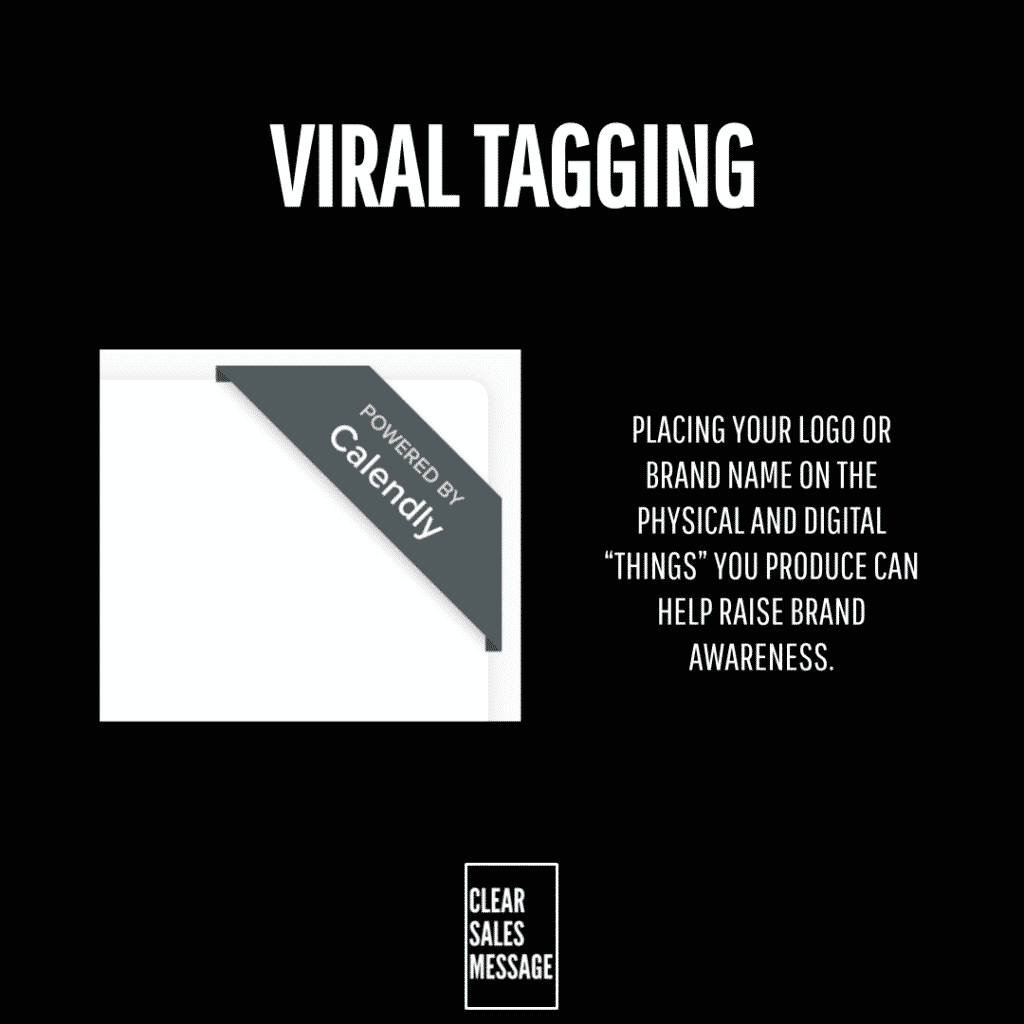
Viral Tagging is when you attach your branding or logo to the products and services you provide. A classic example is the “powered by Calendly” or “Website by [web design company]” links attached to webpages.
So the product itself becomes a small advert. It travels wherever it goes.
That travel is exactly what makes this technique so quietly powerful.
Why Does It Work
It works because it helps your brand reach a new audience. It also increases exposure.
A physical item, like a fence with the fencing company’s logo, works the same way as a digital one. Think a website with a link to the web design company.
It lets new buyers see an offering at work in the real world. They know exactly where to purchase it themselves.
In this regard, it’s a variant of the Freemium Effect or Demonstration Effect. Buyers see what you offer and how it works, before they buy.
How Can You Use It
This doesn’t work very well for services, since it needs something physical or digital for your branding to attach to.
Tag digital products with a link or logo
For digital products, add a simple link to your website. Use your logo, or a phrase like “powered by Calendly.”
Tag physical products with a sign or sticker
For physical products, add a sign, sticker, or label with the same detail. Your logo, or a note about the fact your company provided it.
Offer a way to remove it
The downside is that some consumers don’t like company logos on their goods. So offer a way to remove the branding. Either by request, or as a paid upgrade, like Calendly does.
When It Works Best
This works best on products or services people naturally show or share. Think websites, physical goods on display, anything visible to others.
It also works best when the branding stays subtle. A small, tasteful tag gets noticed. A large, intrusive one gets removed at the first opportunity.
When It Becomes Dangerous
It backfires if the branding feels intrusive or cheapens the product. A buyer who feels like a walking advert may resent the tag rather than tolerate it.
It also becomes risky if there’s no way to remove it. Forcing branding on every buyer with no opt out can genuinely cost you sales.
Overusing the tag across every surface causes its own problem. Multiple logos everywhere starts to look desperate rather than confident.
Common Mistakes
Making the branding too large or intrusive
Making the branding too large or intrusive irritates the very people carrying your advert for you.
Giving no option to remove it
Giving no option to remove the branding costs you buyers who specifically dislike visible logos on their purchases.
Placing the tag somewhere awkward
Placing the tag somewhere ugly or awkward makes the product look worse, which undermines the very goodwill you’re relying on.
Viral Tagging – An Example
Calendly’s “Powered By” Link
Calendly’s “powered by Calendly” link appears on every free scheduling page a user creates.
Every time someone books a meeting through the page, they see Calendly’s branding. The link takes them straight back to the product.
Paying users can remove the branding entirely, as part of a paid plan. That gives free users a reason to upgrade, while everyone else keeps generating exposure for Calendly at no cost.

See also