
Practical Sales Training™ > How To Get Attention > Stunt Marketing

Stunt Marketing
Most marketing asks for attention politely. Stunt Marketing seizes it. It is the art of doing something so unexpected that people cannot look away. They cannot resist telling someone else either.
Done well, a stunt earns attention that money alone cannot buy. It gets shared, covered, and talked about. The brand does not just reach an audience. It becomes the news.
Stunt Marketing uses a surprising or devious act to grab attention and generate coverage, often at low cost.
What Is Stunt Marketing?
Stunts work because they break the pattern. Every day, people scroll past hundreds of ads without noticing. A stunt does something they did not expect. Because it is surprising, the brain flags it as worth processing. So it gets noticed when everything else gets ignored.
There is also an intelligence element. The best stunts are not just loud. They are clever. When people see the thinking behind a stunt, they feel rewarded for noticing it. That feeling makes them want to share it. Because sharing a clever stunt makes the sharer look sharp, the content spreads without any extra budget.
Timing matters too. A stunt that lands at the right cultural moment feels current and relevant. One that misses the moment just looks desperate. The best stunts tap into something people are already thinking about and give it a twist.
Why Does Stunt Marketing Work?
Paid advertising rents attention. Stunt Marketing earns it. When a stunt is well executed, the audience does the distribution. They share it because they want to, not because an algorithm placed it in front of them. That makes the cost per impression extraordinarily low and the credibility far higher than a paid ad could achieve.
There is also a memorability factor. A stunt creates a story. Stories stick in a way that a banner ad never does. Because the buyer experienced something unexpected, the brand gets linked to that feeling. So when the buying moment comes, that brand has a presence in the buyer’s mind that no amount of repetition could have bought.
The surprise element is also powerful. When something defies expectations, people want to tell others about it. That word-of-mouth effect multiplies the reach of a stunt far beyond the initial audience.
How Can You Use Stunt Marketing?
Think about what your brand stands for and what would surprise people in that context. The gap between what buyers expect and what you actually do is where a stunt lives. Wider gaps mean more attention.
Find the Visual and the Share
Two things need to come together for a stunt to work. It needs visual impact and something worth sharing. Visual impact means a passer-by or a scroller stops. Shareable means they want to send it to someone else. When both are present, the stunt does its own distribution. If you only have one, the stunt works half as hard.
Use a Natural Hook
Find a date, event, news story, or cultural moment that people already care about. Then build the stunt around it. April Fools Day is the most obvious hook, but there are many others. A product launch, a sporting event, a news cycle, or even a local moment can all work. The hook gives you a reason to act and gives the audience a reason to pay attention.
Keep It Legal and Intentional
Keep it legal. Stunts that cross a line, break rules, or embarrass the wrong people can backfire badly. The goal is coverage for the right reasons. So plan the worst-case outcome before you commit, not after. Reverse Graffiti is one low-cost, low-risk option for shops and physical locations that creates real visual impact without drama.
When Stunt Marketing Works Best
Stunt Marketing works best when the brand has a clear, strong identity. Because the stunt must link back to the brand without explanation, a weak brand identity makes that harder. When people see the stunt and instantly know who is behind it, it lands at full strength.
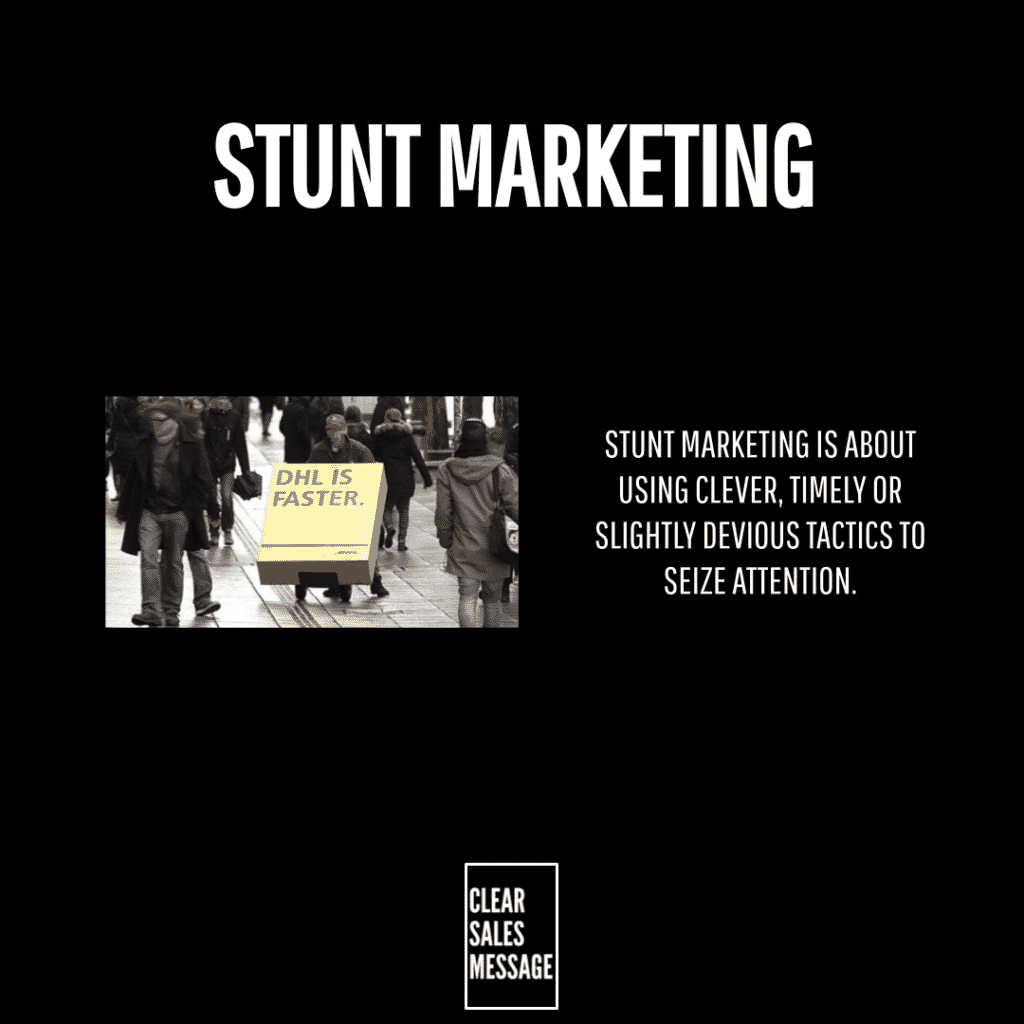
It also works well when one business wants to make a point about a competitor. DHL once shipped parcels through UPS with a special heat-sensitive coating. The writing on the parcel was hidden at first. But once the UPS driver collected it, the warmth revealed the message: DHL is faster. The media covered it widely. Because the stunt was clever and bold, it earned far more attention than a conventional ad could have bought. See more here.
It is also effective for brands with personality. A stunt requires commitment and a willingness to be noticed. Brands that play it safe rarely pull off a good stunt. But brands that know who they are and what they stand for can use stunts to bring that identity to life in ways that advertising cannot replicate.
When Stunt Marketing Becomes Dangerous
The main risk is the stunt overshadowing the brand. If people remember the stunt but not who did it, the effort counts for nothing. Every stunt should have the brand clearly at its centre. The product or service should be part of the joke, not just the name on the poster.
There is also a risk of getting it wrong in public. A stunt that causes offence, confusion, or genuine harm can damage a brand quickly. Because the reach is hard to control once a stunt launches, the downside can match the upside. Test the idea on a range of people before it goes live.
Common Stunt Marketing Mistakes
Loud Without Being Clever
The most common mistake is doing something loud without doing something clever. Loud gets a reaction. Clever gets a response. A stunt that is only noisy creates short-term attention but no lasting impression. The intelligence behind the stunt is what makes it memorable and worth sharing.
Too Complicated to Land at a Glance
A second mistake is making the stunt too complicated to grasp at a glance. If people need an explanation, the moment has already passed. The idea must land instantly. When you are still explaining it, it is not working. If you cannot describe it in one sentence, it is too complex.
No Clear Brand Link
Not linking the stunt back to the brand is also a frequent miss. A stunt that gets thousands of shares but leaves people unsure who did it has failed. The reach numbers mean nothing without the brand link. Make the connection obvious from the start.
Stunt Marketing – An Example
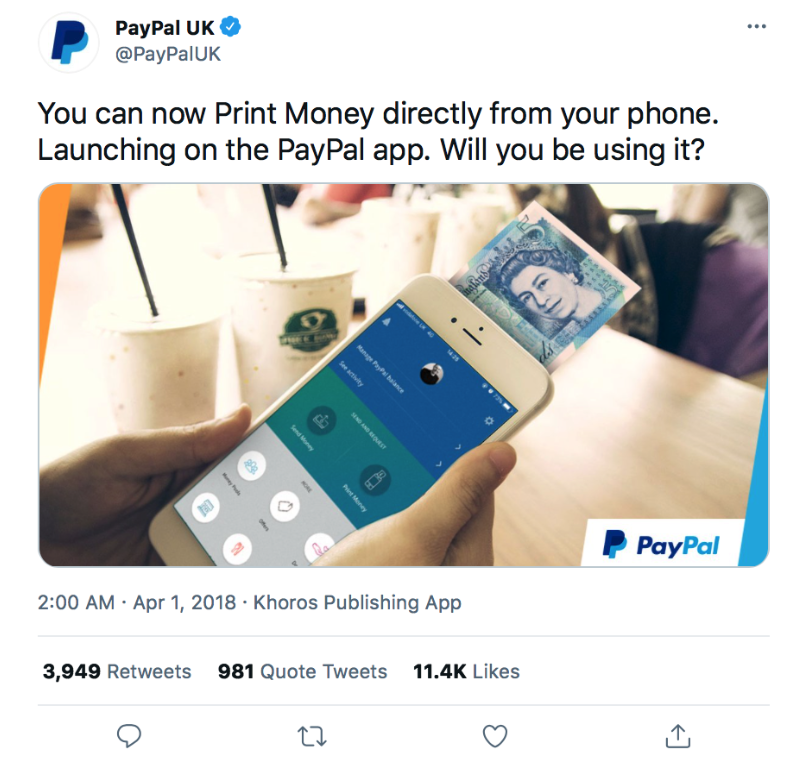
On 1st April 2018, PayPal UK tweeted that you could print money from your phone via the app. The tweet got nearly 4,000 retweets and 11,400 likes. For a few hours, people debated whether it was real. But PayPal is a payments brand, so the joke landed perfectly in their territory. It was timely, branded, and impossible to scroll past.
That is the formula. Find the moment. Make the stunt unmistakably yours. Ensure it is clever enough that people want to share it. Then get out of the way and let it travel.
See Also