Practical Sales Training™ > How To Convert > Buying Limit

Buying Limit
Restricting a sale sounds like bad business. But done right, it is one of the most effective conversion tools you have. A limit on quantity tells buyers something important: this is popular, this is in demand, and if you wait, you might miss out.
Buyers only see limits on things worth having. So the moment you impose one, you imply the product deserves it. That implication does a lot of the selling for you.
Used well, a buying limit protects supply, prevents stockpiling, and creates the kind of urgency that turns browsers into buyers.
What Is A Buying Limit?
A buying limit is a cap on how many units of a product one person can purchase. Rather than limiting total supply, you limit per-person quantity. So the restriction applies to the individual buyer, not the stock overall.
This distinction matters. A general “limited stock” notice is about the product. A buying limit is about the buyer. It says: we want everyone to have a fair chance, which implies demand is high enough that without the limit, some people would miss out entirely.
When the drink Prime launched and stores imposed a two-bottle-per-customer rule, that limit did more for demand than almost any advert could. The message was clear: this is something people want badly enough to hoard.
Why Does A Buying Limit Work?
Limits work because we associate restrictions with popularity. Nobody caps the quantity of something nobody wants. So a buying limit signals, explicitly or not, that demand is either very high already or expected to be.
That signal triggers FOMO. The buyer who was casually browsing starts to wonder if they should act now rather than later. Suddenly the question shifts from “do I want this?” to “will I still be able to get this tomorrow?”
There is also a fairness angle. A per-person limit tells buyers the seller is trying to make the product available to as many people as possible. That feels principled, and buyers respond well to sellers who appear to act fairly rather than just maximise profit.
How Can You Use A Buying Limit In Sales?
For products, set a per-person cap
Choose a sensible limit of one, two, or three per customer and advertise it clearly. The key is that the limit applies per person, not to total stock. That framing implies demand rather than shortage. So instead of sounding like you are running low, you sound like you are in high demand.
For services, use capacity as the limit
Services cannot be capped in units the same way products can. However, you can highlight how many clients you work with at any one time. “We only take on eight clients per quarter” is a buying limit. It creates the same FOMO effect, because buyers can see that spaces are finite and others are competing for them.
Make the limit visible
A buying limit that nobody sees does nothing. Put it where buyers will encounter it: on the product page, at the point of purchase, or in your marketing. Because a limit only drives urgency if the buyer knows it exists.
Give a reason for the limit
Limits feel more credible when they come with a reason. “To ensure everyone gets the chance to buy” or “to prevent stockpiling” both add context that makes the restriction feel fair rather than arbitrary. As a result, buyers are more likely to accept it and act on it.
When A Buying Limit Works Best
Buying limits work best on products with genuine demand, or products you want to position as having genuine demand. The limit reinforces the perception of popularity, so the more believable that popularity is, the more the limit does its job.
New launches benefit particularly well from this approach. Combining a buying limit with a product launch signals from day one that what you are selling is worth having. That early perception of demand can shape how the product is seen for a long time afterwards.
When A Buying Limit Becomes Dangerous
A buying limit on something nobody wants just looks desperate. If the product does not have genuine appeal, the limit will not create the perception of demand. It will just confuse buyers or make them suspicious.
Limits also backfire when they feel punitive rather than fair. A cap that seems designed to frustrate buyers rather than protect supply damages goodwill. So the reason for the limit matters as much as the limit itself.
Common Buying Limit Mistakes
Limiting total stock instead of per-person quantity
Saying “only 50 left” is a scarcity message. Saying “maximum two per customer” is a buying limit. Both can work, but they send different signals. A per-person cap implies high demand far more strongly than a low stock notice. So make sure you are using the right framing for the effect you want.
Not communicating the limit clearly
Many sellers impose a limit but bury it in the small print. That wastes the opportunity entirely. The limit is a selling tool, so treat it like one. Put it where buyers will see it and let it do its job.
Using a limit on a product with no demand
A buying limit only works if the product is desirable, or can be made to feel that way. Slapping a limit on something that is not selling will not fix the underlying problem. Address the appeal of the product first, then use the limit to amplify the demand that already exists.
Setting the limit too high
A limit of ten per customer on a consumer product does not feel like a limit. It just feels like a large order. Keep the number small enough to feel meaningful. One, two, or three per person creates urgency. Ten does not.
Buying Limit – An Example
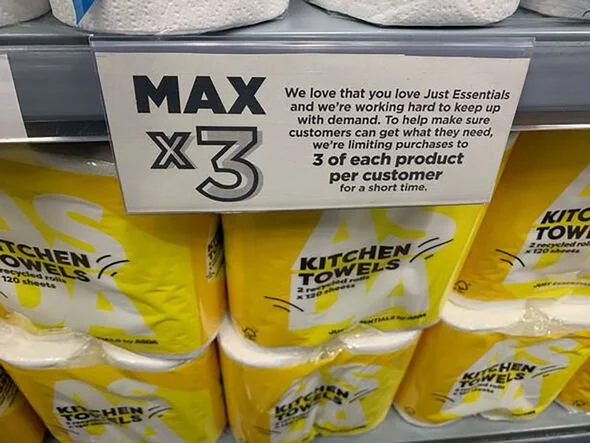
A supermarket limits how many items a buyer can take from their budget range. The sign next to the shelf says clearly: maximum three per customer. That sign does two things at once.
First, it prevents stockpiling. Second, and more importantly for conversion, it tells every shopper who reads it that these items are popular enough to need protecting. So buyers who might have picked up one item pick up three. Because the limit told them this was worth having.
See Also