

Practical Sales Training™ > Selling Communication Basics > The Honesty Effect
The Honesty Effect
What Is It?
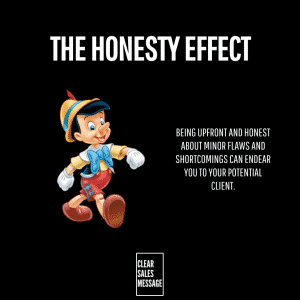
The Honesty Effect means being upfront with clients at all times. That includes your flaws.
Most sellers hide their weak points. But hiding them rarely works for long, since buyers usually find them anyway.
Why Does It Work?
When someone admits an imperfection, we warm to them. We also trust them more, because honesty feels rare.
If you have a flaw that buyers will discover eventually, get ahead of it. Put it out in the open yourself, rather than hoping nobody notices.
This works because it removes the shock later. There’s no nasty surprise waiting for the buyer, so there’s nothing to feel misled about.
How Can You Use It?
Name The Flaw First
In your pitch or sales copy, mention a minor flaw before anyone else does. Then follow it with the positive straight after. This shows buyers you know your weak spots, and you’re not trying to hide them.
Pair It With A Real Strength
Say your delivery times run a bit slower than average. That’s fine, as long as every parcel arrives insured, tracked and on the date promised. The flaw becomes smaller once it sits next to something solid.
Defuse Problems Before They Happen
Being honest early gives you control. If a parcel does turn up late, the buyer already expected it might. Compare that to a client who wasn’t warned. They complain, and you’re stuck playing defence instead of standing on solid ground.
Avis used exactly this idea in their “we try harder” campaign. They were the number two car hire company in the world, and they said so. It worked, because it felt honest instead of boastful.
When It Works Best
This works best when your flaw is minor and your strength is genuine. A small, honest weakness paired with a real benefit feels human. It also feels safe to buy from.
It works especially well in service businesses, where trust matters more than flawless polish. Buyers expect a business to be perfect. So when you admit you’re not, it stands out.
When It Becomes Dangerous
The risk is admitting a flaw that’s actually a dealbreaker. Some weaknesses aren’t small enough to spin. If you fix your language, the mismatch will still land badly with buyers.
Fake humility is another trap. If your admitted “flaw” is really a hidden brag, like “we care too much,” buyers see straight through it. That kind of honesty isn’t honest at all.
Used well, this builds trust fast. Used badly, it reads as a trick, and tricks always cost you more than they earn.
Common Mistakes
Choosing A Flaw That’s Too Big
If the flaw is a genuine dealbreaker, no amount of honest framing fixes it. So be honest about which flaws are actually small enough to admit.
Skipping The Strength That Follows
A flaw on its own just sounds like a warning. Always pair it with the real benefit that makes it worth accepting.
Disguising A Brag As A Flaw
“We care too much” isn’t honesty. It’s a compliment wearing a disguise, and buyers can tell the difference.
The Honesty Effect – An Example
The Small Design Agency
A boutique design agency writes this on their sales page: “We’re a small team, so we don’t take on more than 5 clients at a time. That means you might wait a little longer, but when it’s your turn, you get our full attention.”
They don’t hide the wait. Instead, they name it and turn it into a reason to choose them. Buyers feel respected by that kind of honesty, and respect builds trust fast.
It also creates a quiet sense of exclusivity. Nobody’s shouting about limited spots here. The scarcity is just true, so it doesn’t need hype to land.
That’s the whole effect in one small paragraph. A real limitation, framed honestly, sells harder than a polished promise ever could.
See also