Practical Sales Training™ > How To Keep Your Clients Happy > Code of Conduct
Code of Conduct
What Is It
A code of conduct tells your buyer how you’ll behave, before they’ve even worked with you. It sets out what to expect from you and your team, in plain terms, rather than leaving them to guess.
Most businesses keep this stuff in their heads. Nothing gets written down, so buyers have no way to check it. A code of conduct puts it on paper instead, and that alone builds a different kind of trust.
Think of it as a promise with edges. It doesn’t just say what you’ll do well. There’s also a clear line around what you won’t do at all. That matters just as much to a nervous buyer.
Why Does It Work
It works because it removes the unknown. Buyers hate uncertainty far more than they mind a strict rule. Setting clear boundaries actually makes people relax, rather than pull away.
When someone knows exactly what to expect, every decision after that becomes easier. They stop watching for red flags, because you’ve already told them where the lines sit. That’s a huge weight off a buyer’s mind.
It also works because it signals confidence. A business that’s willing to put its standards in writing clearly isn’t hiding anything. Silence, on the other hand, always makes people wonder what’s being left out.
How Can You Use It
What To Include
Start by writing a simple set of rules for how you and your team will behave. Articles such as this one can help you get started properly.
At minimum, cover the fundamentals below.
- Conflicts of interest
- Company policies
- Company culture
- Privacy policy
- Equal opportunity
Making It Visible
Once it’s written, don’t bury it. Put it somewhere your clients and team can actually find it. That way, everyone knows where they stand and what they can expect from you at every stage.
A code of conduct that only lives in a drawer does nothing for trust. Share it early, ideally before a buyer even asks. It then starts working in your favour from the very first conversation.
When It Works Best
It works best in situations where trust is genuinely fragile. Think high value services, long contracts, or anything involving someone else’s money, data, or reputation. The bigger the stakes, the more a buyer wants written boundaries.
It’s also powerful early in a relationship, before trust has had time to build naturally. A new client hasn’t seen you deliver yet. So a code of conduct gives them something solid to lean on straight away.
When It Becomes Dangerous
A code of conduct turns dangerous the moment it’s written but not followed. Nothing damages trust faster than a client discovering your written promises don’t match your actual behaviour.
It also backfires if it’s vague on purpose, full of soft language designed to avoid real commitment. Buyers notice hedging quickly, and a wishy-washy code often does more harm than having no code at all.
Common Mistakes
Writing It And Hiding It
Plenty of businesses draft a code of conduct purely for compliance, then never show it to a single client. If nobody outside the company sees it, it can’t do any of the trust building work it’s meant for.
Copying Someone Else’s Standards
A generic code, lifted from a template with the names changed, reads exactly like what it is. Buyers can tell the difference between real standards and a document nobody actually thought about.
Treating It As A One Time Task
A code of conduct written once and never revisited quickly falls out of step with how the business actually operates. Review it regularly, or the gap between the document and reality will eventually catch you out.
Code Of Conduct – An Example
What Larger Companies Publish
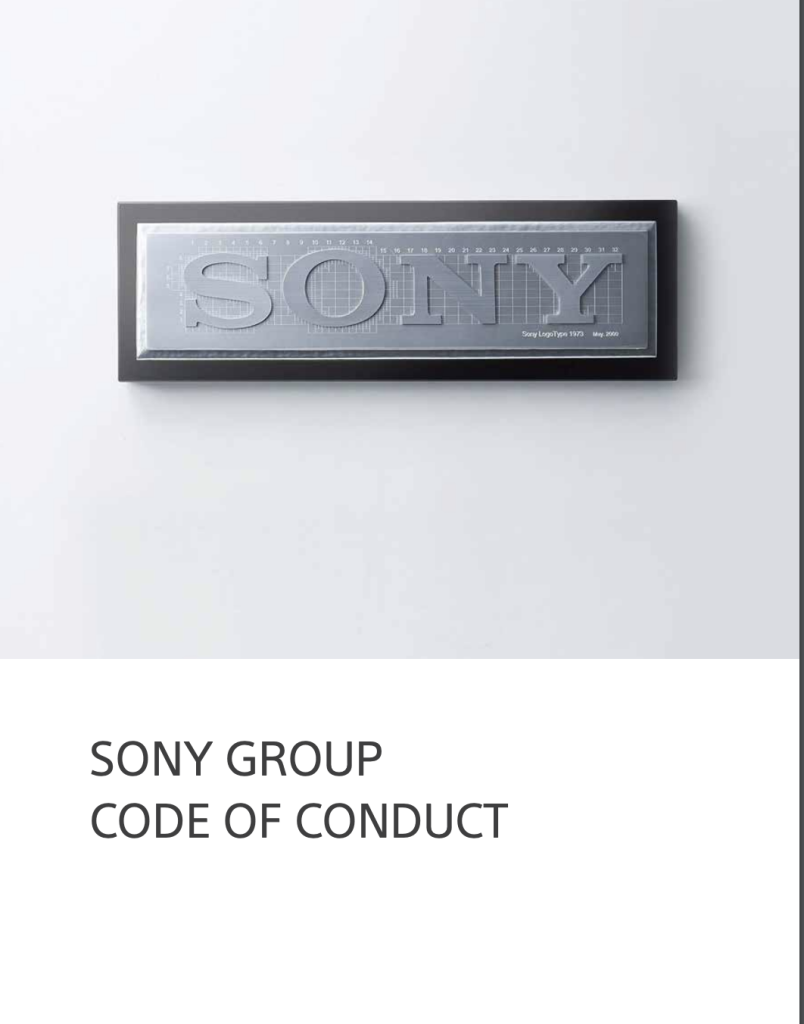
Plenty of larger companies publish their code of conduct freely, rather than keeping it internal. The Sony Group shares theirs in full, and you can read it here.
Notice how specific it gets, rather than staying vague and safe. That specificity is exactly what makes a code of conduct believable. It’s worth copying the approach, even at a much smaller scale.
See also