Practical Sales Training™ > How To Lose The Sale > The Abbreviation Paradox
The Abbreviation Paradox
What Is It
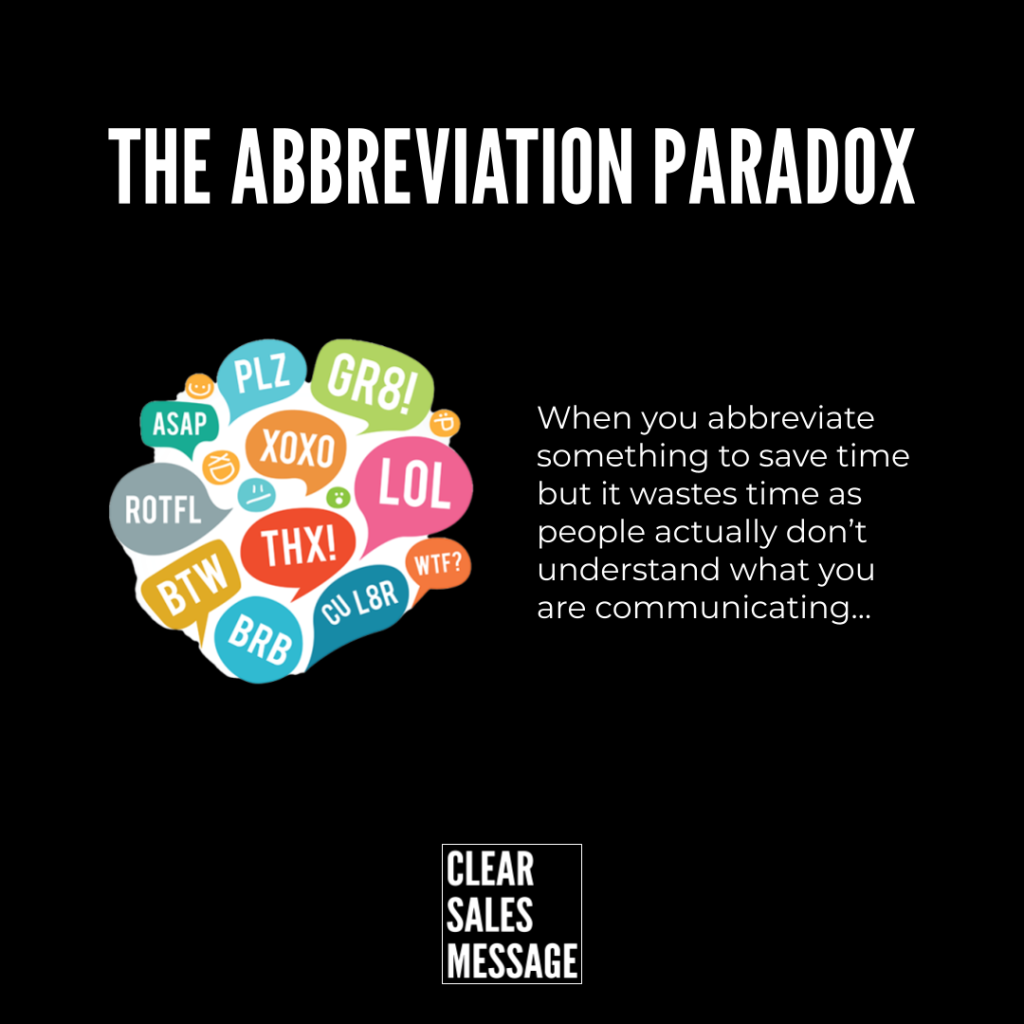
You think you’re saving time. So you use the acronym instead of the full phrase, because it feels quicker.
But if the other person doesn’t know what it means, you’ve just added a step. They have to stop, ask, and wait for you to explain. That’s the Abbreviation Paradox. A shortcut that should speed things up instead ends up slowing everything down.
I see this constantly in sales conversations. A rep drops an internal acronym or an industry term. The buyer nods along anyway, even though they haven’t got a clue what it means. They’re too polite to ask. So the confusion just sits there, quietly working against you.
Why Does It Work
This works against you because it exploits a gap you can’t see. You know what the abbreviation means, so it feels obvious. You’ve used it a hundred times.
But your buyer hasn’t heard it before. Or they’ve learned a different meaning for the same letters. CPR means one thing to a paramedic, but something else entirely to an accountant. So you can’t tell which version sits in their head. That means the shorthand becomes a gamble, not a shortcut.
Also, every time a buyer has to guess at meaning, you lose a little trust. So they start wondering what else you’ve assumed they already know.
How Can You Use It
Spell It Out The First Time
Say the full phrase before you use the short version. Once the buyer knows what it stands for, the abbreviation becomes useful shorthand instead of a barrier. So this one habit removes almost all the risk.
Watch Their Face, Not Just Their Words
Buyers rarely say they don’t understand. Instead they nod, smile, and let the conversation move on. So you need to read the pause, the slight frown, the look away. If you spot it, stop and check, since a quick check costs you nothing and saves the deal.
Test Your Language On An Outsider
Before a big pitch, read your script to someone outside your industry. If they stumble on a term, your buyer will too. So this is one of the fastest ways to catch hidden jargon before it costs you a sale.
When It Works Best
Abbreviations earn their place once both sides already share the meaning. Inside your own team, after everyone’s learned the shorthand, it speeds things up properly. Between two engineers who both know the standard, letters replace paragraphs and nobody loses a beat.
But the paradox still bites when you carry that same shorthand into a room where nobody’s agreed on it yet.
When It Becomes Dangerous
It turns dangerous fast in new client meetings, first calls, and proposals. That’s because you’re still building trust in those moments. If confusion creeps in here, the buyer doesn’t blame the acronym. Instead they blame you, or your company, for making things unclear.
It’s also risky whenever your abbreviation clashes with another accepted meaning. CPR is the obvious example. So is ROI. It can mean return on investment in one meeting. In another, it means rate of interest instead, depending on who’s in the room.
Common Mistakes
Assuming Everyone’s Caught Up
You’ve said the term a dozen times this month. But that doesn’t mean the buyer has heard it once. So never assume shared history where none exists.
Using Internal Shorthand Externally
Your company’s own acronyms feel completely normal to you. But to a buyer hearing them for the first time, they sound like a locked door. So leave the internal shorthand inside the building.
Explaining Too Late
Waiting until the buyer looks lost before you explain costs you more than explaining upfront ever would. By then, they’ve already stopped listening properly. So get ahead of the confusion instead of chasing it.
The Abbreviation Paradox – An Example
CPR – Cardiopulmonary Resuscitation vs. Customer Profitability Ratio
Something as simple as CPR can mean two completely different things. Say it in a hospital, and everyone pictures resuscitation. But say it in a boardroom discussing customer profitability, and a new hire might picture something else entirely.
Neither meaning is wrong. But if you don’t clarify which one you mean, you’ve handed your buyer a guessing game instead of an answer. In a medical setting, CPR is lifesaving resuscitation. In business, it refers to financial performance analysis instead. So two letters make two different conversations. Only one of them fits the room you’re in.
See also