
Practical Sales Training™ > Wordplay > Acrostic
Acrostic
Most sales messages fall apart the moment the salesperson leaves the room. The buyer heard it, liked it, and then forgot it. Not because they were not interested, but because nothing made it stick.
Memorable messaging is one of the hardest problems in sales. You can have the right words in the right order and still lose the buyer the moment something else takes their attention. So the question is not just what you say, but how you make it stay.
Acrostics are one of the simplest and most effective tools for this. They give your message a shape the brain can hold onto, and a sequence it can follow. Because when each letter does a job, the whole thing becomes much easier to recall.
What Is An Acrostic?
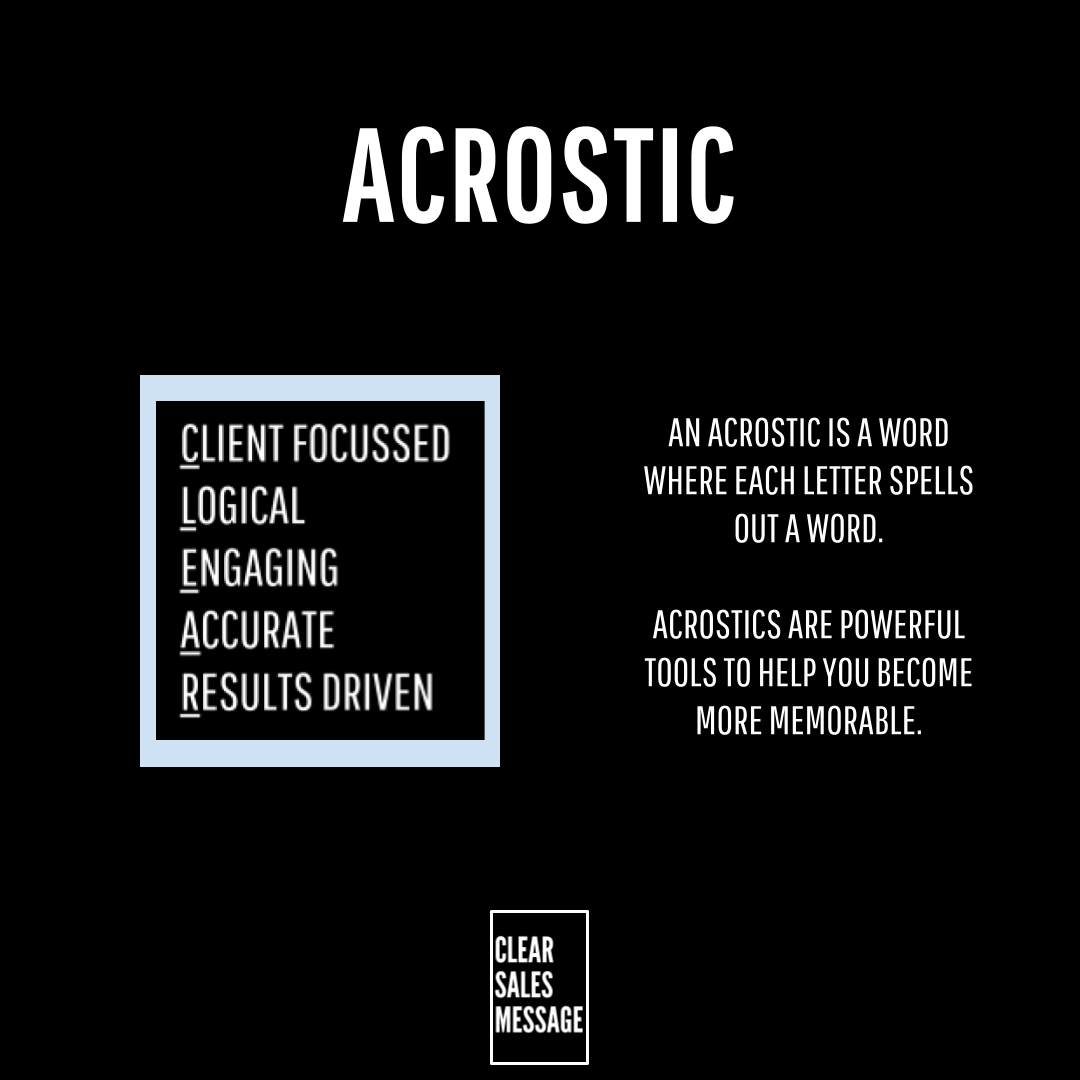
An acrostic is a word where each letter stands for something. CLEAR, LEASE, SMART – these are all acrostics. Each letter represents a word or idea, and together they spell out something meaningful.
This makes them different from acronyms. An acronym is just a set of initials, like PhD or BBC. An acrostic spells an actual word, and that word usually carries meaning of its own. So the device works on two levels: the letters give you the content, and the word itself reinforces the idea.
Why Do Acrostics Work?
Memory works best when information has structure. A list of five points is hard to hold in your head. But five points anchored to five letters of a word you already know? That is much easier. The word acts as a retrieval cue, pulling the content back into focus when you need it.
Acrostics also create consistency. Because the letters fix the message in a set order, the same ideas come out the same way every time. That matters in sales teams, where different people can easily drift into different versions of the same story. An acrostic keeps everyone on the same message without needing a script.
They also travel well. A buyer who remembers your acrostic can repeat it to a colleague, a decision maker, or a budget holder without losing the core meaning. So your message keeps working even after you leave the conversation.
How Can You Use Acrostics In Sales?
Acrostics work both externally with buyers and internally with sales teams. However, they tend to work best inside the business first. When every person on your team can recall and repeat the same message in the same order, your brand becomes much more consistent and your buyers get a clearer picture of what you do.
The key is to choose a word that already means something to your audience. A word that connects directly to what you do will reinforce the message every time someone hears it. A random word that happens to fit the letters will feel forced and fall flat quickly.
Build it around a word your buyers already use
The strongest acrostics use words that already live in the buyer’s world. A commercial property firm using LEASE, a legal firm using TRUST, a logistics company using ROUTE – each of these feels natural because the word fits the context. So start with the word, not the letters. Find a word that resonates, then build the content around it.
Use it to align your sales team
One of the biggest internal problems for sales teams is message drift. Different people explain the business in different ways, and buyers pick up on that inconsistency. An acrostic gives everyone the same framework to work from. Because the word anchors the sequence, the message stays the same whether it comes from the CEO or a junior sales rep.
Keep each letter short and plain
The point of an acrostic is to make things easier to remember, so each letter should represent one clear, simple idea. If the explanation for a single letter takes a paragraph, the device loses its purpose. Aim for one word or one short phrase per letter. The simpler each point, the more the whole thing sticks.
When Acrostics Work Best
They work best when you need to communicate several connected ideas in a way that stays consistent over time. That makes them ideal for onboarding new salespeople, training customer-facing staff, and giving buyers a simple framework they can repeat internally. They also work well in proposals and presentations where you want the key points to land and stay landed.
When Acrostics Become Dangerous
They become a problem when the word choice drives the content rather than the other way around. If you force your message to fit a word that does not quite work, the result feels awkward and the letters end up representing ideas that are vague or stretched. Buyers notice when something feels contrived. So if the right word does not exist yet, it is better to keep looking than to settle for a poor fit.
Common Acrostic Mistakes
Most people either overcomplicate the content or underthink the word. Here are two mistakes that come up regularly.
Choosing the word before the message
It is tempting to pick a clever word first and then try to make the message fit. But this usually produces letters that stand for ideas which feel forced or vague. Start with your core message and the points you actually want to communicate. Then look for a word that fits those points naturally. The message should drive the word, not the other way around.
Making it too long
An acrostic with eight or ten letters asks a lot of the person trying to remember it. Five is usually the sweet spot. Beyond that, the device stops being a memory aid and starts being another thing to learn. If you have more than five or six key points, consider whether some can combine, or whether you need two separate acrostics for different parts of your message.
Acrostic – An Example
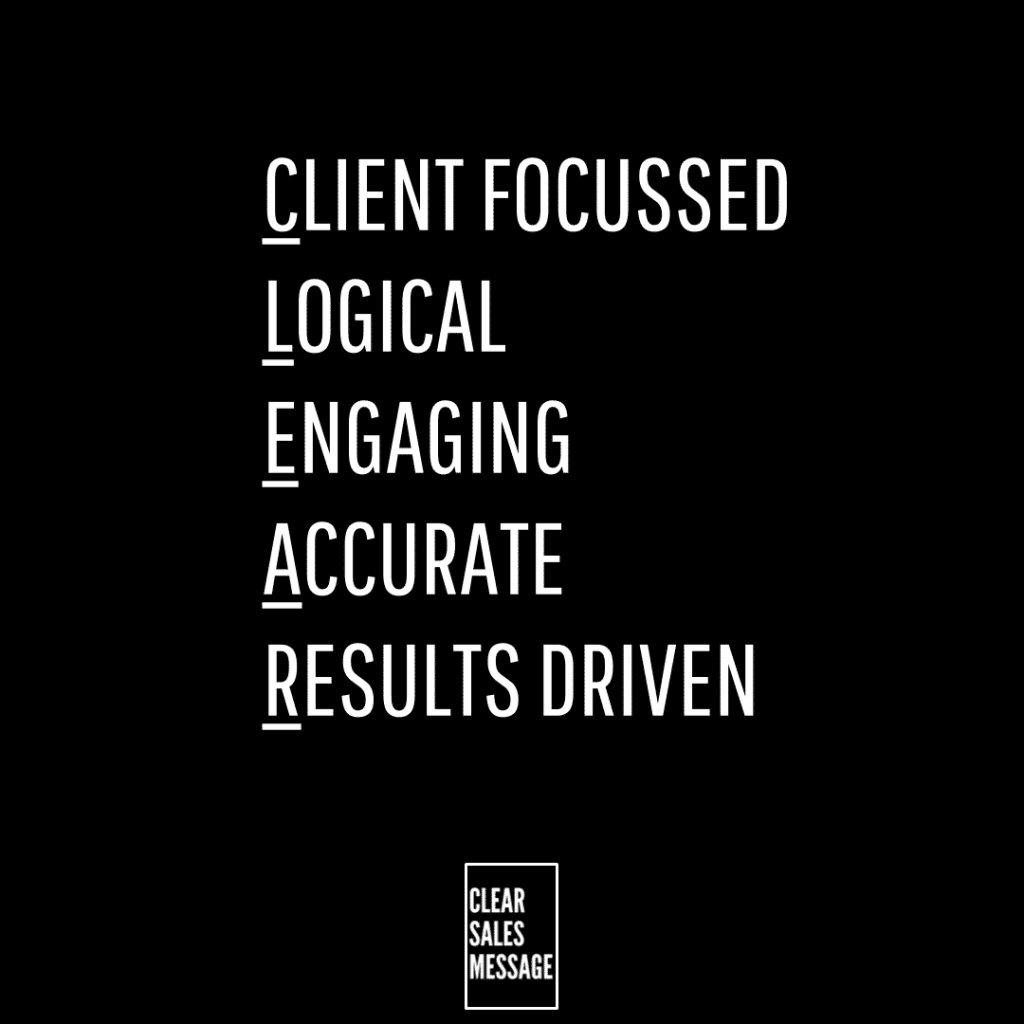
The word CLEAR from Clear Sales Message is an acrostic that describes the five main characteristics of what it means to communicate clearly in sales. Each letter stands for a distinct quality, and together they spell a word that sits at the heart of the whole business. That connection between the word and the meaning is exactly what makes it work.
A client in the commercial property space uses the acrostic LEASE to explain what they do. You can see how they use it here: this client example. Because LEASE already means something in their world, the word reinforces the message every time someone hears it.
See also
- 25+ wordplay techniques that work (and sell)
- 100+ ways to be more memorable
- The CLEAR Acrostic
- Making Moves Client Example

