Practical Sales Training™ > How To Convert > Rejection Remarketing
Rejection Remarketing
Most businesses go quiet the moment they hear “no.” That’s exactly why the ones who don’t stand out so sharply.
Rejection remarketing turns a lost pitch into your next opportunity, not by chasing, but by becoming impossible to forget.
What Is Rejection Remarketing?
Rejection remarketing is the strategy of following up with prospects who said no in a way so creative, personal and memorable that they can’t forget you. It’s about turning rejection into brand recognition, goodwill and future opportunity.
Instead of chasing people who walked away, you create something that pulls them back in on its own. This isn’t about second chances. It’s about becoming the one they remember, long after the pitch itself has faded.
Why Does It Work?
Most businesses stop the moment they hear “no.” Rejection remarketing is built for the long game instead. It works because it flips the usual response to rejection. Instead of disappointment or pushiness, you show confidence, creativity and generosity, and that’s what makes you stand out.
It works through memorability, since you don’t get lost in a crowded inbox. Humour turns a flat “no” into a positive story worth telling. Generosity means giving something of value with no strings attached. Brand gravity gives people an actual reason to talk about you. And confidence shows through self-awareness, since you’re not chasing anyone. You’re simply showing strength.
How Can You Use Rejection Remarketing?
Accept The No
Thank them genuinely. Show real respect. Keep the door open without ever pushing on it, since pressure at this stage undoes everything the rest of the strategy is trying to build.
Send A Creative Follow-Up
Make it thoughtful, funny, or genuinely useful. A cheeky gift, a small voucher for future use, a handwritten note with a funny twist, or a branded item that turns the “no” into a talking point all work well here.
Let The Impression Do The Work
You’re not asking for a response. You’re giving someone a reason to remember you. When they eventually need what you do, you’ll already be top of mind, without a single follow-up email chasing them there.
When It Works Best
This works best when the original relationship was genuinely warm, even though the outcome wasn’t a yes. A polite, respectful rejection leaves room for goodwill in a way a hostile one never does.
It’s especially effective for higher-value deals or long sales cycles, since a memorable gesture has time to pay off well after the original pitch has been forgotten by everyone else who tried the usual follow-up email.
When It Becomes Dangerous
This backfires if it feels like a manipulation tactic rather than genuine goodwill. A gift that comes across as an obvious attempt to buy a second chance undoes the confidence this whole approach depends on.
It also risks looking desperate if repeated too often or aimed at every single lost deal. Save it for prospects genuinely worth the long game, not as a blanket response to every rejection you receive.
Common Mistakes
Making It Feel Like A Sales Push
A gesture that clearly hopes for an immediate reply reads as pressure, not generosity. Keep the gesture free of expectation, and let it work quietly over time.
Choosing Something Generic
A bland, forgettable gesture defeats the entire purpose. The whole point is memorability, so invest genuine creativity into whatever you send.
Doing It For Every Single Lost Deal
Sending this to every prospect who says no dilutes both the impact and your budget. Reserve it for deals genuinely worth playing the long game for.
Rejection Remarketing – An Example
The Day Job Hat
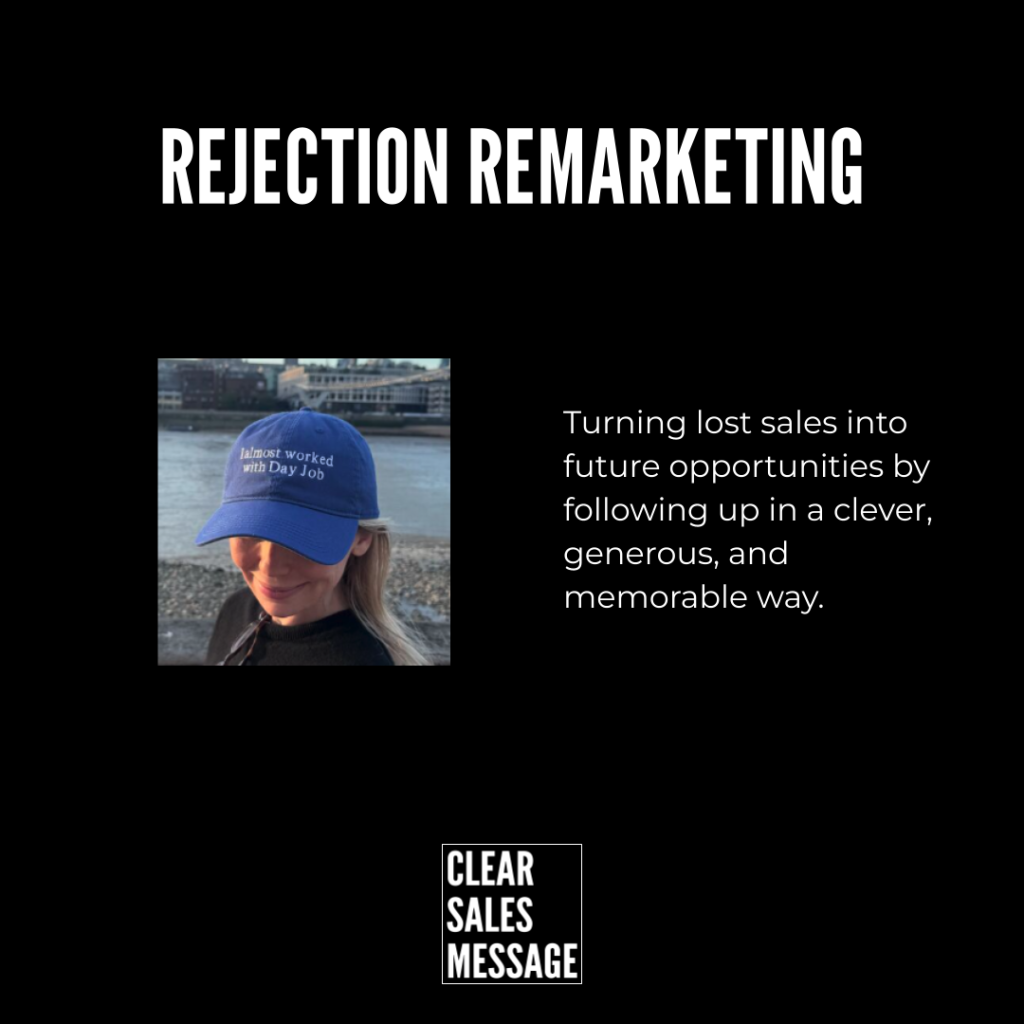
As shared on LinkedIn, an LA creative agency called Day Job once lost a pitch. Months later, they reportedly sent the prospect a hat reading “I ALMOST WORKED WITH DAY JOB,” along with a gift card for creative work.
According to the post, it was funny, generous and completely unexpected. The prospect remembered them, talked about them online, and booked another call. Whether or not every detail is verified beyond the original post, the story captures the core idea of rejection remarketing well: a memorable “no” can still lead somewhere good.

See Also