Practical Sales Training™ > How To Convert > The Qualify Effect

The Qualify Effect
What Is It
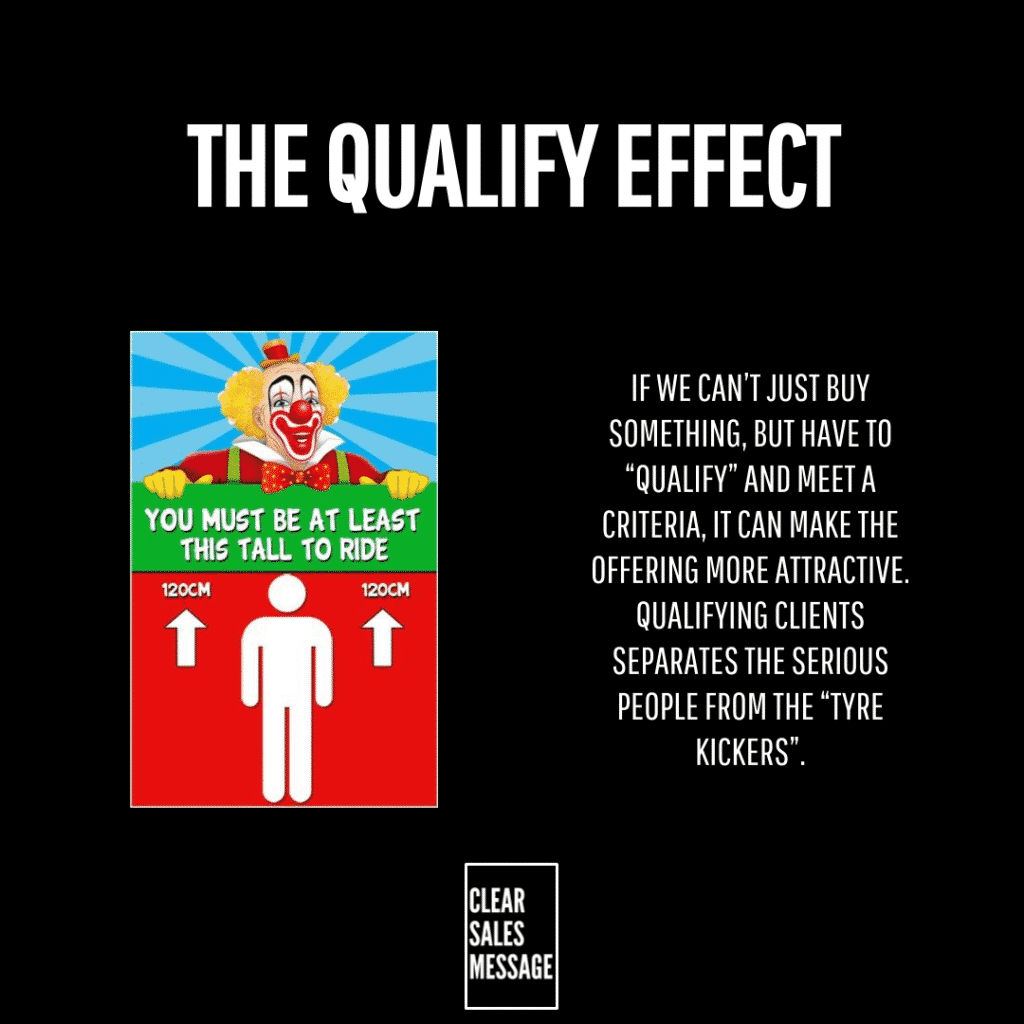
The Qualify Effect happens when someone can’t simply buy from you. To buy, they need to meet a criteria first. They’re essentially left asking the seller to sell to them.
That flips the usual dynamic completely. Normally you chase the buyer. Here, the buyer chases you.
It sounds risky on paper. Turn away buyers, and surely you lose sales? In practice, the opposite tends to happen.
Why Does It Work
It works because of Reactance. When we’re told we can’t do something, it spurs us on to do it. That reaction is almost automatic, and it’s hard to switch off.
But there’s more to it than that. The Qualify Effect also separates the serious buyers from the tyre kickers. It ensures anyone serious has to make a commitment, by jumping through hoops, before they even get the chance to buy.
That filtering does real work behind the scenes. You spend less time on buyers who were never going to say yes. And the ones who do qualify arrive already invested in the outcome.
There’s a status element too. A criteria implies not everyone gets in. So meeting it feels like an achievement, not just a purchase.
How Can You Use It
Define your ideal client, then say it out loud
Using the Qualify Effect in your sales process is simple enough to implement. Decide on your ideal client type, then make this clear in your sales conversations. For example: “We typically deal with businesses of at least 5 people and a £2M turnover, can I just check your company meets that please?”
Let the criteria do the filtering for you
Asking in this way puts you in the upper hand. It also ensures that if a client doesn’t meet the criteria but still wants to buy, they feel engaged, since it seems like you’re making a special allowance for them. This is The Exclusive Effect at work.
Make the bar real, not decorative
A criteria only works if you’d genuinely turn someone away for missing it. If you’d say yes to anyone regardless, buyers sense the bluff fast, and the whole effect collapses.
When It Works Best
This works best when demand already exists. A criteria on something nobody wants just looks like a wall, not an invitation.
It also works best in markets where status matters to the buyer. Business services, coaching, and premium products all lean on this far more naturally than commodity purchases do.
When It Becomes Dangerous
It backfires if the criteria feels arbitrary rather than earned. A vague, unexplained bar reads as gatekeeping for its own sake, not genuine selectivity.
It also becomes risky if you bend the rule too easily. Let everyone in eventually, and buyers stop believing the bar was ever real. Once that trust goes, so does the effect.
Overusing it can alienate good buyers too. Someone who’s genuinely qualified but gets treated with suspicion at every step won’t stick around to prove it.
Common Mistakes
Setting a criteria you don’t actually enforce
If you accept anyone who asks, the criteria was never a filter. It was just a line of copy, and buyers eventually work that out.
Making the bar about ego instead of fit
A criteria should explain who you serve well, not just make you sound exclusive. Buyers can tell the difference between genuine fit and empty gatekeeping.
Forgetting to soften the rejection
Turning someone away without warmth just loses a sale outright. Turning them away while leaving the door open, as with the Exclusive Effect, keeps them engaged instead.
The Qualify Effect – An Example
Auditioning For Black Belt
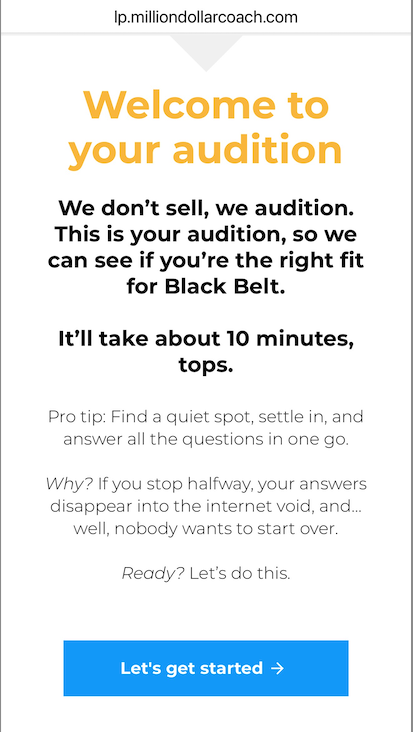
On this website, potential clients are invited to audition to be considered, rather than simply being able to buy.
The landing page frames the whole thing as an audition, not a sales form. It sets a short time limit, asks the visitor to answer every question in one go, and makes clear that stopping halfway means starting over. None of that is an accident.
Every part of it signals that a spot has to be earned, not simply bought. As a result, the visitor arrives already invested before they’ve spent a penny.
See Also